
July 15, 2026
How Do Packages Get Delivered to Apartments?
Curious about how do packages get delivered to apartments? Learn the coordinated process that ensures your parcels arrive safely and on time.
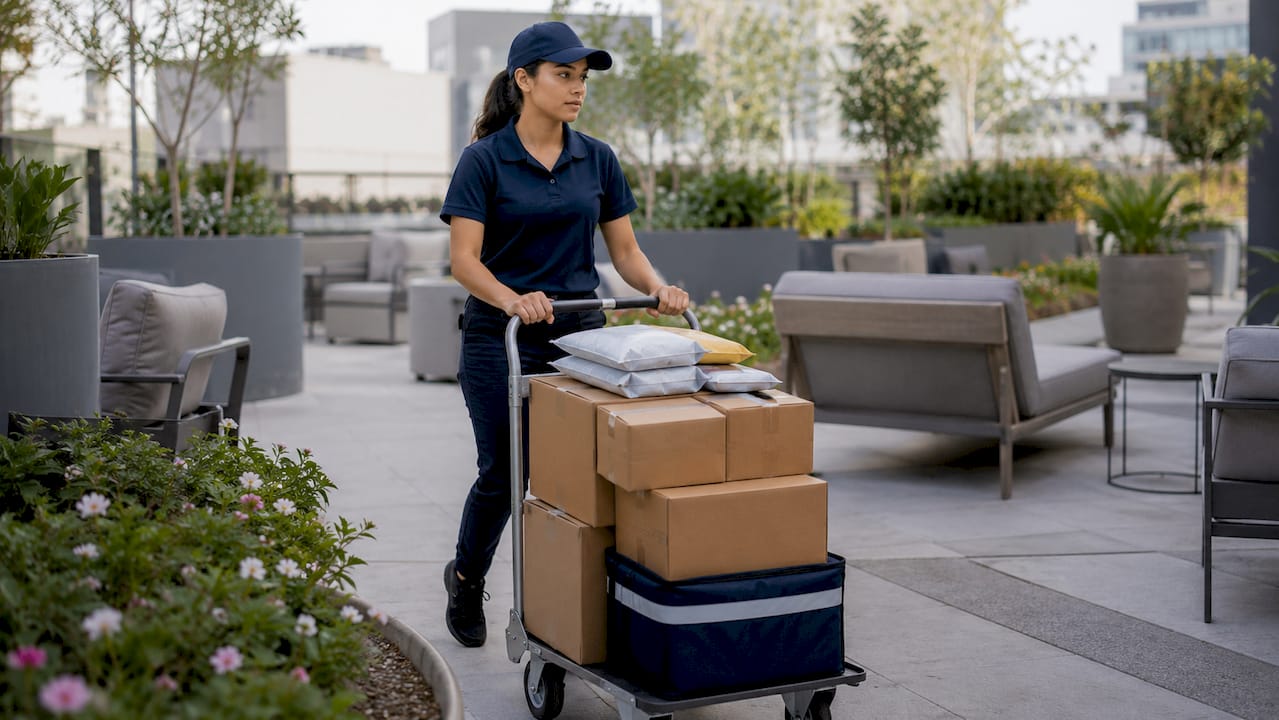
Apartment package delivery is a coordinated process involving carrier protocols, property management systems, and dedicated storage solutions working together to move parcels from a distribution hub to the correct resident. The question of how do packages get delivered to apartments has a more layered answer than most residents expect. UPS, FedEx, USPS, and Amazon each follow distinct access and drop-off procedures when they arrive at a multi-family building. Property staff, package rooms, and electronic lockers all play defined roles in that chain. Understanding how these pieces connect helps both residents and property managers reduce lost packages, missed deliveries, and the daily friction that comes with high parcel volume.
What are the common delivery methods used in apartment buildings?
Apartment buildings use several distinct delivery methods, and the one a carrier chooses depends on building access, package size, and the property’s infrastructure.
Front door and unit-level delivery is the default for carriers with fob or key access. Amazon Logistics drivers, for example, frequently use property-issued access codes to enter buildings and deliver directly to a resident’s door. This method works well for low-density buildings but creates security gaps in larger communities where propped doors are common.
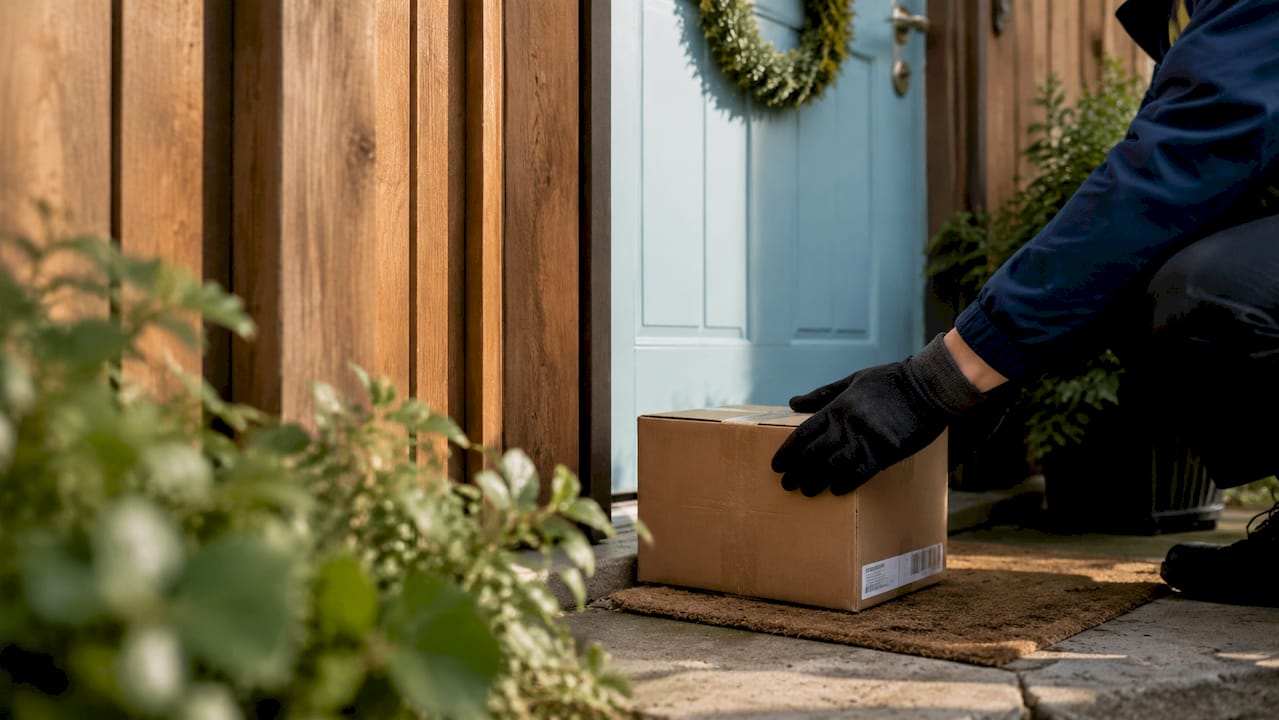
Lobby and concierge drop-off places packages with a staff member or in a designated lobby area. The carrier scans the parcel as delivered, and the property takes custody from that point forward. This handoff is where most manual handling begins.
Package lockers and smart package rooms are the fastest-growing infrastructure solution in multifamily housing. Lockers assign a unique access code to each delivery, and the resident retrieves their parcel independently. Smart package rooms using AI and computer vision go further, reducing resident wait times from minutes to seconds while requiring far less staff involvement.
Third-party off-site delivery services remove the package load from the building entirely. These providers accept parcels at a separate facility and transfer liability for lost items to themselves rather than the property. Residents increasingly expect doorstep delivery for large items, which makes this option relevant for oversized freight that lockers cannot accommodate.
- Front door delivery: requires building access credentials from the property
- Lobby drop-off: transfers custody to staff at the point of carrier scan
- Package lockers: resident self-service with unique access codes per delivery
- Smart package rooms: AI-powered open shelving with 24/7 resident access
- Off-site third-party services: external facility handles receipt and liability
- Oversized and perishable items: require separate handling protocols and staff coordination
Pro Tip: Ask your property manager which carriers have been issued building access codes. Carriers without codes default to lobby drop-offs, which increases staff handling time and the chance of a misplaced parcel.
How do property management teams handle package logistics?
Property management teams are the operational backbone of the apartment package delivery process, and the workload is heavier than most residents realize.
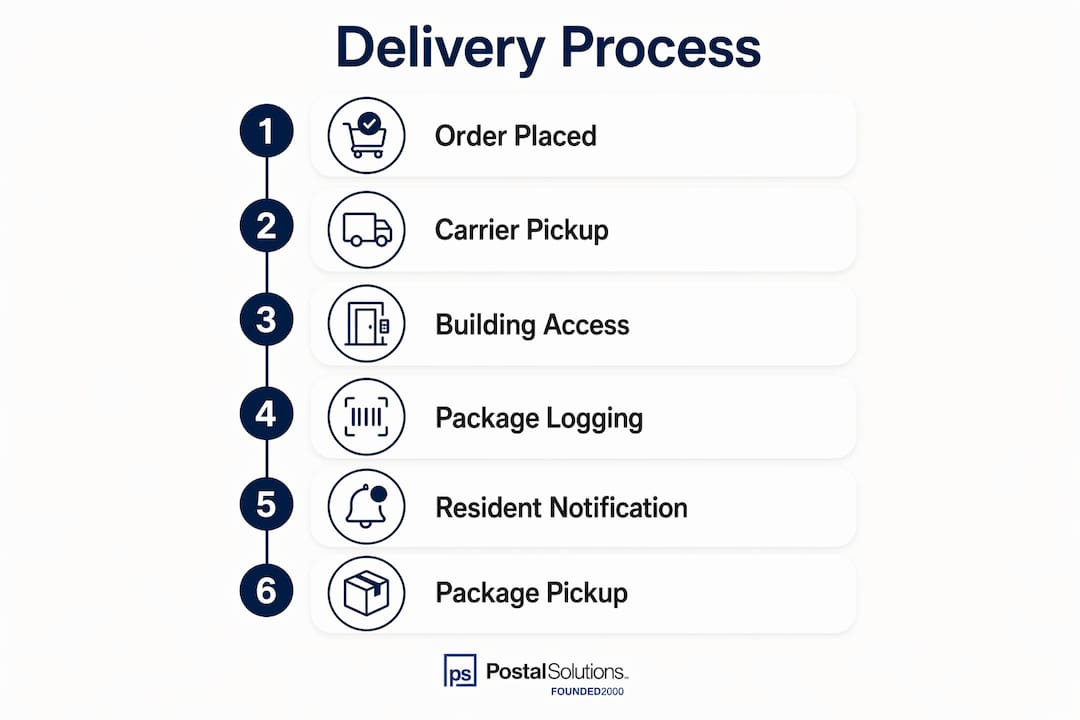
When a carrier drops packages in the lobby or package room, a staff member must receive, log, sort, and notify the resident. Each package requires 4–5 manual touches by leasing staff. At a property receiving 75 packages per day, that translates to roughly 6 hours of staff time consumed by package handling alone.
The technology layer: logging and notifications
Most properties now use package management software to log incoming parcels and send automated resident notifications by text or email. These platforms create a digital chain of custody, which reduces disputes about whether a package was received. The notification step is critical. Residents who are not alerted promptly leave packages sitting in storage longer, which compounds the space problem during high-volume periods.
Standardized procedures and carrier compliance
Carrier compliance is a process issue before it is a technology issue. Buildings with structured driver instructions reduce delivery failures significantly. Standardized carrier communication packages, including pictorial standard operating procedures and QR codes for drivers, improve delivery accuracy and make compliance auditable. Properties that skip this step find that carriers default to wherever is most convenient for the driver, not wherever is best for the operation.
Peak season pressure
Holiday periods and Amazon Prime events create volume spikes that expose every weakness in a manual system. Manual package handling can consume 30+ hours per week of leasing staff time. That is time pulled directly from leasing tours, renewal conversations, and resident service. Properties without a dedicated package operation feel this most acutely because the same staff member handling packages is also expected to lease apartments.
- Carrier arrives and scans package as delivered at the building entry point
- Staff member receives and physically inspects the parcel
- Package is logged in the property management or package tracking system
- Resident receives an automated notification with pickup instructions
- Resident retrieves the package and the record is closed in the system
What technology solutions improve package delivery efficiency?
Technology has changed how packages reach residents in apartments, but no single solution eliminates the need for human oversight.
Smart lockers: reliable but dimensionally rigid
Smart locker systems assign a unique access code to each incoming parcel. The resident receives a notification, enters the code, and retrieves the package without staff involvement. The limitation is physical. Package lockers have fixed compartments that create dimensional rigidity. When a parcel is too large for any available compartment, the system overflows and staff must intervene. Properties with high parcel volume find that lockers alone cannot keep pace.
AI-powered package rooms: higher capacity, lower staffing
AI-powered open shelving package rooms use computer vision to log incoming parcels and grant resident access without fixed compartments. At one 11,200-unit property, staffing dropped from 12 to 2 after switching to an AI-powered room. Open shelving triples storage capacity compared to locker banks of the same footprint. The trade-off is that the system depends on carriers placing packages correctly, which requires active carrier compliance management.
| Feature | Smart lockers | AI-powered package rooms |
|---|---|---|
| Resident access | Code-based, self-service | App or code-based, self-service |
| Storage flexibility | Fixed compartment sizes | Open shelving, any parcel size |
| Staff required | Low, but spikes at overflow | Very low, with proper carrier compliance |
| Best fit | Low-to-mid volume properties | High-volume or large communities |
The hidden cost of “hands-off” technology
High-tech package rooms reduce but do not eliminate staff time. Exceptions, overflow, and carrier errors still require human attention. Hidden annual costs for properties relying on technology alone are estimated between $40,000 and $70,000 when staff time is fully accounted for. Technology is a force multiplier, not a replacement for a managed operation.
Pro Tip: 60% of online shoppers prefer home delivery and expect 24/7 access to their packages. Any solution that restricts pickup to office hours will generate resident complaints regardless of how well the technology functions.
How can residents and property managers improve the delivery experience?
The best practices for apartment package delivery split cleanly between what residents control and what property managers control.
For residents:
- Track every order and know which carrier is delivering it before the expected date
- Use your building’s preferred delivery address format exactly as the property specifies, including unit number and building name
- Retrieve packages promptly after notification to free up space for other residents
- For high-value items, request a signature confirmation at checkout so the carrier cannot leave the parcel unattended
- Report any package that shows as delivered but is not in the designated pickup area within the same business day
For property managers:
- Issue written carrier access instructions to every major carrier serving your building, including UPS, FedEx, USPS, and Amazon Logistics
- Post clear signage at every building entry point directing drivers to the package room or locker bank
- Define a written standard operating procedure for oversized items that do not fit standard storage
- Communicate surge-period protocols to residents before peak seasons, not during them
- Plan for peak delivery volumes by adding temporary staffing or extending package room hours during the weeks surrounding major holidays
The most overlooked best practice is carrier onboarding. Properties that treat carrier compliance as a one-time setup rather than an ongoing relationship see delivery failures climb over time as driver turnover resets institutional knowledge. Refreshing driver instructions at the start of each peak season is a low-cost, high-impact habit.
Key Takeaways
Effective apartment package delivery requires coordinated carrier compliance, the right storage infrastructure, and active on-site management. Technology alone does not solve the problem.
| Point | Details |
|---|---|
| Manual handling is costly | Each package requires 4–5 staff touches, consuming roughly 6 hours daily at 75 packages. |
| Carrier compliance drives outcomes | Structured driver instructions reduce delivery failures more reliably than hardware upgrades alone. |
| Lockers have physical limits | Fixed compartments overflow with large parcels; open shelving AI rooms triple storage capacity. |
| Technology has hidden costs | Unmanaged tech systems carry estimated hidden annual costs of $40,000–$70,000 in staff time. |
| Residents expect 24/7 access | Any pickup system restricted to office hours will generate consistent resident dissatisfaction. |
What 25 years of package operations taught us
The conversation in multifamily housing almost always starts with hardware. A property installs lockers or a smart room, and leadership expects the package problem to disappear. It rarely does. What we have seen consistently, across hundreds of communities, is that the operation around the technology determines whether it works. A locker bank with no carrier compliance program fills up and overflows. A smart room with no one managing exceptions becomes a source of resident complaints within weeks of peak season.
The properties that get this right treat package management as a dedicated function, not a task assigned to whoever is available at the front desk. That means a defined intake process, written carrier instructions refreshed regularly, and someone accountable for the room every day it is open. The technology matters, but it is the process and the person behind it that residents actually experience.
The other thing worth saying plainly: the package problem is not going away. E-commerce volume in the United States continues to grow, and multifamily properties absorb that growth directly. Properties that build a real operation now will have a meaningful advantage in leasing and resident retention over those that keep treating packages as an afterthought.
— Postal Solutions
On-site package management that actually works
Postal Solutions runs the on-site package operation for apartment and student housing communities across the country, so leasing teams can get out of the package business entirely.
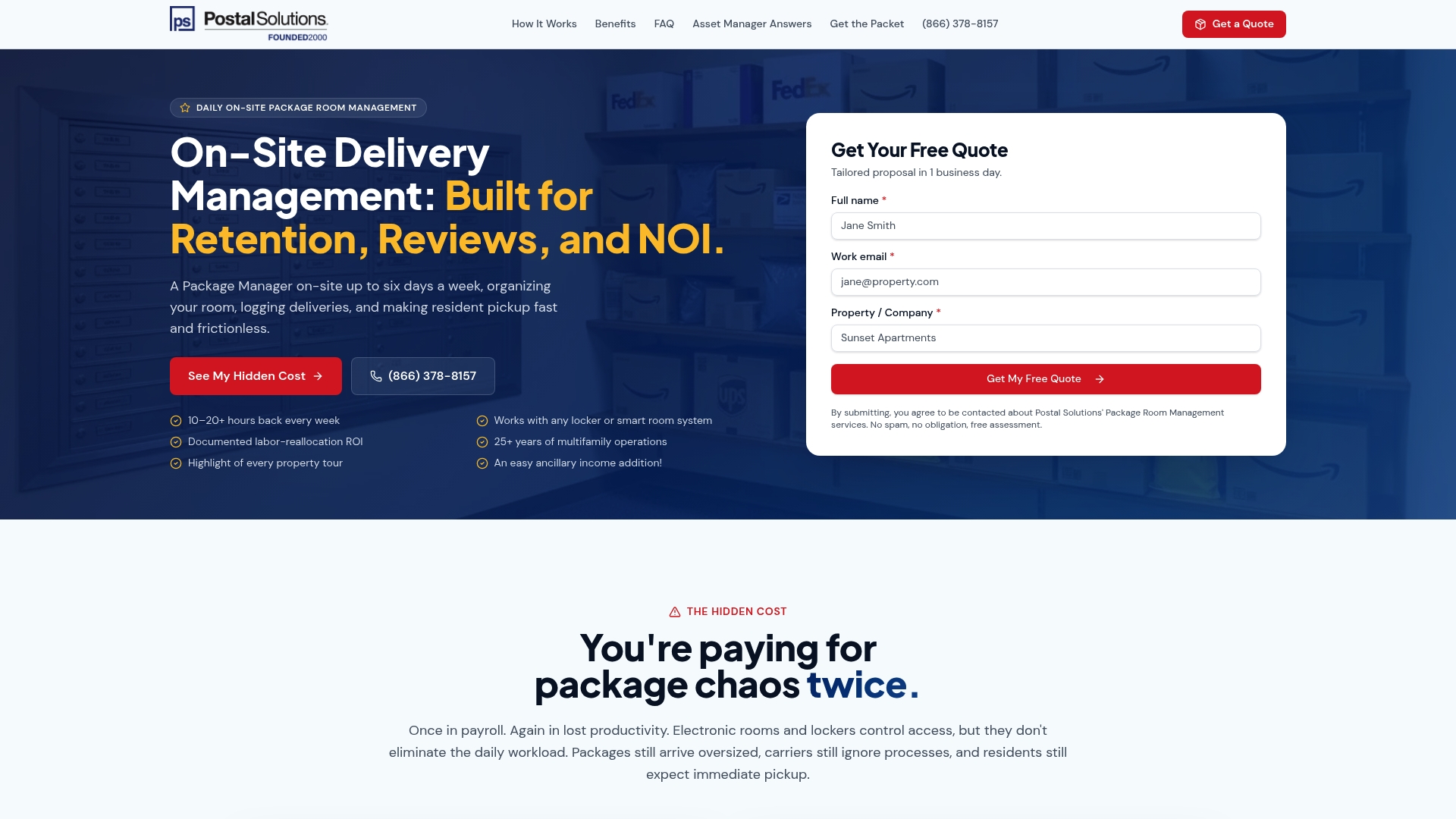
A dedicated on-site Package Manager works your community up to six days a week, receiving, sorting, securing, and keeping packages organized and available to residents around the clock through the package room or lockers you already have. Properties in cities from Boston to Austin have used this model to recover hours of leasing staff time every week and turn a package room into a leasable amenity. If your property has an electronic locker or package room system and your staff is still spending hours a day on parcels, On-Site Package Room Management is worth a conversation.
FAQ
How do packages get delivered to apartments without a doorman?
Carriers use property-issued access codes, lobby drop-off areas, or package lockers to deliver parcels in buildings without doorman service. Residents receive automated notifications once the package is logged by staff or the locker system.
Where are packages delivered in apartments with lockers?
Packages are placed directly into an available locker compartment by the carrier, and the resident receives a unique access code to retrieve the parcel at any time. Oversized items that do not fit a compartment are typically held by staff or placed in a designated overflow area.
Why do couriers sometimes leave packages in the lobby instead of the locker?
Carriers default to lobby drop-offs when all locker compartments are full, when a parcel exceeds compartment dimensions, or when the driver has not received clear instructions directing them to the locker bank. Structured driver instructions from the property reduce this significantly.
How can property managers reduce staff time spent on packages?
Implementing a dedicated package intake process, issuing written carrier compliance instructions, and using automated notification software cuts manual handling time substantially. Properties that add dedicated on-site package management recover the most staff hours.
What happens to packages during peak delivery seasons in apartments?
Without active on-site management during surge periods, even high-tech lockers can overflow, leading to lost items and frustrated staff. Properties that plan ahead with temporary staffing or extended package room hours handle peak volume without service breakdowns.
Recommended
Ready when you are
Fix your package room — start with a free proposal
Daily on-site Package Manager, resident text & email pings*, and a tour-ready amenity. Tell us your unit count and we'll send a right-sized proposal — usually within one business day.
- ✓ 16–30 hours back every week
- ✓ Works with any locker system
- ✓ Faster, friction-free resident pickup
- ✓ An easy ancillary income addition