
July 14, 2026
How to Reduce Package Theft in Your Apartment
Learn how to reduce package theft in your apartment with practical solutions like organized handling and clear policies, ensuring your deliveries are safe.
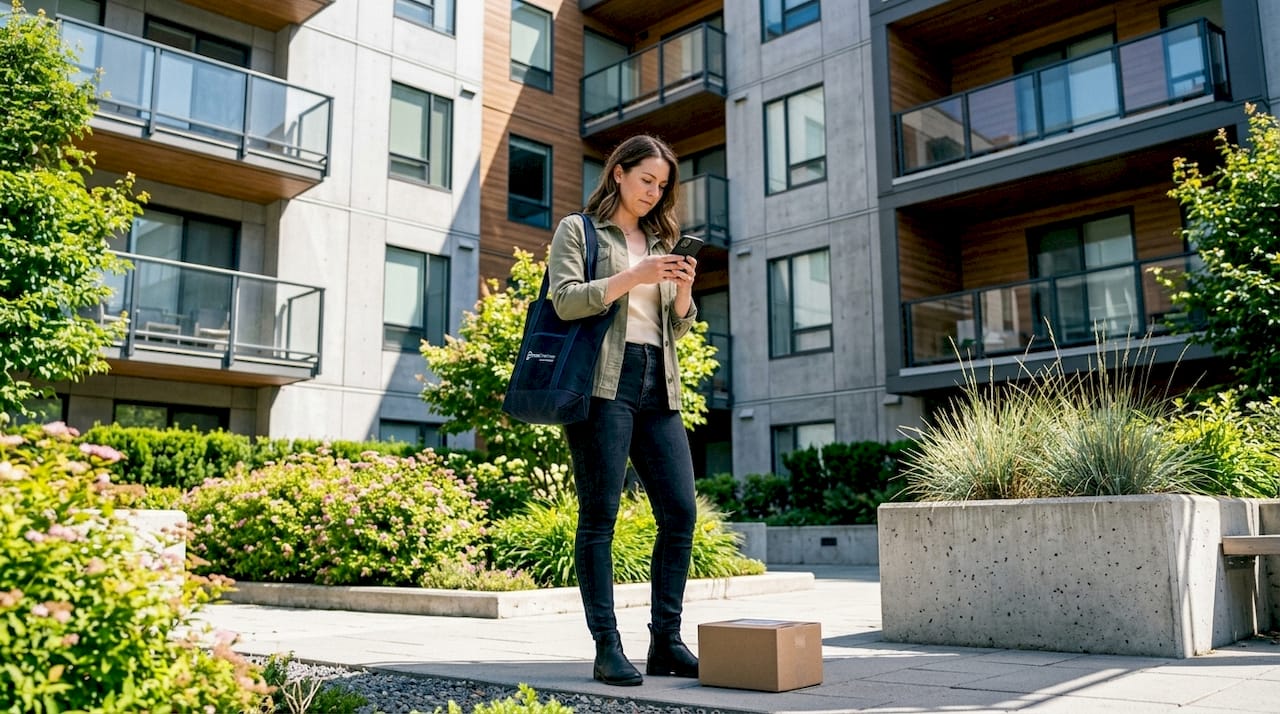
Apartment residents are 3.5 times more likely to experience package theft than single-family homeowners. That gap exists because multifamily buildings concentrate hundreds of deliveries in shared spaces with limited oversight. Reducing package theft in an apartment setting requires more than a doorbell camera. It takes controlled access, organized package handling, and clear policies that residents and property managers follow together. The good news: the most effective solutions are operational, not expensive, and most properties already have the infrastructure to put them in place.
What makes apartment buildings vulnerable to package theft?
Apartment buildings create theft conditions that single-family homes simply do not. Understanding those conditions is the first step toward fixing them.
Shared entryways are the primary vulnerability. A lobby or mail room that dozens of residents use daily also gives opportunistic thieves a plausible reason to be there. They blend in, pick up a package, and leave before anyone notices. Unlike a private porch, there is no single owner watching the space.
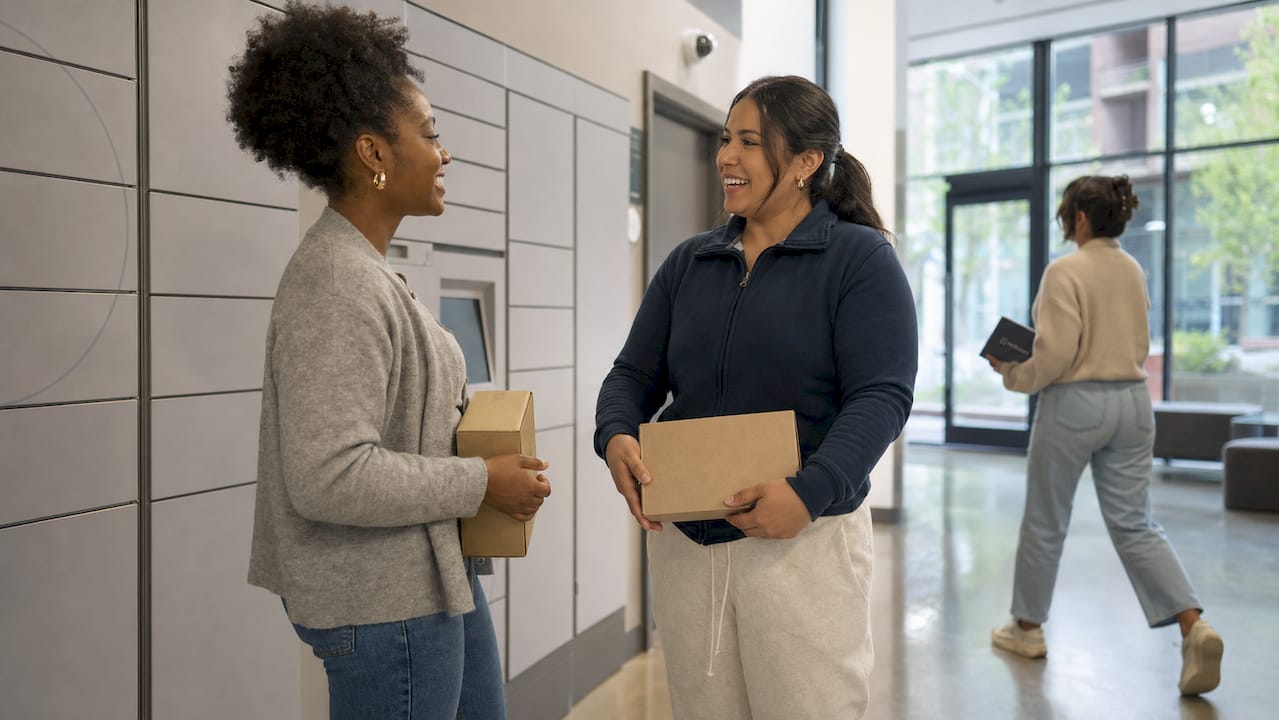
Delivery access is the second weak point. Most carriers, including UPS, FedEx, and USPS, need building entry to drop packages inside. When drivers prop doors open or tailgate behind residents, that access extends to anyone nearby. Properties without a verified entry process for carriers create a gap that thieves exploit regularly.
The package room or lobby itself becomes a focal theft zone when it lacks proper controls. Common failure points include:
- Propped or broken entry doors that allow unrestricted access
- Package overflow piling up in hallways or unsecured corners
- No audit trail for who entered the room and when
- Poor lighting that reduces camera effectiveness
- No staff presence or active monitoring during peak delivery hours
One more factor that residents often overlook: renters insurance rarely covers the loss. Typical deductibles run $500–$1,000, while the average stolen package is worth $144–$222. Filing a claim costs more than the loss itself. That insurance gap means residents absorb the financial hit directly, which makes prevention far more valuable than recovery.
What can property managers do to prevent package theft?
Property managers hold the most leverage in any apartment delivery security plan. The interventions below address both access control and operational accountability.
Controlled delivery access. Verifying who enters the building before a package is dropped is the single most effective theft deterrent. AI-powered buzzer screening automates carrier identity verification and prevents unauthorized building entry without requiring staff to be physically present at the door. Properties that implement verified entry see fewer tailgating incidents and a measurable drop in lobby theft.
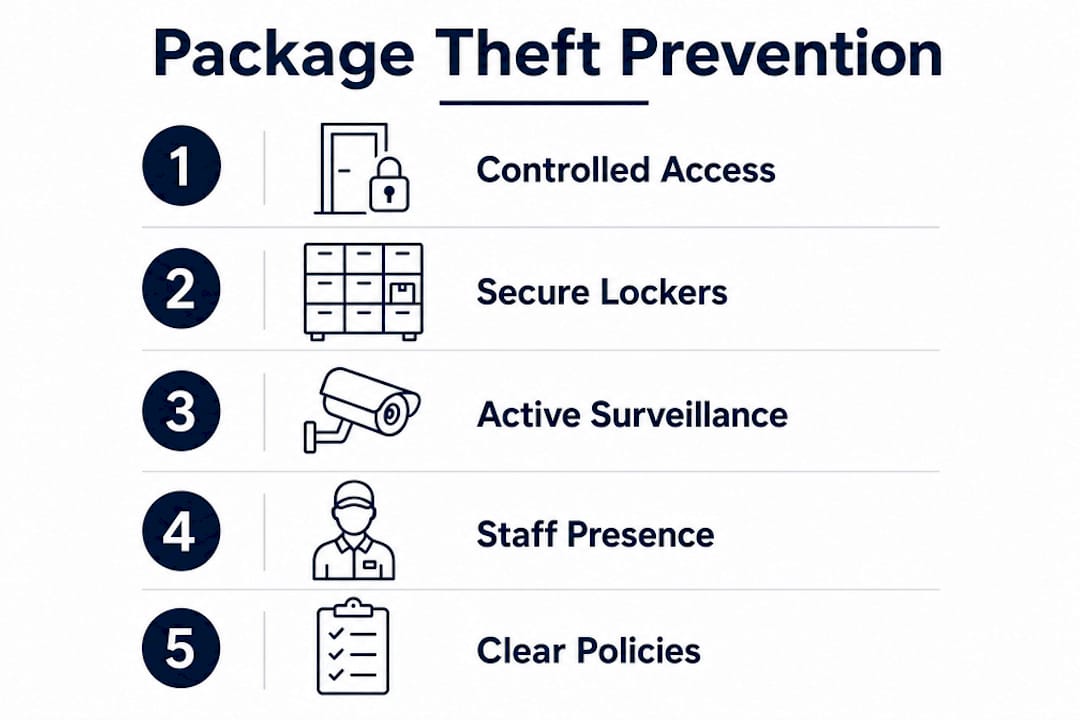
Secure package rooms and locker systems. A locked, access-controlled package room with resident-only entry eliminates the open-lobby theft scenario entirely. When you install package lockers with individual compartments and PIN or app-based access, each delivery is isolated. No resident can accidentally or intentionally pick up someone else’s package.
Active surveillance, not passive recording. Static cameras document theft but do not prevent it. Real-time monitoring or AI behavior analytics provide active deterrence by triggering immediate audio warnings when suspicious behavior is detected. A camera system without live monitoring is evidence collection, not security.
Visible staff presence. Concierge services and mobile patrols deter theft more effectively than cameras alone. A staff member who can make eye contact, ask questions, and document incidents changes the risk calculation for anyone considering theft. Documented accountability through shift logs and incident reports also creates the audit trail needed to identify patterns.
Clear delivery policies and resident communication. Consistent resident messaging about where packages go, how to retrieve them, and what to do when something goes missing reduces both theft and confusion. Post the policy in the lobby, send it in the welcome packet, and reinforce it at move-in.
Pro Tip: Set up a delivery event log that timestamps every package received and retrieved. When a resident reports a missing package, you can pinpoint exactly when it was last accounted for and narrow down what happened.
What can residents do to protect their packages?
Residents are not passive participants in apartment delivery security. Several direct actions reduce individual theft risk significantly.
-
Use delivery instructions. Every major carrier, including Amazon, UPS, FedEx, and USPS, allows customers to specify a drop location. Direct packages to the package room, a staffed desk, or a locker rather than leaving the destination open.
-
Sign up for delivery alerts. Real-time tracking notifications from carriers let you know the moment a package arrives. The faster you retrieve it, the shorter the window for theft.
-
Request signature-required delivery for high-value items. A signature requirement means the carrier cannot leave the package unattended. For electronics, jewelry, or anything over $100, this is the most direct form of lost delivery prevention.
-
Coordinate delivery timing. Schedule deliveries for days when you or a trusted neighbor will be home. Many carriers now offer delivery windows that let you narrow the arrival time to a two-hour range.
-
Install a video doorbell where applicable. In buildings that permit it, a video doorbell at your unit door adds a personal layer of deterrence and documentation.
-
Report suspicious activity immediately. Notify property management and the carrier the same day you notice a problem. Early reporting preserves camera footage, which most systems overwrite within 24–72 hours.
Pro Tip: If your building has a package room, check it before filing a theft report. Carriers sometimes scan a package as delivered before it physically arrives, creating a false alarm. Give it two hours before escalating.
How does a layered security approach reduce theft long-term?
A single security measure always has a gap. Layered security closes those gaps by ensuring that when one control fails, another catches the problem. This is the core principle behind any effective multifamily package security plan.
Physical barriers handle the first line of defense. A locked package room door stops casual theft immediately. Access controls add the second layer by limiting who can enter and logging every entry. Surveillance adds the third layer by documenting what happens inside. Active monitoring or staff presence adds the fourth by responding in real time.
The table below shows how each layer addresses a specific vulnerability:
| Security layer | Vulnerability addressed | Failure point to watch |
|---|---|---|
| Physical barriers (locked doors) | Open-access theft | Propped or broken doors |
| Access controls (PIN, app, fob) | Unauthorized entry | Shared codes or lost fobs |
| Surveillance cameras | Evidence collection | Poor placement, low lighting |
| Active monitoring or AI alerts | Real-time deterrence | No response protocol |
| Staff presence (concierge, patrol) | Human deterrence and enforcement | Inconsistent coverage hours |
| Resident communication policies | Behavioral compliance | Outdated or unclear messaging |
The most common mistake properties make is investing in one layer and ignoring the others. A well-placed camera system with poor lighting and no monitoring is nearly useless. A package room with a broken door lock defeats the entire access control investment. Each layer depends on the others to function.
Adapting the approach based on property-specific data matters too. Track incident reports by location, time of day, and delivery carrier. Patterns reveal where the weakest layer is and where to focus next. Properties that treat security as an ongoing process, not a one-time installation, consistently outperform those that do not.
How do you manage ongoing challenges in package theft prevention?
Sustaining a theft prevention program requires managing the operational realities that emerge after the initial setup.
Package overflow is the most common breakdown point. When lockers fill up and packages spill into hallways, the security perimeter collapses. Managing overflow requires either expanding capacity, enforcing retrieval deadlines, or both. A 48-hour retrieval policy with automated reminders keeps the room functional.
Resident compliance requires ongoing reinforcement. New residents need onboarding. Long-term residents develop habits that may not match current policy. Regular communication through email, app notifications, or lobby signage keeps expectations clear.
Carrier cooperation varies by company and driver. USPS, UPS, FedEx, and Amazon all have different protocols for accessing package rooms. Establishing a clear carrier access procedure and posting it at the entry point reduces confusion and unauthorized propping of doors.
Technology also ages. Camera systems, locker firmware, and access control software need regular updates to address new vulnerabilities. A quarterly review of all security hardware and software keeps the system current. Tracking incident rates before and after any change gives you the data to justify future investments.
Key Takeaways
Reducing package theft in apartments requires layered security, consistent policies, and active management rather than any single technology fix.
| Point | Details |
|---|---|
| Apartment theft risk is elevated | Residents face 3.5x higher theft risk than homeowners due to shared access and high delivery volume. |
| Renters insurance rarely helps | Deductibles of $500–$1,000 exceed the average stolen package value, making prevention the only real protection. |
| Cameras alone are not enough | Static surveillance documents theft but does not prevent it; active monitoring or AI alerts are required for deterrence. |
| Layered security closes gaps | Combining physical barriers, access controls, surveillance, and staff presence ensures no single failure exposes the whole system. |
| Resident action matters | Delivery instructions, real-time alerts, and prompt reporting directly reduce individual theft risk at no cost. |
The case for human presence in a tech-heavy world
After 25 years managing on-site package operations, I have watched properties spend significant money on camera systems and locker hardware while ignoring the one factor that consistently moves the needle: a person who shows up every day and takes ownership of the package room.
Technology creates conditions for security. People enforce it. A camera captures a theft. A staff member prevents one. That distinction sounds obvious, but the industry keeps learning it the hard way. Properties that install lockers and walk away still see overflow, propped doors, and confused residents who leave packages sitting for days.
The properties that actually reduce package theft long-term share one trait: accountability. Someone receives the packages, organizes them, communicates with residents, and flags problems before they become incidents. That accountability does not require a large budget. It requires consistency.
Resident trust is also a real asset. When residents know their packages are handled by someone who cares, they retrieve them faster, report problems sooner, and treat the package room with more respect. That behavioral shift reduces theft more than any single hardware upgrade.
The most cost-effective security improvement most properties can make is not a new camera. It is a dedicated, present, accountable person running the package operation daily.
— Postal Solutions
On-Site Package Room Management from Postal Solutions
Package theft is an operational problem as much as a security one. When no one owns the package room, everything breaks down.
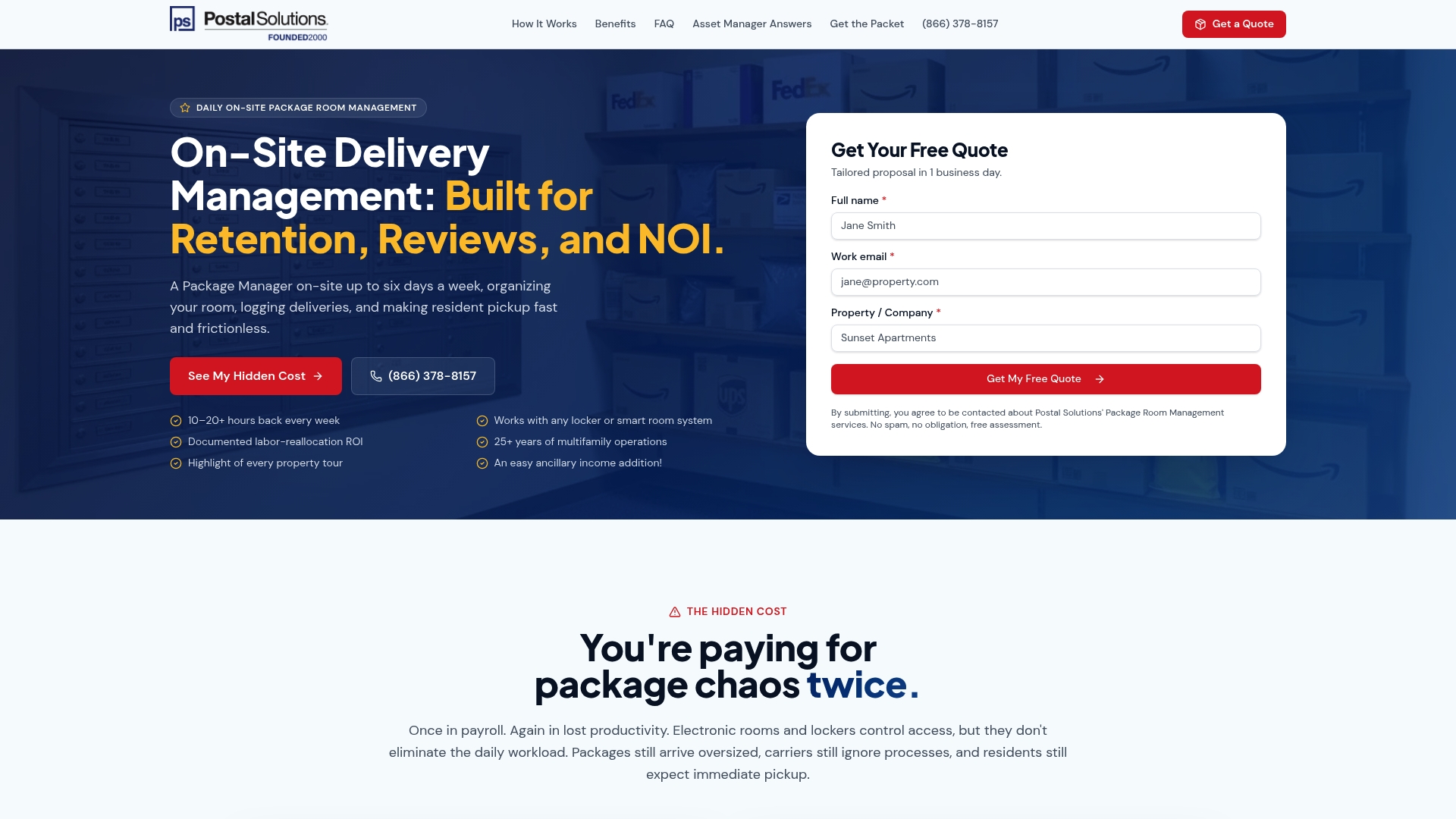
Postal Solutions provides on-site package room management for apartment and student housing communities across the country. A dedicated Package Manager works your property up to six days a week, receiving, sorting, securing, and organizing packages so residents can retrieve them any time. Your leasing team stops chasing lost deliveries and gets back to leasing. The package room becomes a visible amenity that prospects notice on tours. Many communities structure the service as a paid amenity and recover the cost through resident fees. If you want to see how it works in practice, request the asset manager packet and review the full service model.
FAQ
How much does package theft cost apartment residents?
Package theft caused $15 billion in consumer losses nationwide in 2025. Individual residents rarely recover losses through renters insurance because deductibles exceed the average stolen package value.
Do package lockers actually prevent theft?
Package lockers with individual, access-controlled compartments prevent casual theft by isolating each delivery. They work best as part of a layered system that also includes controlled building entry and active monitoring.
What is the fastest way to reduce package theft in an apartment building?
Controlling who enters the building during delivery hours is the fastest single improvement. AI-powered buzzer screening and verified carrier access stop unauthorized entry before theft can occur.
Why do cameras fail to stop package theft?
Static cameras record theft but do not interrupt it. Without live monitoring or automated audio alerts, a thief can take a package and leave before anyone reviews the footage.
What should residents do immediately after a package goes missing?
Report the missing package to property management and the carrier on the same day. Most camera systems overwrite footage within 24–72 hours, so early reporting preserves the evidence needed to identify what happened.
Recommended
Ready when you are
Fix your package room — start with a free proposal
Daily on-site Package Manager, resident text & email pings*, and a tour-ready amenity. Tell us your unit count and we'll send a right-sized proposal — usually within one business day.
- ✓ 16–30 hours back every week
- ✓ Works with any locker system
- ✓ Faster, friction-free resident pickup
- ✓ An easy ancillary income addition