
July 16, 2026
Managing Student Housing: Best Practices for 2026
Discover best practices for managing student housing in 2026. Improve occupancy, resident satisfaction, and operational efficiency today!

Managing student housing is defined as the operational discipline of maintaining high occupancy, resident satisfaction, and efficient daily workflows across student living communities. With occupancy reaching 95.1% and average rents at $933 per bed for the 2025–2026 academic year, the market is competitive and unforgiving of operational gaps. At the same time, resident satisfaction dropped nearly 7% year over year, signaling that strong occupancy numbers alone do not guarantee a healthy operation. The administrators who outperform their peers share one trait: they treat operational excellence as a non-negotiable standard, not an afterthought.
What does managing student housing require operationally?
Effective student housing management requires three foundational pillars: the right tools, trained staff, and documented protocols. Without all three, even well-located properties lose residents to competitors who simply run a tighter operation.
The tools that matter most fall into distinct categories. Package management systems handle the daily flood of deliveries that leasing staff would otherwise absorb. Digital communication platforms send automated maintenance updates, lease reminders, and community announcements. Automated maintenance request workflows route work orders to the right vendor without staff manually triaging every ticket.
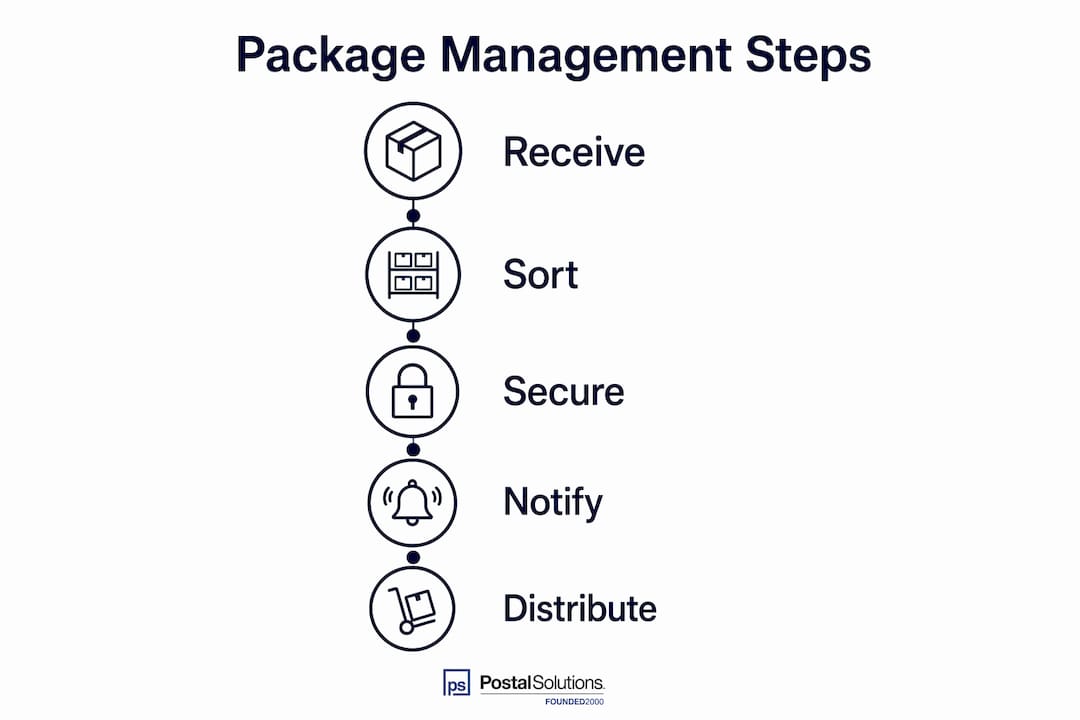
The table below maps each tool category to its primary function in a student housing operation.
| Tool category | Primary function |
|---|---|
| On-site package room management | Receives, sorts, secures, and distributes resident packages daily |
| Digital communication platform | Automates notifications for maintenance, lease events, and community updates |
| Maintenance request workflow | Routes and tracks work orders from submission to completion |
| Resident portal | Centralizes rent payment, lease documents, and service requests |
| Vendor scheduling system | Coordinates cleaning and maintenance vendors during turnover periods |
Prerequisites matter as much as the tools themselves. Staff need training on each system before move-in season, not during it. Clear operational protocols, written and accessible, prevent the kind of ad hoc decision-making that creates inconsistency and resident complaints.
Key prerequisites for any student housing operation include:
- Written standard operating procedures for package intake, storage, and pickup
- Staff training completed at least 30 days before peak move-in
- Vendor contracts finalized with scheduled start dates before semester turns
- A documented escalation path for maintenance delays and resident disputes
How to optimize package management step by step
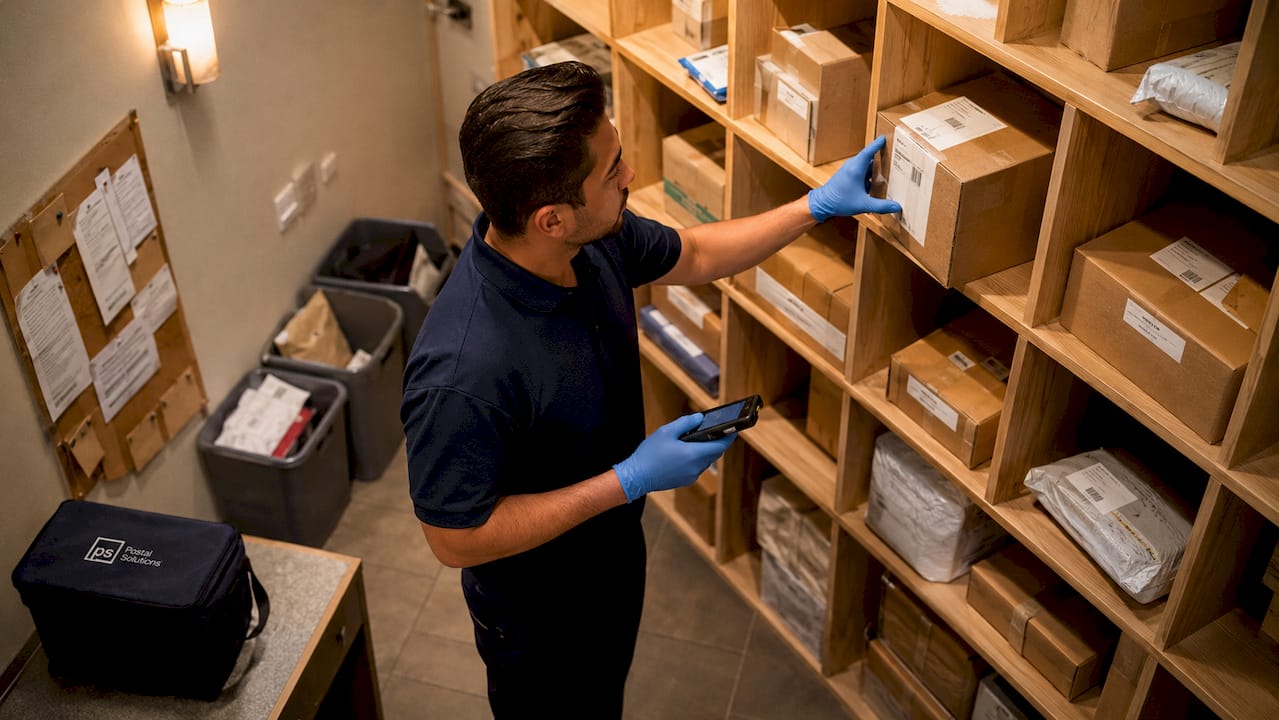
Package management is the single most visible daily operation in student housing, and most properties handle it poorly. Leasing staff spend hours sorting boxes, fielding “where is my package?” calls, and managing overflow. That time comes directly out of leasing, renewals, and resident relationships.
A disciplined package operation follows a clear sequence.
- Receive and log every package at the point of entry. Scan each item into a tracking system immediately upon arrival. Never allow packages to sit unlogged in a hallway or office.
- Assign a secure storage location. Place each package in a designated locker or labeled shelf in the package room. Consistent placement eliminates search time during pickup.
- Notify the resident automatically. Send a text or app notification the moment the package is logged. Residents who know their package arrived do not call the office to ask.
- Maintain a pickup window that matches resident schedules. Student renters are not home during business hours. Package access needs to extend into evenings and, ideally, be available around the clock through a secure room or locker system.
- Log the pickup and close the record. Confirm pickup in the system so staff always know what is still on-site. Unclaimed packages need a follow-up protocol, not a growing pile in the corner.
- Audit the room weekly. A weekly count of unclaimed packages catches accumulation before it becomes a storage crisis.
Pro Tip: During semester move-in and move-out, package volume can spike sharply. Schedule additional package room coverage for the two weeks surrounding each semester turn. Residents moving in expect their Amazon orders to be waiting. Residents moving out are returning equipment and receiving last-minute deliveries. Both groups need a system that does not break under pressure.
Coordination with carriers also reduces friction. Post clear signage at every building entrance directing UPS, FedEx, USPS, and Amazon drivers to the designated package intake area. Carriers who cannot find the drop point leave packages at doors or in lobbies, which creates theft risk and resident complaints.
How does resident communication affect satisfaction and turnover?
Operational friction, not building age, drives negative reviews and higher turnover. Slow maintenance responses, unclear communication, and dirty common areas push residents out faster than an older building ever would. This finding reframes where administrators should focus their energy.
Student renters prefer text and app-based communication for routine matters but expect access to a real person for lease and rent discussions. That distinction shapes how a well-run operation structures its communication workflows.
Effective communication practices for student housing administrators include:
- Set and publish response time standards. Residents need to know that maintenance requests receive a response within 24 hours and a resolution timeline within 48 hours.
- Use automated notifications for every status change. A work order opened, assigned, and completed should trigger a message at each stage.
- Send proactive community updates before problems become complaints. If a common area is closed for repairs, notify residents the day before, not after they find a locked door.
- Reserve personal contact for high-stakes conversations. Lease renewals, rent increases, and dispute resolution require a human voice, not an automated message.
“The future of renting is defined by clarity, responsiveness, and choice rather than luxury amenities, setting new expectations for student housing operators.”
Automation frees staff from administrative tasks so they can focus on mental health support and conflict mediation, which directly improves retention. That is not a soft benefit. It is a measurable operational outcome that shows up in renewal rates.
Nearly 70% of student renters live off-campus and approach housing exactly like conventional renters. They expect transparency, responsiveness, and options. Administrators who treat student renters as a separate, lower-expectation category consistently underperform on satisfaction scores.
What are the most common challenges in student housing management?
The most persistent challenge in student housing is vendor coordination during move-in and move-out seasons. Poor scheduling of maintenance and cleaning vendors during resident turnover creates a condition known as vendor drift, where overlapping or misaligned start dates increase labor costs and require heavy supervision. The fix is exact scheduling: assign vendor start dates and room assignments before the turnover window opens, not after it starts.
The table below identifies the most common operational issues and their practical solutions.
| Common issue | Practical solution |
|---|---|
| Vendor drift during turnover | Lock in vendor schedules and room assignments 30 days in advance |
| Package overflow in leasing office | Implement dedicated on-site package room management with daily staffing |
| Slow maintenance response | Automate work order routing and set published response time standards |
| Resident communication gaps | Use a digital platform for automated status updates at every workflow stage |
| Lease expectation mismatches | Include clear service standards in lease documents and onboarding materials |
Weak communication during high-turnover periods compounds every other problem. When residents do not know the status of a maintenance request or a package delivery, they call the office. Each call pulls a staff member away from higher-value work. Multiply that by hundreds of residents during move-in week and the operational cost becomes significant.
Pro Tip: Build a turnover playbook that covers vendor schedules, package room staffing, communication templates, and escalation contacts. A written playbook used consistently produces better outcomes than experienced staff improvising under pressure.
Preleasing rates for the 2026 academic year range from 54% to 92.1% across top and bottom markets. That spread reflects how much localized operational quality affects competitive position. Properties that run clean, responsive operations attract and retain residents even in softer markets.
Key Takeaways
Effective student housing management requires operational discipline across package handling, communication, and vendor coordination to maintain high occupancy and resident satisfaction.
| Point | Details |
|---|---|
| Occupancy and satisfaction diverge | A 95.1% occupancy rate does not prevent a 7% satisfaction drop without strong daily operations. |
| Package management is a visible amenity | A professionally run package room reduces staff burden and signals operational quality to prospects. |
| Operational friction drives turnover | Slow maintenance and poor communication cause more resident exits than building age ever does. |
| Vendor coordination prevents cost overruns | Exact scheduling of vendor start dates during turnover seasons eliminates costly vendor drift. |
| Automation enables human connection | Digital workflows free staff to focus on lease renewals, conflict resolution, and resident relationships. |
What 25 years in package rooms taught me about student housing
The conventional wisdom in student housing is that newer buildings win. Newer finishes, newer amenities, newer everything. After 25 years running on-site package operations across student housing communities, I can tell you that is not what actually determines whether a property holds its residents.
What wins is being easier to live in. A resident whose packages are always where they expect them, whose maintenance request gets a same-day acknowledgment, and who never has to wonder if anyone is paying attention, that resident renews. The building across the street with a rooftop deck loses that resident’s renewal if their package room is a chaotic pile of boxes and their work orders disappear into a void.
The shift toward automation is real and it matters, but not for the reason most operators think. Automation does not replace the human element. It creates space for it. When staff are not sorting packages and fielding “where is my delivery?” calls, they are available for the conversations that actually move the needle: the renewal discussion, the roommate conflict, the resident who is quietly struggling. Those conversations require a person. Automation just makes sure a person is available to have them.
Student renters in 2026 are not a forgiving audience. They grew up with same-day delivery and instant responses. They will not lower their expectations because your leasing office is understaffed. The properties that understand this, and build operations around it, are the ones that hold occupancy when the market softens.
— Postal Solutions
How Postal Solutions handles your package operation
Student housing administrators who want their leasing teams focused on residents, not boxes, have a direct path forward with Postal Solutions’ on-site package room management.
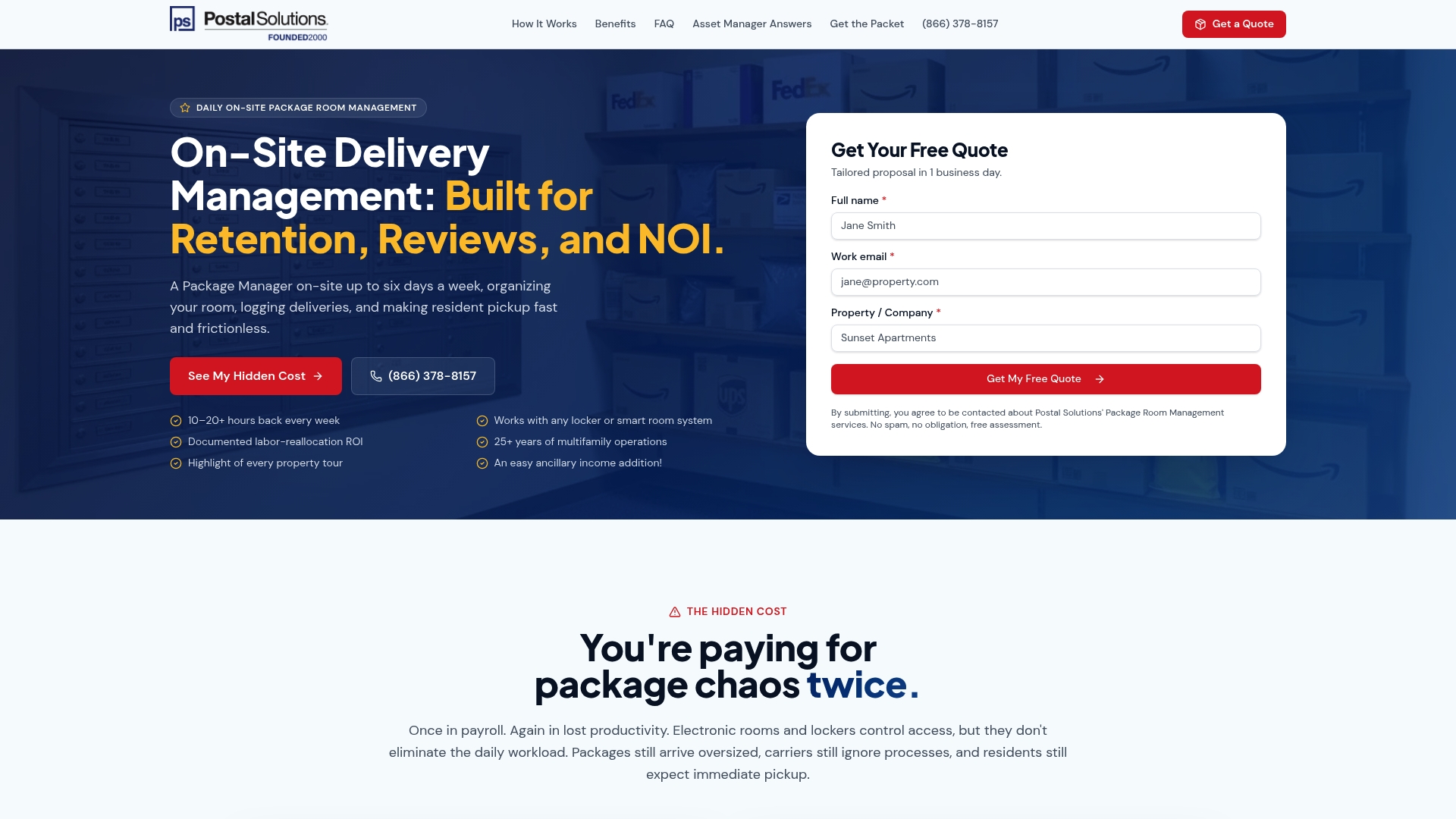
A dedicated on-site Package Manager works your community up to six days a week, receiving, sorting, securing, and organizing every delivery. Residents get 24/7 access through your existing package room or locker system. Your leasing team gets their time back. The service works for any property with an electronic package locker or package room already in place, and many communities structure it as a paid amenity that offsets the cost of management. Postal Solutions serves communities across the country, including student housing in Ann Arbor, Athens, and Auburn. If your market is not listed, check the full locations directory to find coverage near you.
FAQ
What is the biggest driver of turnover in student housing?
Operational friction is the primary driver of turnover in student housing. Slow maintenance responses, poor communication, and disorganized common areas push residents out faster than building age or competing new construction.
How should student housing administrators handle package management?
The most effective approach is a dedicated on-site package management system with daily staffing, automated resident notifications, and 24/7 access. This removes the package burden from leasing staff and turns the package room into a visible, functional amenity.
What communication channels work best for student renters?
Student renters prefer text and app-based communication for routine updates but expect direct human contact for lease and rent discussions. Administrators should automate routine notifications and reserve personal outreach for high-stakes conversations.
What is vendor drift and how do you prevent it?
Vendor drift occurs when cleaning and maintenance vendors during turnover seasons have misaligned start dates, which increases labor costs and supervision demands. Preventing it requires locking in exact vendor schedules and room assignments at least 30 days before the turnover window opens.
What occupancy and rent benchmarks should student housing operators track?
For the 2025–2026 academic year, the national benchmark is 95.1% occupancy with an average rent of $933 per bed. Operators who fall below these benchmarks should audit their operational friction points before adjusting pricing.
Recommended
Ready when you are
Fix your package room — start with a free proposal
Daily on-site Package Manager, resident text & email pings*, and a tour-ready amenity. Tell us your unit count and we'll send a right-sized proposal — usually within one business day.
- ✓ 16–30 hours back every week
- ✓ Works with any locker system
- ✓ Faster, friction-free resident pickup
- ✓ An easy ancillary income addition