
July 26, 2026
Peak Season Preparation for Apartment Package Management
Prepare your apartment package management for peak season preparation and boost resident satisfaction. Find out how now!
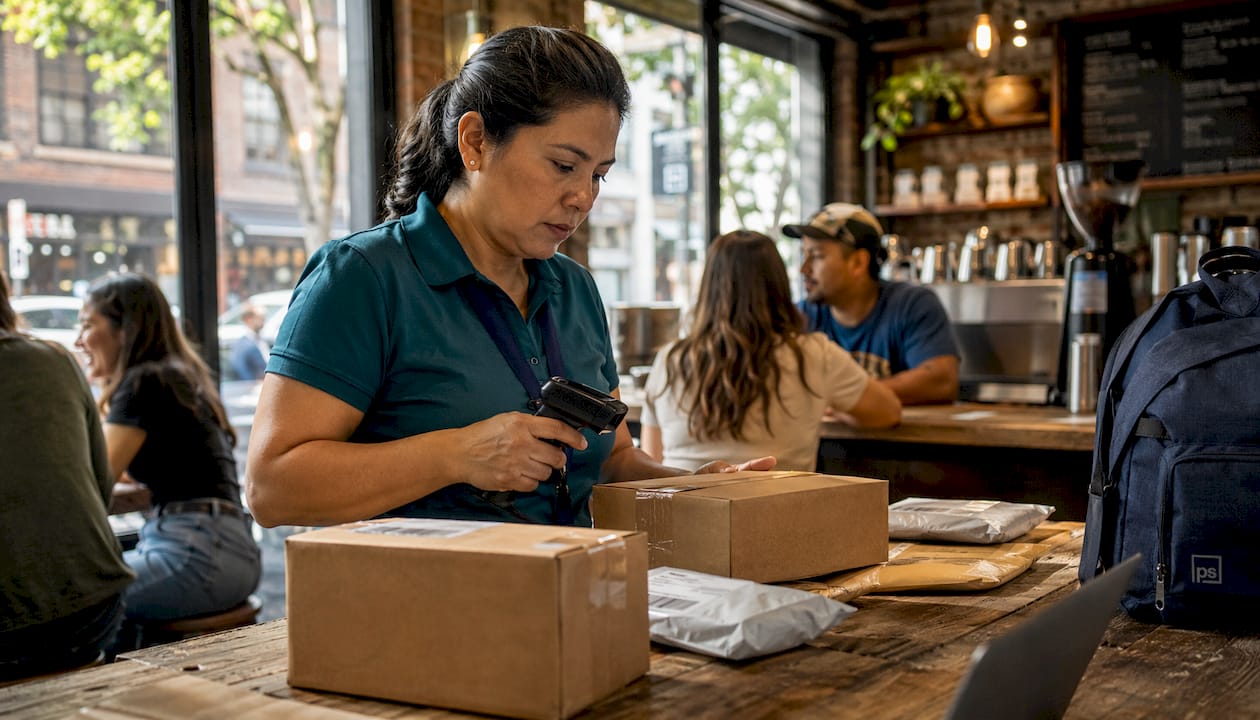
Why peak season preparation defines your package operation
Peak season preparation in multifamily housing is the process of getting your package room, your staff, and your resident communication ready before delivery volume spikes, not after it already has. And the window for “peak season” has stretched well beyond the six weeks between Thanksgiving and Christmas.
In student housing, elevated delivery activity begins in August and stays strong through October, driven by move-ins, semester starts, and back-to-school spending. Conventional apartment communities face their own surges around Black Friday, Cyber Monday, and Amazon’s Prime Big Deal Days. The result is a delivery calendar with multiple peaks, not one.
The stakes are real. 95% of apartment residents consider secure package retrieval important, and effective package management can boost lease renewals by up to 40%. That is not a minor amenity. It is a retention lever.
Critical preparation components include:
- Staffing: Temporary help, defined roles, and trained communication scripts
- Space optimization: Overflow zones, secondary staging areas, and exterior lockers
- Resident communication: Timed notifications and clear expectation-setting
- Technology: Package tracking software and smart locker integration
- Carrier coordination: Proactive outreach to FedEx, UPS, USPS, and Amazon route managers
Table of Contents
- 10 strategies to get your package room ready for peak seasons
- How a well-run package room becomes a leasing advantage
- Operational best practices that hold up year-round
- What effective peak season prep actually looks like
- Key Takeaways
- FAQ
10 strategies to get your package room ready for peak seasons
1. Start your planning 6–8 weeks out
The single most effective thing you can do is begin before the surge. A tabletop exercise conducted 6–8 weeks before peak periods forces your team to define who owns each step: intake, logging, notification, overflow, and resident pickup. Running through the scenario on paper surfaces gaps that only show up as chaos on the actual day.
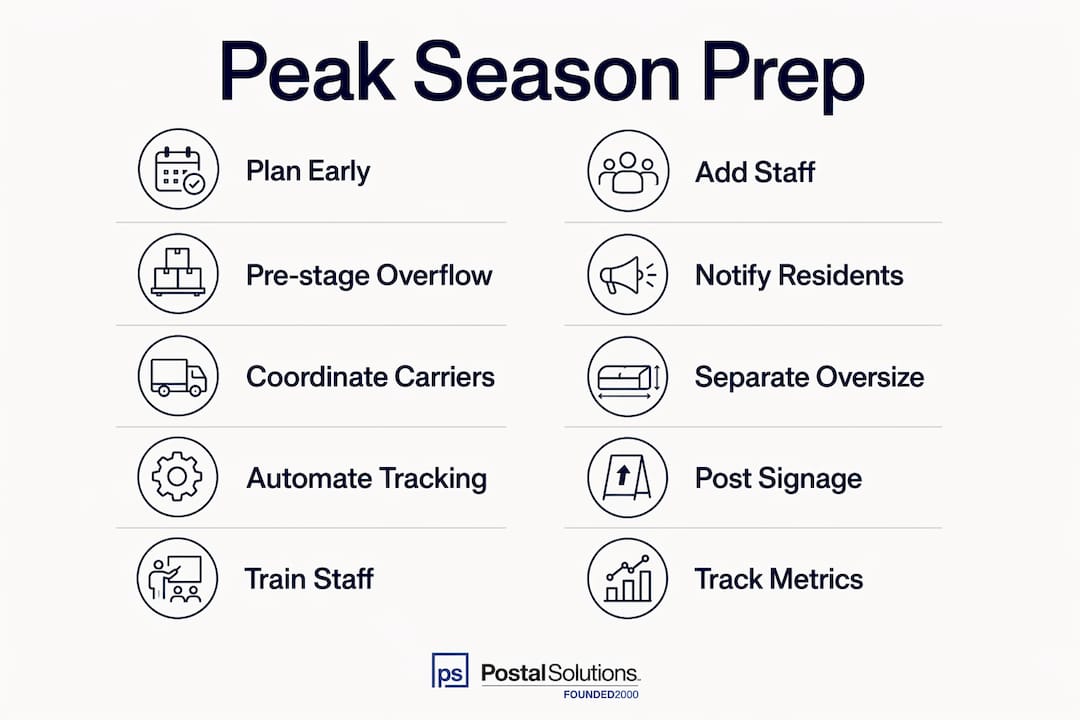
2. Pre-stage overflow capacity
Your standard package room was built for normal volume. During a move-in surge or holiday peak, daily volume can climb significantly above baseline. Identify a secondary staging area at least 14 days before the surge: an unused storage room, a secure lobby corner, or a section of the leasing office. Set it up with temporary shelving or rolling carts before the first carrier arrives.

3. Coordinate with carriers at least two weeks in advance
Reach out to your FedEx, UPS, USPS, and Amazon route managers before the surge hits. Request morning-only delivery windows so your team can process packages in a single organized block rather than fielding drop-offs all day. Most route managers can accommodate short-term schedule adjustments with enough notice. This one step alone cuts the chaos that comes from packages arriving in unpredictable waves.
4. Add temporary staffing for the surge window
Move-in day and peak shopping weeks create concentrated package bursts that hit all at once, not gradually. Plan supplemental staff coverage for the full 72-hour window after your first move-in date or the first major retail event. Temporary help does not need deep training, but they do need a clear script: how to accept a package, where it goes, and how to trigger a resident notification.
Pro Tip: Write a one-page intake checklist for temporary staff. When someone new walks in on a Monday morning during peak week, a laminated checklist on the package room wall removes every question about what to do next.
5. Build a notification cadence that moves packages out
Packages sitting in your room are the problem. Timely resident notifications with immediate, 48-hour, and 96-hour nudges keep packages moving and reduce lobby congestion. Automate this wherever possible. When residents know a package is waiting and get a follow-up reminder, pickup rates climb and your overflow problem shrinks on its own.
6. Designate a separate zone for oversized items
Furniture, mattresses, and appliances need their own staging area. During student move-ins especially, oversized deliveries arrive in volume and will block your package room entrance if you do not plan for them. Brief couriers on where the oversized zone is before move-in week begins. A designated spot keeps the main room functional and prevents the kind of corridor blockage that draws resident complaints.
7. Use technology to automate tracking and security
Package tracking software and smart lockers reduce the manual workload on your team while improving security and resident convenience. Automated notifications eliminate the need for staff to manually contact residents. Chain-of-custody logging answers “where is my package” questions in seconds rather than triggering a search. For properties with existing locker hardware, integrating tracking software is often the fastest upgrade available. Pair that with commercial security cameras to close the accountability loop on high-value deliveries.
8. Post clear signage for staff, residents, and carriers
Clear signage and consistent communication cut the volume of “where is my package” calls to your front desk. Carriers need to know where to drop packages. Residents need to know where to pick them up. Staff need to know where overflow goes. When everyone is working from the same visual cues, the number of questions drops and so does the front-desk bottleneck.
9. Train staff on peak-specific scenarios, not just normal operations
Standard package room training covers daily intake. Peak season training covers what to do when the room is full, when a carrier arrives with 40 boxes at once, and when a resident is upset about a delayed notification. Run through those scenarios before the surge. Staff who have mentally rehearsed the hard moments handle them faster and with less friction.
10. Track daily metrics so you can adapt in real time
Count parcels received, log dwell time, and note complaint volume every day during peak periods. These three numbers tell you whether your overflow plan is holding, whether your notification cadence is working, and whether you need to call in additional help. Without daily tracking, you are reacting to problems after they have already compounded.
How a well-run package room becomes a leasing advantage
Treating package management as a visible service amenity rather than a back-office chore changes what prospects see on a tour. A clean, organized package room with clear signage and a professional intake process signals that the property is run well. That impression carries weight when a prospect is deciding between two otherwise similar buildings.
The retention case is equally strong. When residents trust that their packages are secure and that pickup is easy, that confidence feeds into their overall satisfaction with the property. Fewer complaints about lost or delayed packages means fewer friction points between residents and management, which matters when renewal conversations come around. Given that secure package retrieval is a high priority for 95% of residents, a package room that consistently delivers on that expectation is doing real retention work.
Qualitative benefits stack up quickly:
- Reduced lobby congestion during peak periods
- Fewer front-desk interruptions from package-related questions
- Improved staff morale when the package room is not a daily source of stress
- A leasing story that is easy to tell and easy to show
Operational best practices that hold up year-round
Peak season preparedness is not a once-a-year project. Student housing communities see year-round elevated delivery activity that makes continuous readiness the baseline, not the exception. Conventional apartment properties face their own recurring surges tied to retail events and move-in cycles.
The operational backbone that handles peaks well is the same one that handles normal volume efficiently: a defined intake workflow, consistent logging, automated notifications, and a clear overflow protocol. The difference during peak periods is scale, not process.
“The majority of these move-ins happen in a very short window of time. Trying to help students find their way and handle the flood of deliveries can be overwhelming, and the property may not even have sufficient space to store all the packages.” — National Apartment Association
Specialized handling deserves its own protocol. Refrigerated deliveries, high-value items, and oversized packages each require a defined step in your workflow before peak season begins. If your staff discovers the refrigerated delivery protocol on the day a meal-kit subscription arrives, you have already lost time.
Pro Tip: Audit your package room workflow in September and again in late October. Those two checkpoints catch gaps before the two biggest surge windows: student move-in season and the retail holiday peak.
For student housing communities managing sustained delivery volumes, the key is building a package operation that does not depend on heroic staff effort during surge weeks. Consistent process, clear roles, and the right technology make the difference between a team that absorbs the peak and one that gets buried by it.
What effective peak season prep actually looks like
Getting your package operation ready for peak periods comes down to a short list of decisions made before the volume arrives:
- Plan 6–8 weeks out with a tabletop exercise that assigns clear ownership
- Pre-stage overflow capacity and brief couriers on where it is
- Coordinate with FedEx, UPS, USPS, and Amazon route managers two weeks in advance
- Automate resident notifications with immediate, 48-hour, and 96-hour follow-ups
- Add temporary staffing for the 72-hour surge window after move-in or major retail events
- Track daily parcel count, dwell time, and complaint volume to catch problems early
- Treat the package room as a visible amenity, not a storage closet
Postal Solutions has spent 25 years refining exactly this kind of operation. A dedicated on-site Package Manager works your community up to six days a week, handling intake, sorting, logging, notifications, and overflow, so your leasing team stays focused on leasing. The package room becomes something you can show on a tour rather than something you apologize for.
If your current setup is not ready for the next surge, on-site package room management from Postal Solutions is worth a close look. Your leasing team will notice the difference within the first week.
Key Takeaways
Effective peak season preparation in multifamily package management requires early planning, overflow capacity, carrier coordination, and automated resident notifications working together before volume spikes.
| Point | Details |
|---|---|
| Start 6–8 weeks early | Run a tabletop exercise to assign ownership of every step before the surge arrives. |
| Pre-stage overflow space | Identify a secondary staging area at least 14 days before move-in or peak retail events. |
| Automate notifications | Use immediate, 48-hour, and 96-hour nudges to keep packages moving and reduce lobby congestion. |
| Track daily metrics | Monitor parcel count, dwell time, and complaints every day during peak periods to catch problems early. |
FAQ
When should peak season preparation begin for apartment communities?
Start at least 6–8 weeks before your anticipated surge. That window gives you time to run a tabletop exercise, coordinate with carriers, pre-stage overflow capacity, and brief temporary staff before volume arrives.
How much does package volume increase during peak periods?
Package volume in apartment communities rises significantly during peak periods, often more than doubling compared to normal conditions.
Does peak season only apply to the winter holidays?
No. Student housing sees elevated delivery volume beginning in August, with October ranking as the second-busiest month. Retail events like Black Friday, Cyber Monday, and Prime Big Deal Days create additional peaks throughout the year.
How do resident notifications reduce package room congestion?
A structured notification cadence, immediate alert plus 48-hour and 96-hour follow-ups, prompts faster pickup and keeps packages from sitting in the room. Faster pickup means more available space during the next delivery wave.
Can a package room become a leasing amenity rather than a liability?
Yes. A professionally managed, well-organized package room signals operational quality to prospects on tours and builds resident trust that drives renewals. Properties where package management functions as an amenity see measurable improvements in both lobby experience and resident satisfaction.
Recommended
Ready when you are
Fix your package room — start with a free proposal
Daily on-site Package Manager, resident text & email pings*, and a tour-ready amenity. Tell us your unit count and we'll send a right-sized proposal — usually within one business day.
- ✓ 16–30 hours back every week
- ✓ Works with any locker system
- ✓ Faster, friction-free resident pickup
- ✓ An easy ancillary income addition