
July 23, 2026
When Staff Are Overwhelmed by Package Deliveries
Discover how to manage staff overwhelmed by package deliveries. Learn strategies to improve operations and boost team morale effectively.

Why package delivery overload is breaking your operation
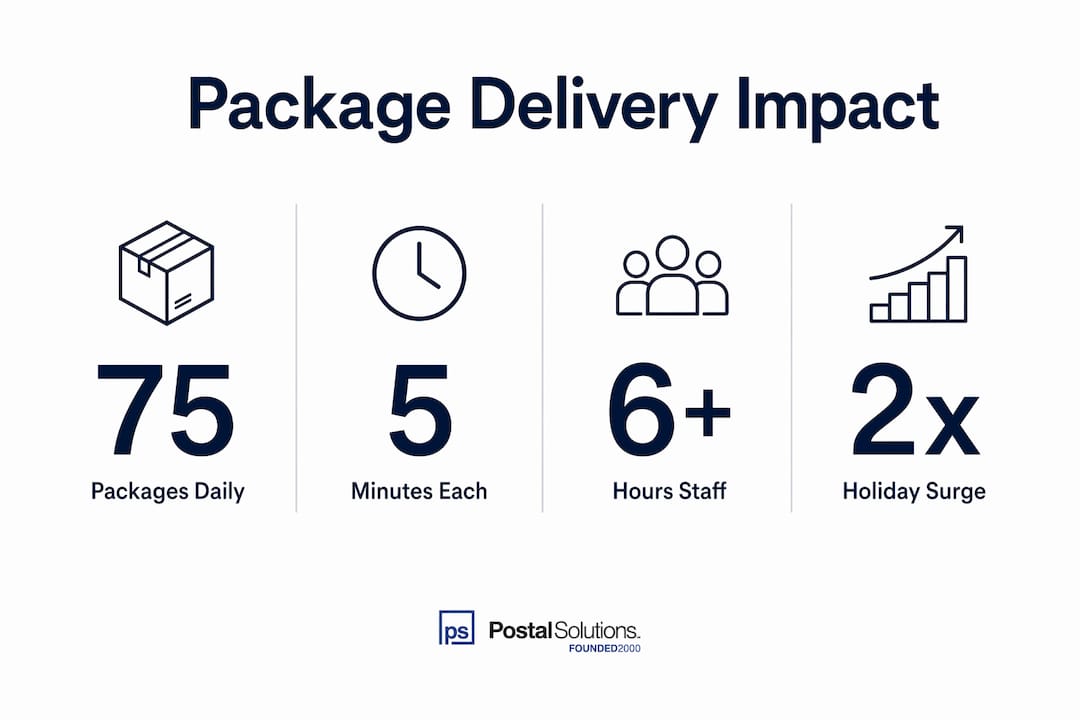
At a typical 370-unit apartment community, 75 packages arrive daily. At five minutes per package, this consumes more than six hours of staff time daily. Not by leasing. Not by maintenance. By boxes.
The core problem isn’t volume alone. It’s that most properties were never designed, staffed, or budgeted to handle this load. When staff overwhelmed by package deliveries are also expected to run tours, answer phones, and process renewals, something breaks. Usually morale first, then operations.
Key causes and immediate steps to address them:
- Volume growth: E-commerce has permanently raised baseline delivery counts, with holiday surges capable of doubling daily totals
- Manual handling: Four to five touches per package are required without a self-service system, from receipt to resident pickup
- Role blending: Leasing and maintenance staff absorbing mailroom duties creates constant workflow interruptions
- Carrier non-compliance: Drivers bypassing intake protocols break notification chains and generate resident complaints
- Process gaps: Installing hardware without managing the workflow around it shifts the burden without removing it
The fix requires three things working together: process redesign, the right technology, and clear role separation.
How package overload actually damages your staff and property

The labor math is stark. Handling 75 packages a day at five minutes each consumes over six hours of your team’s working day. For a small office team, that can be a significant portion of one employee’s entire shift, lost before a single lease is touched.
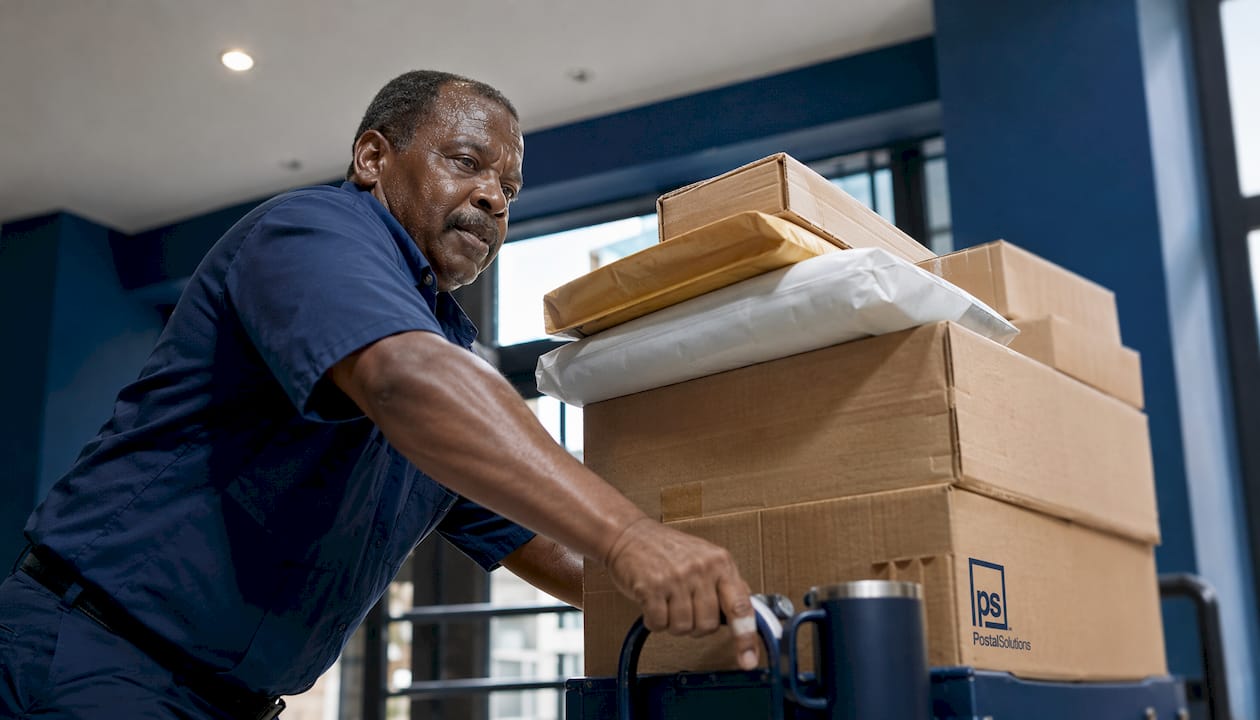
Staff delivery stress compounds quickly. Residents call repeatedly to check on packages. Leasing associates field complaints about missing items. When packages go missing or sit unclaimed, staff absorb the blame. Over time, this erodes job satisfaction and drives turnover, which costs far more than the labor hours lost to sorting boxes.
The operational impact extends beyond the mailroom. Prospect calls go unanswered. Lease renewal conversations get interrupted. Maintenance requests pile up. These aren’t abstract opportunity costs; they’re the daily reality at properties still handling packages manually in 2026.
Seasonal surges during the holidays or student move-in weeks can double daily volume, overwhelming even properties that manage adequately the rest of the year. Overflow packages end up in offices, hallways, and closets, creating security and liability exposure on top of the operational strain.
Comparing major US shipping providers for property delivery needs
Property managers dealing with high package volumes often work with multiple carriers and shipping providers. Understanding what each offers helps you set expectations, negotiate compliance, and route outbound shipments efficiently.
| Provider | Services Offered | Specialization | Best For | Rating |
|---|---|---|---|---|
| FedEx Ship Center | Package shipping, drop-off, label creation, customer support | Local shipping and global network access | Properties needing reliable local shipping and drop-off | 3.1★ (859 reviews) |
| XPO | LTL freight shipping, tracking, instant quotes, shipment management, invoicing | Less-than-truckload freight, nationwide coverage | Properties requiring large-scale freight shipping | 4.6★ (467 reviews) |
| The UPS Store | Package shipping, certified packing, printing, shredding, mailbox services | Certified packing for fragile items, Pack & Ship Guarantee | Properties needing certified packing and small package shipping | 2.6★ (130 reviews) |
FedEx Ship Center covers the everyday inbound and outbound shipping needs most properties encounter, with drop-off access and label creation built into its local retail footprint. For properties shipping large or freight-class items, XPO’s LTL network and shipment management tools handle scale that parcel carriers can’t. The UPS Store fills a specific gap: when residents or staff need to ship fragile or high-value items with a documented Pack & Ship Guarantee, it’s the only option here with certified packing expertise.
None of these providers solve the inbound management problem at your property. They handle the carrier side. The operational burden on your staff still requires a separate solution.
Practical strategies to reduce staff overwhelm from deliveries
Package management systems fail most often when operators treat hardware installation as the finish line. The locker goes in, the staff burden stays. Durable relief requires restructuring the workflow, not just adding equipment.
- Separate mailroom duties from leasing roles. Leasing staff handling packages is a reactive, expensive workaround. Dedicated package management, whether in-house or outsourced, removes the conflict entirely
- Enforce carrier compliance actively. Carrier non-compliance is the top frustration cited by operators and the most common reason package systems break down. Require vendors to have tools for driver enforcement and intake logging
- Automate resident notifications. Text and email alerts triggered at intake eliminate the “where’s my package” calls that interrupt staff throughout the day
- Build surge capacity into your plan. Overflow lockers, repurposed amenity space, or flexible open-shelf systems handle holiday and move-in spikes without requiring emergency staffing
- Use smart package room technology with computer vision and optical recognition to automate intake tracking and enable resident self-pickup, reducing staff involvement to near zero for standard deliveries
Pro Tip: Audit carrier compliance monthly, not just when something goes wrong. Drivers change routes frequently, and a new driver unfamiliar with your intake process can silently break your notification chain for weeks before anyone connects the resident complaints to the root cause.
Improving property management workflows across all operational areas, not just packages, compounds the time savings and reduces overall staff overwhelm.
Building a package acceptance policy that actually works
A written policy does two things: it sets expectations for carriers, and it gives your staff a defensible process when residents push back. Without one, every edge case becomes a judgment call that costs time and creates inconsistency.
A functional policy covers at minimum: which carriers may deliver and to what location, what happens when the package room or lockers are full, how oversized and refrigerated items are handled, and the timeline for resident notification. Post the policy visibly in the package area and share it with every carrier that delivers to your property regularly.
Resident notification standards belong in the policy too. Specify the method (text, email, or both), the trigger (intake scan, not staff availability), and the pickup window before a package is flagged for follow-up. Residents who know what to expect generate fewer calls.
What to look for in a package management service provider
The right provider does more than accept packages. Look for these criteria before signing a contract:
- Carrier compliance tools: Can the provider enforce intake protocols with drivers, or does compliance depend entirely on driver goodwill?
- Chain-of-custody logging: Every package should be logged at intake and tracked through to resident pickup, with a timestamped record
- Resident notification integration: Automated alerts at intake, not manual staff-triggered messages
- Surge handling: How does the provider manage holiday or move-in volume spikes without defaulting back to your staff?
- Role clarity: Is package management genuinely separated from your leasing team’s responsibilities, or does the provider still require staff involvement for exceptions?
Operators consistently prefer solutions that restructure the intake workflow over those that simply add locker capacity. Hardware alone doesn’t fix a compliance or staffing problem.
What successful package management looks like in practice
At a very large apartment community, residents once had long wait times to retrieve packages while a dozen staff members managed daily deliveries. After deploying an AI-powered smart package room system, wait times dropped to seconds and the dedicated package staff count fell from 12 to two.
That’s an extreme example, but the pattern holds at smaller properties. Communities that separate package handling from leasing staff functions, enforce carrier compliance, and implement self-service pickup consistently report recovered staff hours, fewer resident complaints, and lower turnover costs. The package security improvements that come with a properly managed system also reduce the liability exposure that comes with packages sitting unsecured in hallways.
Postal Solutions handles what your leasing team shouldn’t have to
Your leasing team is good at leasing. Package sorting isn’t in that job description, and every hour spent on it is an hour not spent on tours, renewals, or resident relationships.
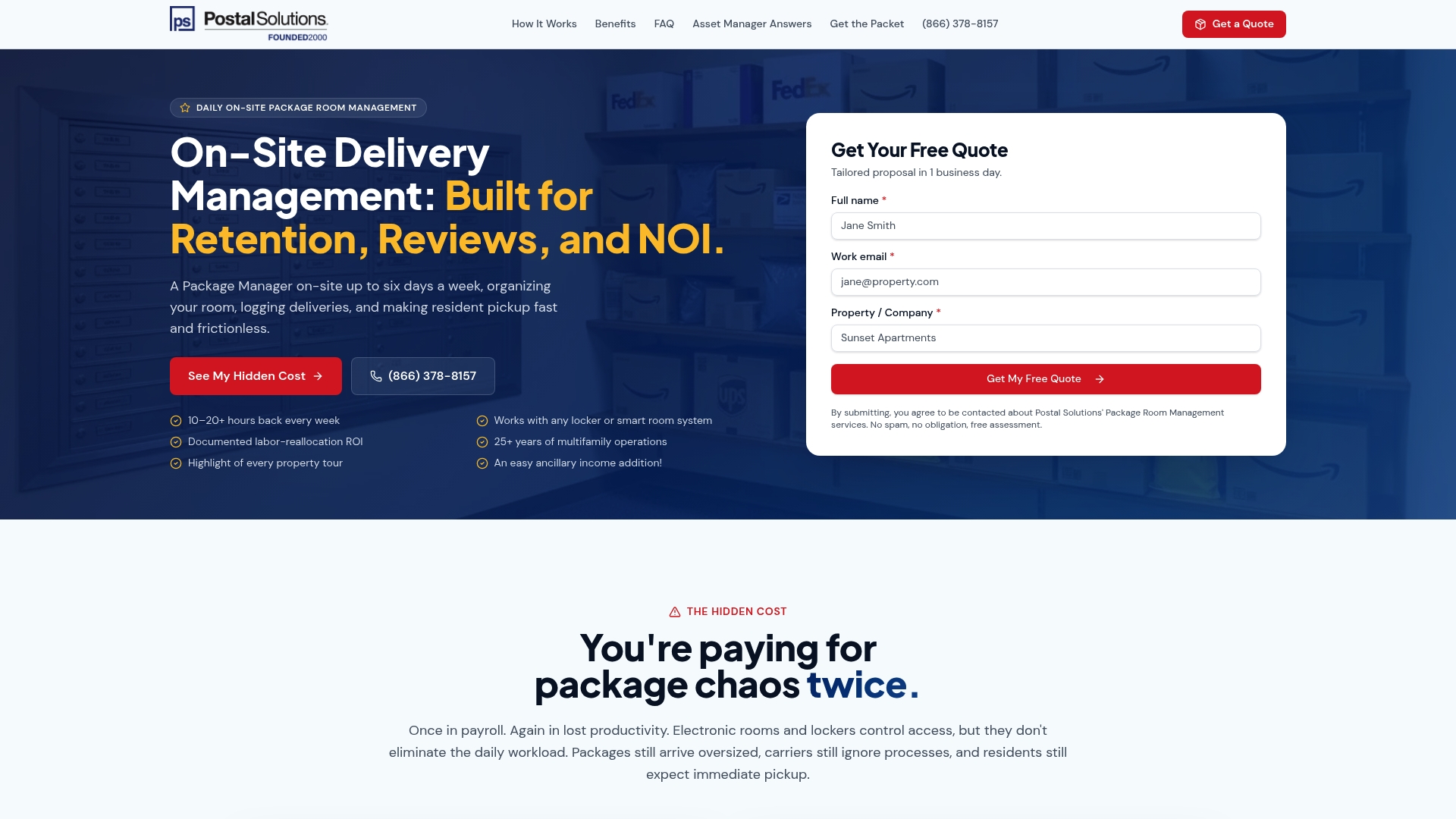
Postal Solutions provides On-Site Package Room Management for apartment and student housing communities: a dedicated Package Manager on-site up to six days a week, handling receipt, sorting, chain-of-custody logging, resident notifications, and pickup coordination through the package room or locker system you already have. Your staff gets hours back every week, and your package room becomes an amenity worth showing on tours rather than a problem to apologize for. Many communities structure the service as a paid resident amenity, turning a budget drain into a partial revenue offset. With 25 years in multifamily package operations, Postal Solutions has built the process so you don’t have to.
FAQ
What is the 7-hour rule for USPS?
The “7-hour rule” is not an official USPS policy or published standard. If you’ve encountered this term in a specific operational context, check directly with your USPS business mail entry unit for clarification.
Why is USPS slow right now in 2026?
USPS has faced ongoing delivery delays driven by staffing shortages, network restructuring under its Delivering for America plan, and sustained high parcel volumes from e-commerce growth. Service standard changes have extended delivery windows for some first-class and ground mail categories.
Which carrier loses the most packages?
No single carrier consistently tops loss rates across all markets, and published data varies by region and package type. Property managers report that carrier non-compliance at intake, not carrier identity, is the most common cause of lost or misrouted packages at multifamily properties.
Is USPS having trouble delivering packages?
Yes. USPS has publicly acknowledged delivery performance challenges tied to its network consolidation and workforce transitions. For multifamily properties, the practical effect is more missed scans, delayed notifications, and driver non-compliance with intake protocols.
Key Takeaways
Manual package handling without a dedicated system can consume more than six hours of staff time daily, making delivery overload one of the most expensive untracked costs in multifamily operations.
| Point | Details |
|---|---|
| Labor cost of manual handling | At 75 packages daily and five minutes each, package management consumes over six hours of staff time per day. |
| Carrier compliance is the root cause | Operators cite carrier non-compliance as their top frustration, ahead of storage capacity. |
| Hardware alone isn’t enough | Installing lockers without managing the intake workflow shifts the burden without removing it. |
| Policy and role separation matter | A written acceptance policy and dedicated package roles reduce staff interruptions and resident complaints. |
| Postal Solutions for on-site relief | Postal Solutions’ On-Site Package Room Management removes leasing staff from the package equation entirely. |
Recommended
Ready when you are
Fix your package room — start with a free proposal
Daily on-site Package Manager, resident text & email pings*, and a tour-ready amenity. Tell us your unit count and we'll send a right-sized proposal — usually within one business day.
- ✓ 16–30 hours back every week
- ✓ Works with any locker system
- ✓ Faster, friction-free resident pickup
- ✓ An easy ancillary income addition