
July 21, 2026
Improve Resident Satisfaction with Package Delivery in 2026
Learn how to improve resident satisfaction with package delivery through effective strategies like smart lockers and clear communication.
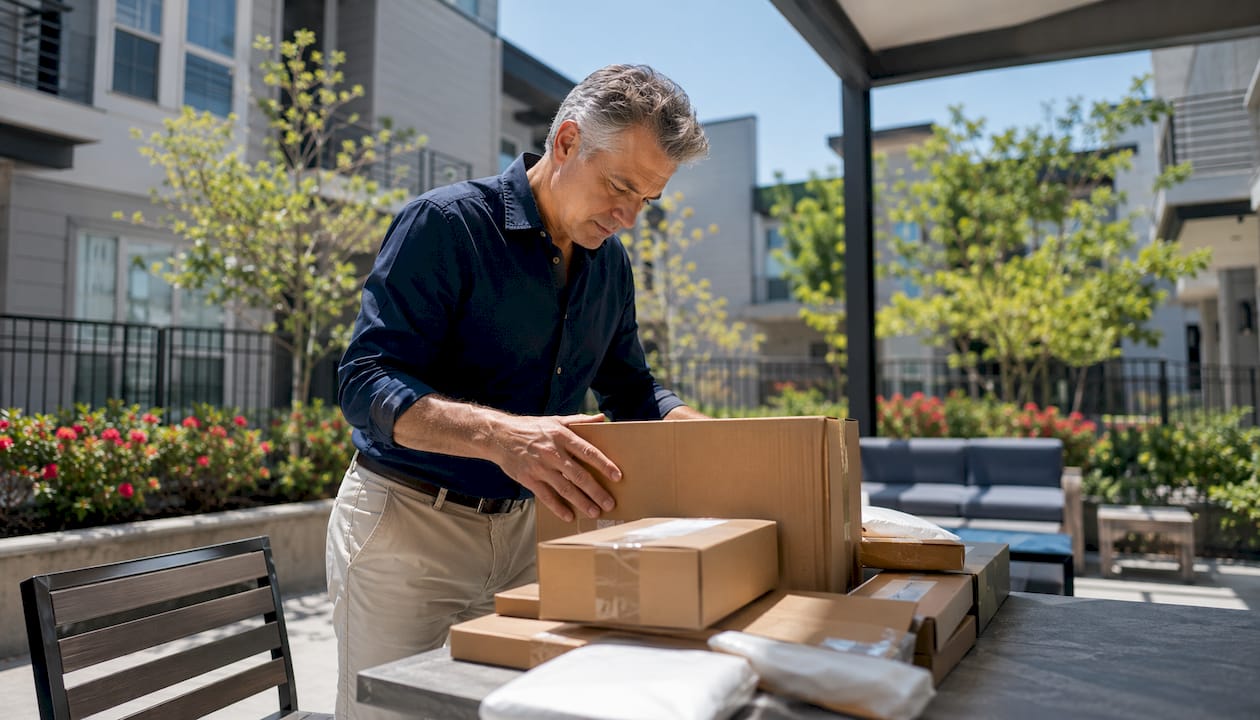
Secure handling, clear communication, and consistent operations are the three things that actually move the needle on resident satisfaction with package delivery. Properties that get all three right see fewer complaints, stronger renewal rates, and a package room that leasing teams can point to on tours. The strategies below are practical, proven, and built for multifamily operators managing real volume in 2026.
- Implement access-controlled package rooms or smart lockers with 24/7 resident availability
- Send automated arrival notifications, then follow-up pickup reminders within a few days
- Train staff to handle packages, resident inquiries, and escalations with a defined protocol
- Establish written carrier SOPs with QR or PIN access codes to cut compliance failures
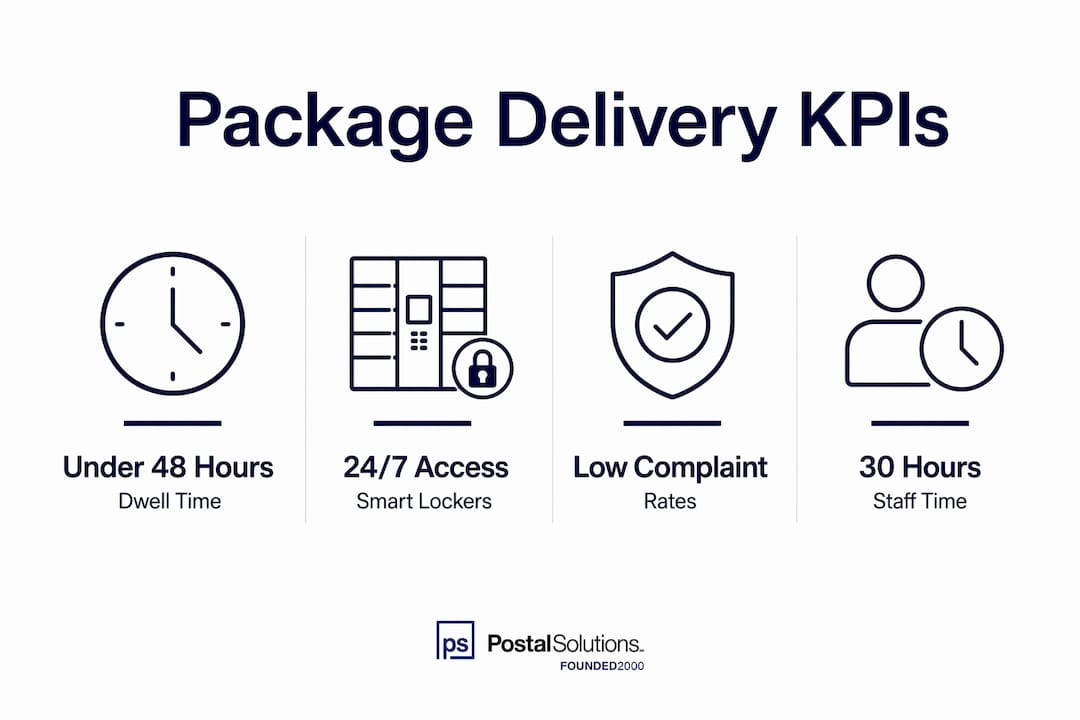
- Track dwell time, complaints per 100 packages, and staff hours weekly
- Create dedicated zones for oversized, refrigerated, and overflow packages
- Consider professional on-site package room management to free your leasing team entirely
How do competitive amenities and human oversight improve package handling?
Package security ranks second among the amenities residents value most, behind only fitness facilities. That ranking has real teeth: it directly influences renewal decisions, which means your package room is a retention tool whether you treat it that way or not.
Smart lockers like those offered by Luxer One accept 100% of packages and give residents 24/7 self-service access. Controlled-access package rooms add flexibility for oversized items and perishables. Many properties run a hybrid model, using lockers for the bulk of daily volume and a monitored room for overflow and odd-sized deliveries.
Technology alone does not close every gap. Human oversight during peak delivery windows, typically 3:00–7:00 PM, keeps the intake process moving and catches the situations no locker handles well. A staff member or dedicated package manager present during carrier rush hours prevents lobby clutter, catches misdeliveries before residents notice, and gives tours a clean first impression.
Pro Tip: Feature your package room on leasing tours. Walk prospects through the intake process, show them the access controls, and name the amenity explicitly. Properties that do this report it as one of the most memorable stops on the tour.
What communication practices reduce package-related complaints?
Timely notification is the single fastest way to cut “Where’s my package?” calls. Over 54% of resident package transactions happen via mobile during peak holiday season, which means residents are already checking their phones. An immediate arrival text or email meets them where they are.
The communication stack that works:
- Arrival alert: sent within minutes of package intake, with carrier and item description when possible
- 48-hour nudge: a polite reminder if the package has not been picked up
- 96-hour follow-up: a firmer prompt noting that space is limited during peak periods
- Staff scripts: written responses for common escalations (“I never got a notification,” “My package shows delivered but isn’t here”)
- Signage: clear, pictorial instructions posted at the delivery entrance, front desk, and inside the package area
Courteous, knowledgeable staff matter as much as the technology. A resident who gets a fast, honest answer to a package question is far less likely to leave a negative review than one who gets a shrug. Train staff to own the resolution, not just log the complaint.
Smart operational practices that cut resident complaints
Carrier non-compliance is the most common cause of package system failures, cited by 70% of property managers as a top frustration. The fix is not more hardware. It is a written SOP posted where drivers enter, covering where to stage deliveries, how to log packages, where oversized items go, and where perishables belong. Issue QR or PIN codes to regular-route drivers so you have an access audit trail and they have a faster entry experience.
Daily package handling workflow:
- Carrier delivers and scans package at the designated intake zone
- Staff or system logs package with resident unit, carrier, and timestamp
- Automated notification sent to resident immediately
- Package moved to assigned locker, shelf, or overflow area
- Oversized or refrigerated items routed to designated zones per written protocol
- Unclaimed packages flagged at 48 hours; follow-up sent at 96 hours
- Returns and unclaimed items processed per your written exception policy
Key performance indicators to track weekly:
| KPI | Target |
|---|---|
| Package dwell time | Under 48 hours during peak periods |
| Complaints per 100 packages | Trending toward zero month over month |
| Staff hours on package tasks | Tracked and compared against baseline |
| Carrier compliance incidents | Logged per carrier, reviewed monthly |
| Overflow events | Flagged before they become lobby clutter |
For surge periods like move-in weeks and the holiday window, convert a nearby utility room temporarily and publish the plan so no tour walks into a box-clogged lobby.
How do secure package lockers protect residents and build trust?
Properties with package theft prevention measures see higher resident renewal rates because residents connect physical security with the property’s overall reliability. When a package disappears, residents blame the building, regardless of who actually took it.
Security best practices for multifamily package areas:
- Access control: key fob, PIN, or mobile credential required to enter the package room or open a locker
- Camera coverage: at least one camera covering the delivery entrance and the package area interior
- Audit logs: every entry and exit timestamped and tied to a resident or carrier credential
- Incident documentation: a written record for every reported theft or misdelivery, with access log attached
- Carrier verification: drivers granted access only through a managed entry point, not a resident buzzing them in
A 2026 guide to preventing package theft in multifamily properties covers the full range of access control and documentation strategies in detail.
Why professional on-site package management is a 2026 competitive advantage
Manual package management consumes an average of 30 hours per week of leasing staff time. That is time not spent on tours, renewals, or resident relationships. At a national vacancy rate of 7.1% and a list-to-lease cycle stretching to 31 days, those hours have a direct dollar value.
Postal Solutions’ On-Site Package Room Management places a dedicated Package Manager at your property up to six days a week. That person handles intake, sorting, chain-of-custody logging, resident notifications, weekly audits, and overflow management. Your leasing team stops touching boxes entirely. The package room becomes a visible, professionally run amenity rather than a daily fire drill.
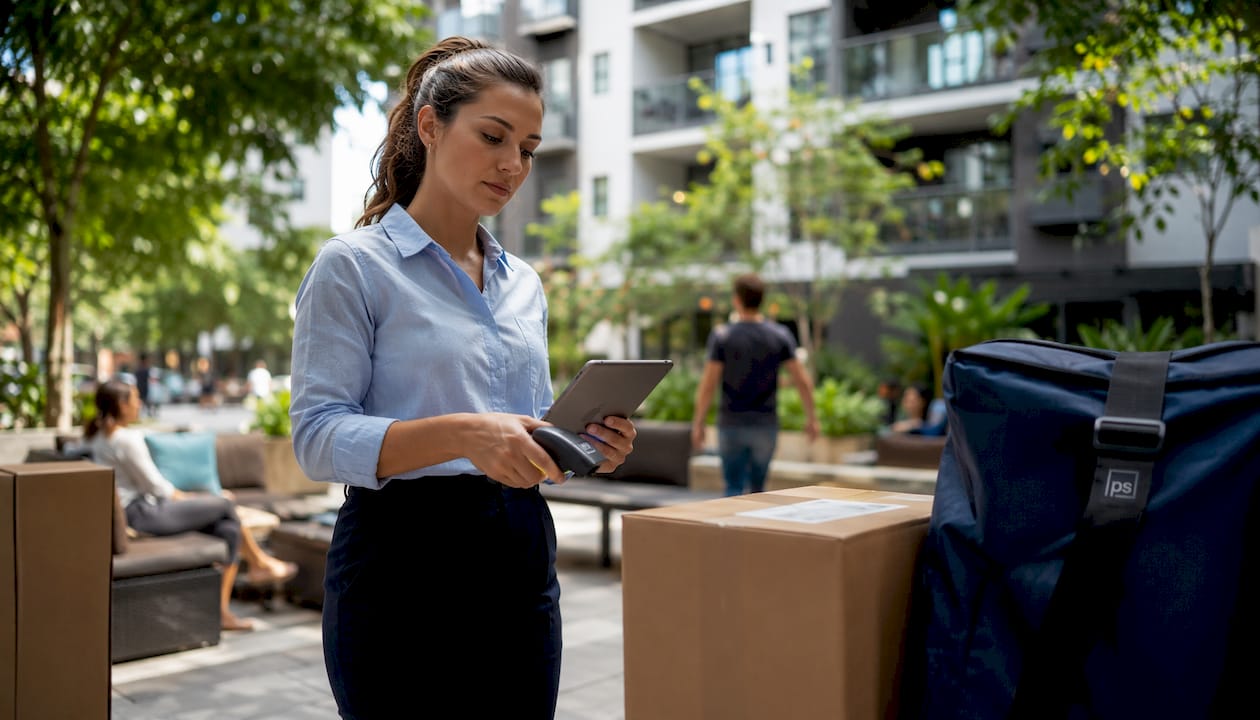
Properties that make this shift report cleaner lobbies, fewer desk interruptions, and a package operation they can actually show off on tours. The service can also be structured as a resident amenity fee, turning a cost line into a partial revenue offset.
Pro Tip: Ask your package management partner for a monthly one-page summary: parcel volume, dwell time, complaint count, and one action taken. Share it with your regional manager. In a soft market, that report quantifies the hours and headaches you have recovered.
How should you integrate package software with your resident portal?
Integration between your package management system and your resident portal, whether that is Yardi, Entrata, or another platform, reduces friction for both staff and residents. When the two systems share data, arrival notifications go out automatically, pickup confirmations update in real time, and your team is not manually reconciling two separate logs.
The practical checklist: confirm that your package system pushes notifications through the resident portal’s messaging layer, verify that access credentials sync without manual re-entry, and test the workflow end-to-end before go-live. For operators managing compliance across a portfolio, pairing package software integration with property management compliance tools keeps the operational picture consistent across assets.
Cost-benefit analysis of package delivery solutions
Three models dominate multifamily package delivery today, and each carries a different cost and operational profile.
Locker-only systems have a higher upfront hardware cost but low ongoing labor demand. They work well for mid-size communities with predictable package sizes and residents who value 24/7 self-service. The constraint is fixed compartment sizes, which create overflow problems during peak periods.
AI-powered smart package rooms replace fixed compartments with open shelving and computer vision tracking. At Stuyvesant Town, this approach reduced wait times from 30 minutes to seconds and cut package-dedicated staff from 12 to two. The tradeoff is greater dependence on driver adoption of the intake workflow.
Professional on-site management like Postal Solutions’ service carries a per-unit monthly fee but eliminates the hidden labor cost your leasing staff currently absorbs. For properties where staff time is the binding constraint, the math often favors outsourcing once you account for the 30 hours per week currently lost to package handling.
What feedback mechanisms actually improve package delivery over time?
Resident feedback on delivery services only improves operations when it is collected consistently and acted on visibly. One-off surveys after a complaint do not build the data pattern you need.
The most effective approach combines three channels: a short post-pickup survey triggered automatically after each retrieval, a monthly package-specific question in your standard resident satisfaction survey, and a direct escalation path for complaints that bypasses the front desk. That last one matters because residents who feel heard at the moment of frustration are far less likely to post a negative review.
Review your package KPIs alongside your feedback data monthly. When dwell time spikes and complaint volume rises in the same week, that correlation points to a specific operational gap, usually a carrier compliance failure or a staffing shortage during peak hours. Tracking both together gives you the context to fix the right thing.
Key Takeaways
Improving resident satisfaction with package delivery requires secure infrastructure, consistent communication, and professional operations working together as a single system.
| Point | Details |
|---|---|
| Security drives renewals | Package security ranks second among resident amenities, directly influencing renewal decisions. |
| Staff time is the hidden cost | Manual package handling consumes an average of 30 hours per week of leasing staff time. |
| Carrier compliance is the top failure point | Carrier non-compliance is the leading package frustration for most property managers. |
| Notifications cut dwell time | Automated alerts at arrival, 48 hours, and 96 hours keep space turning without staff chasing residents. |
| Professional management pays back | Outsourcing package operations frees leasing staff for tours, renewals, and resident relationships. |
Ready to get your leasing team out of the package business?
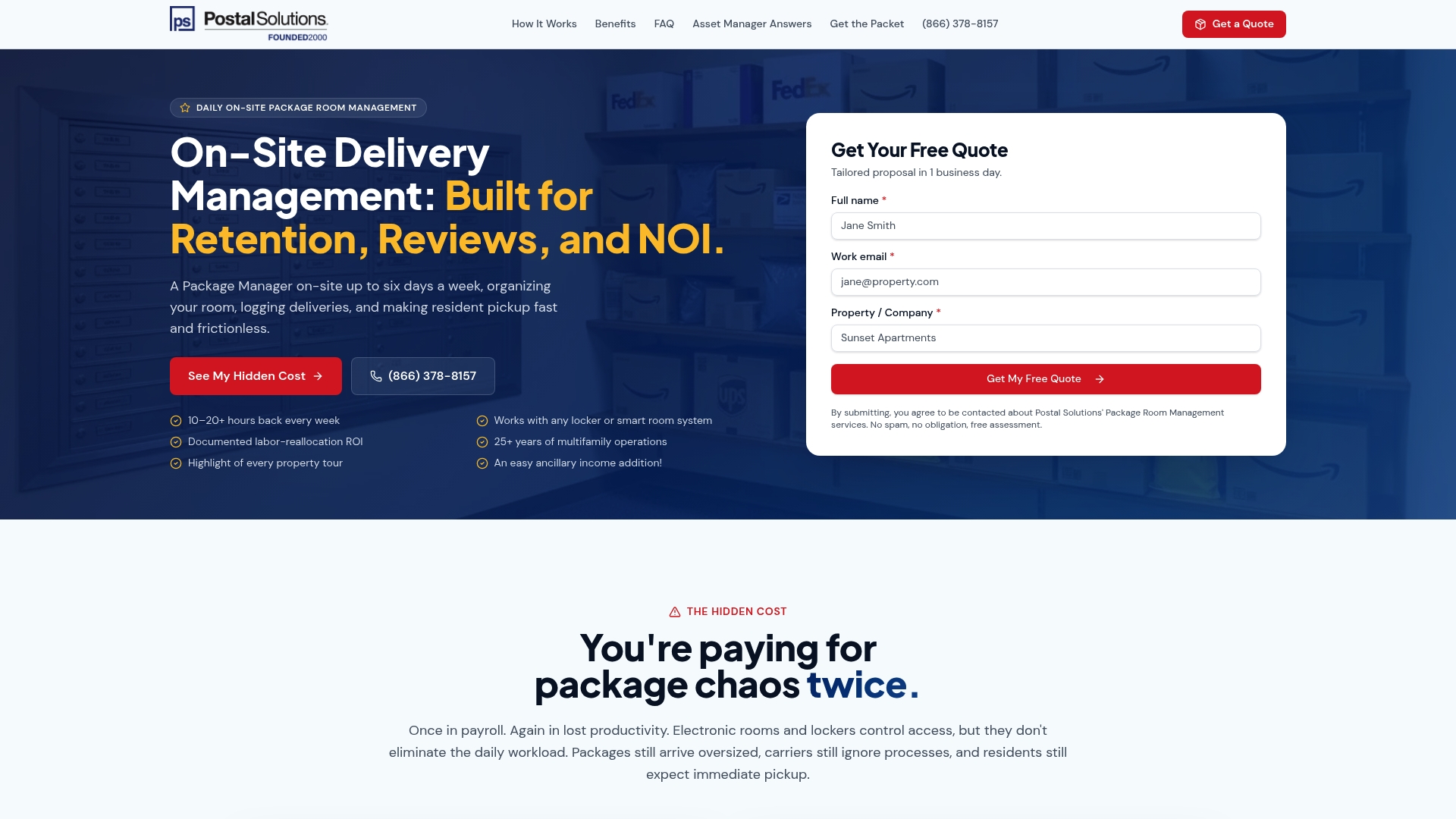
Postal Solutions’ On-Site Package Room Management handles every step of the package operation, from intake and sorting to resident notifications and weekly audits, so your team can focus on leasing and renewals. Properties across the country have used this service to recover staff hours, clean up their lobbies, and turn their package room into a genuine selling point.
Learn how it works and see whether On-Site Package Room Management fits your property.
FAQ
How do you improve resident satisfaction with package delivery?
Implement access-controlled storage, automate arrival and pickup notifications, establish written carrier SOPs, and track dwell time and complaints weekly. Properties that combine secure infrastructure with consistent communication see the fastest improvement in resident feedback.
How do you improve the delivery service at a multifamily property?
Post a pictorial SOP at the delivery entrance, issue QR or PIN codes to regular-route carriers, and designate separate zones for oversized and refrigerated items. Clear intake rules reduce carrier non-compliance, which is the leading cause of package system failures.
What is the most secure package delivery setup for apartments?
Access-controlled lockers or package rooms with camera coverage, timestamped entry logs, and carrier verification at the building entrance provide the strongest protection. Secure package storage combined with audit trails gives property managers documented proof of every delivery event.
How can resident satisfaction with package handling be measured?
Track three core KPIs: package dwell time, complaints per 100 packages, and staff hours spent on package tasks. Pair those metrics with a short post-pickup survey and a monthly package question in your standard resident satisfaction survey to catch trends before they show up in online reviews.
Recommended
Ready when you are
Fix your package room — start with a free proposal
Daily on-site Package Manager, resident text & email pings*, and a tour-ready amenity. Tell us your unit count and we'll send a right-sized proposal — usually within one business day.
- ✓ 16–30 hours back every week
- ✓ Works with any locker system
- ✓ Faster, friction-free resident pickup
- ✓ An easy ancillary income addition