
August 22, 2026
Cut Resident Pickup Wait Time With On-Site Package Management
Streamline package management to significantly reduce pickup wait time. Discover effective strategies for faster resident retrieval and improved service.
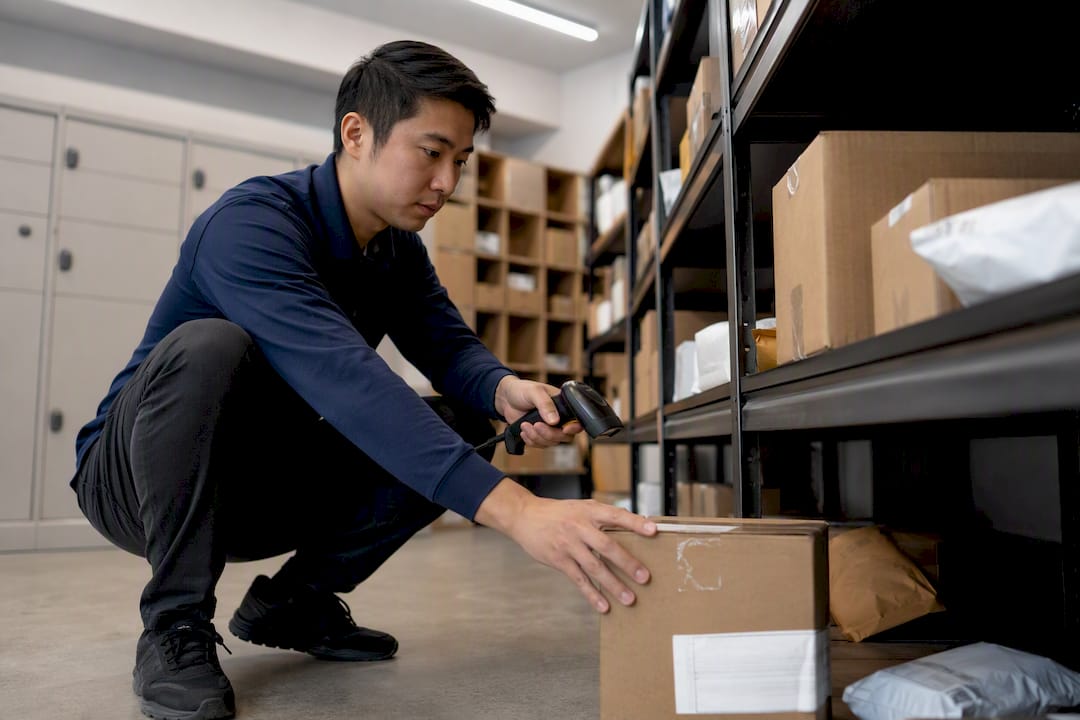
The fastest way to reduce pickup wait time is to take package handling off leasing staff entirely and run it as a dedicated on-site operation with real-time notifications and a fast retrieval flow. That single shift, backed by a Package Manager who owns intake, sorting, and pickup logistics, actually moves the needle more than any single piece of software.
Three moves work immediately:
- Route every delivery through one intake point with photo and timestamp logging, no exceptions.
- Notify residents the moment a package is scanned in, not at the end of the day.
- Build an express retrieval flow so residents who show up within a few hours of the alert don’t wait behind a backlog.
The math behind this matters. At an average of five minutes of staff time per package, a property handling 75 deliveries a day is burning more than six staff-hours daily just on package logistics, time that could go to leasing tours instead.
Key Takeaways
Removing package handling from leasing staff and running it as a dedicated on-site operation is the single fastest way to reduce resident pickup wait time.
| Point | Details |
|---|---|
| Notify instantly | Send a photo-backed alert the moment a package is scanned in to cut inquiry calls. |
| Separate express from standard | Group recent arrivals in an easy-reach zone so retrieval doesn’t require a full shelf search. |
| Staff the role, don’t split it | A dedicated Package Manager cuts staff minutes per package to under one, freeing hours for leasing. |
| Plan overflow before it happens | Set a firm rule and time limit for oversized or perishable deliveries so they never block standard pickup flow. |
| Bring in on-site management | Postal Solutions’ On-Site Package Room Management runs intake, sorting, and pickup up to six days a week within your existing package room or locker setup. |
Table of Contents
- Prioritized Tactics That Shorten Pickup Time This Week
- How Staffing and Locker Integration Remove Pickup Bottlenecks
- What to Measure Once You Start Fixing Pickup Time
- A 30/60/90-Day Rollout for Faster Pickup
- Twenty-Five Years of On-Site Package Data Behind This Playbook
- Handling Overflow and Oversized Deliveries Without Slowing Everyone Else Down
- Training Staff to Handle Packages Without Slowing Down Pickup
- Redesigning the Package Room to Fix the Real Bottlenecks
- Why Property Teams Underestimate How Fast This Fix Pays Off
- Let a Dedicated Package Manager Handle What’s Slowing You Down
- Sources
- FAQ
Prioritized Tactics That Shorten Pickup Time This Week
You don’t need a construction budget to fix most of this. You need discipline around five specific changes, and they work best in this order.
- Turn on instant arrival notifications with a photo and timestamp. Residents stop guessing whether their order arrived, and staff stop fielding “where’s my package” calls. A text or email that shows the box the moment it’s scanned in cuts inquiry volume almost immediately.
- Carve out an express pickup lane. Separate today’s arrivals from last week’s forgotten boxes. Label shelves by date range or by “picked up within 24 hours” versus general storage, so nobody is digging through a wall of boxes to find one unit’s delivery.
- Standardize intake labeling by building, floor, and unit number before anything goes on a shelf. This is the step most properties skip, and it’s the one that saves the most search time later. A consistent label format means any staff member, not just the person who checked it in, can find a package in seconds.
- Use mobile passcodes or QR codes for any locker system already installed. Physical keys and shared codes create bottlenecks at the exact moment residents are trying to grab a package on their way home. Locker vendors that support QR-based access, as vendor guidance on package solutions notes, consistently rank access speed as a top selection factor for a reason.
- Post clear pickup instructions at the door and inside the notification itself. Hours, ID requirements, and where oversized items go should not be a mystery residents have to solve on their first visit.
Pro Tip: Pre-sort deliveries into “express” and “standard” bins as they’re scanned in. Packages likely to be picked up same-day go in an easy-reach express zone; slower movers go to standard shelving. This alone can cut retrieval search time by more than half on busy delivery days.
None of these require new hardware. They require someone whose job is to do them consistently, which is where staffing model comes in.
How Staffing and Locker Integration Remove Pickup Bottlenecks
A dedicated on-site Package Manager changes the equation because one person, working the same shelves every day, develops the kind of location memory a rotating leasing team never will. Instead of three different staff members half-remembering where a resident’s box went, one person owns intake through pickup, which is exactly why removing package duty from leasing staff improves both morale and resident-facing performance.
Carrier workflow matters just as much as staffing. Set firm expectations with delivery drivers:
- One designated drop location, never a lobby floor or leasing office desk.
- Labels facing out and scannable on arrival, not buried under packing tape.
- A defined cutoff window for same-day intake logging.
- A documented process for oversized or refrigerated items that can’t go on standard shelving.
On the technology side, three integration points determine whether pickup actually gets faster: the notification system’s delivery speed, the locker access method (QR code or passcode beats shared physical keys every time), and any vendor API that lets your locker hardware talk to your notification platform directly. Smart lockers add another layer, giving residents secure 24/7 access while opening the door to ancillary revenue through late-pickup fees.
Chain-of-custody logging, scan in, scan out, timestamped, protects the property from liability disputes and speeds pickup by giving staff instant proof of what arrived when.
What to Measure Once You Start Fixing Pickup Time
Five numbers tell you almost everything: average pickup time per package, staff minutes spent per package, the gap between notification and actual pickup, how long the retrieval queue runs during peak hours, and your complaint rate.
Getting a baseline doesn’t require new software. Run a three-day spot sample where staff log timestamps by hand, or pull them straight from your notification platform and locker access logs if you already have one.
| Metric | Realistic Target After Fixes |
|---|---|
| Staff minutes per package | Under 1 minute with a dedicated Package Manager |
| Weekly staff hours on packages | Under 2 hours, down from 35+ in one documented case |
| Resident wait after notification | Minutes, significantly shorter than the extended waits reported before automation |
- Convert staff-hours saved into FTE equivalents. Dropping from 35 weekly hours to under 2 frees up nearly a full-time position’s worth of labor for leasing and renewals.
- Bring that FTE number to leadership instead of a vague “it’s better now.” Numbers get budget approved.
A 30/60/90-Day Rollout for Faster Pickup
You don’t need to overhaul everything on day one. Stagger it.
- Days 1 to 30: Turn on instant notifications, reorganize the pickup area into express and standard zones, post clear signage, and adjust staff schedules to cover peak delivery windows.
- Days 31 to 60: Assign or hire a dedicated Package Manager, connect your notification system to your locker or package-room hardware, and retrain carriers on your drop-location and labeling rules.
- Days 61 to 90: Audit your overflow and oversized-item rules, tighten KPI targets based on your first two months of data, and run a resident communication push reminding everyone how the new system works.
Assign a single owner per phase, leasing handles signage and communication, operations handles staffing and scheduling, and your locker vendor or Package Manager handles the technical integration. Minimal budget items: printed signage, a notification platform subscription if you don’t already have one, and staff time for retraining.
Twenty-Five Years of On-Site Package Data Behind This Playbook
Postal Solutions has managed on-site package operations at apartment and student housing communities for more than 25 years, which means the tactics above aren’t theoretical. They’re what happens when a dedicated Package Manager works a property up to six days a week instead of leasing staff squeezing package duty between tours.
Industry data backs the pattern:
- Staff time on packages can drop from over 35 hours weekly to under 2 hours per property after a managed system goes in.
- Automation and 24/7 access can cut resident wait from up to 30 minutes down to seconds.
- Removing package duty from leasing teams reduces complaint volume and frees staff for renewals.
Getting package handling off a leasing team’s plate isn’t just an efficiency play. It changes what staff are actually able to focus on during a resident’s day, and that shows up in renewal conversations.
Handling Overflow and Oversized Deliveries Without Slowing Everyone Else Down
Furniture deliveries, appliance boxes, and grocery totes are the packages that break a smooth pickup flow if you don’t plan for them separately. A standard-size locker or shelf can’t hold a mattress box, and trying to force it in creates a pileup that blocks access to everyone else’s smaller deliveries.
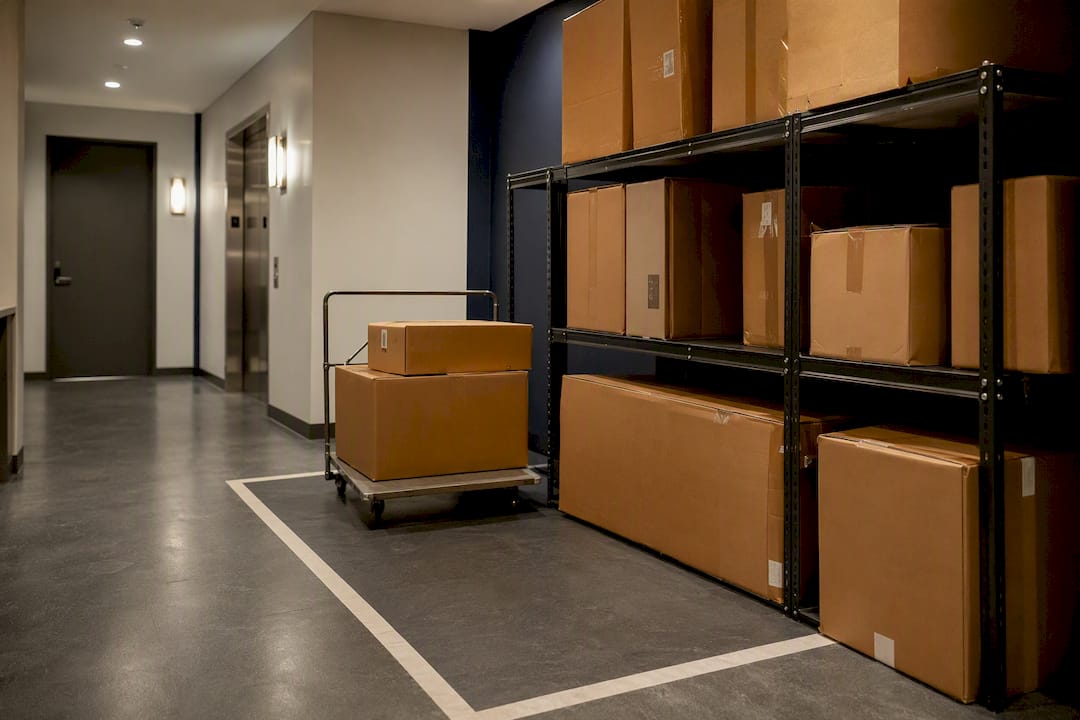
Set a firm rule: anything that won’t fit standard storage gets logged into a separate overflow area immediately, not shoved into a hallway or left at the leasing office door. Assign that overflow zone its own shelving or a marked floor section, away from the express pickup lane, so oversized items never bottleneck the fast-moving traffic of everyday deliveries.
Refrigerated or perishable deliveries need their own protocol too. Groceries and meal kits sitting in a warm package room for six hours defeat the purpose of ordering them. A dedicated Package Manager can flag these on intake and notify the resident with urgency language (“pickup recommended within 2 hours”) rather than a generic alert.
Cap how long oversized items sit before triggering a follow-up notice, seven days is a common threshold, and build a clear disposal or return policy for anything unclaimed past that window. Without a documented overflow process, oversized packages become the single biggest source of pickup delays and resident complaints, even when everything else in the system runs smoothly.
Training Staff to Handle Packages Without Slowing Down Pickup
The intake and labeling standards above only work if staff actually follow them the same way every time. That means training isn’t optional, it’s the mechanism that turns a good process into a consistent one.
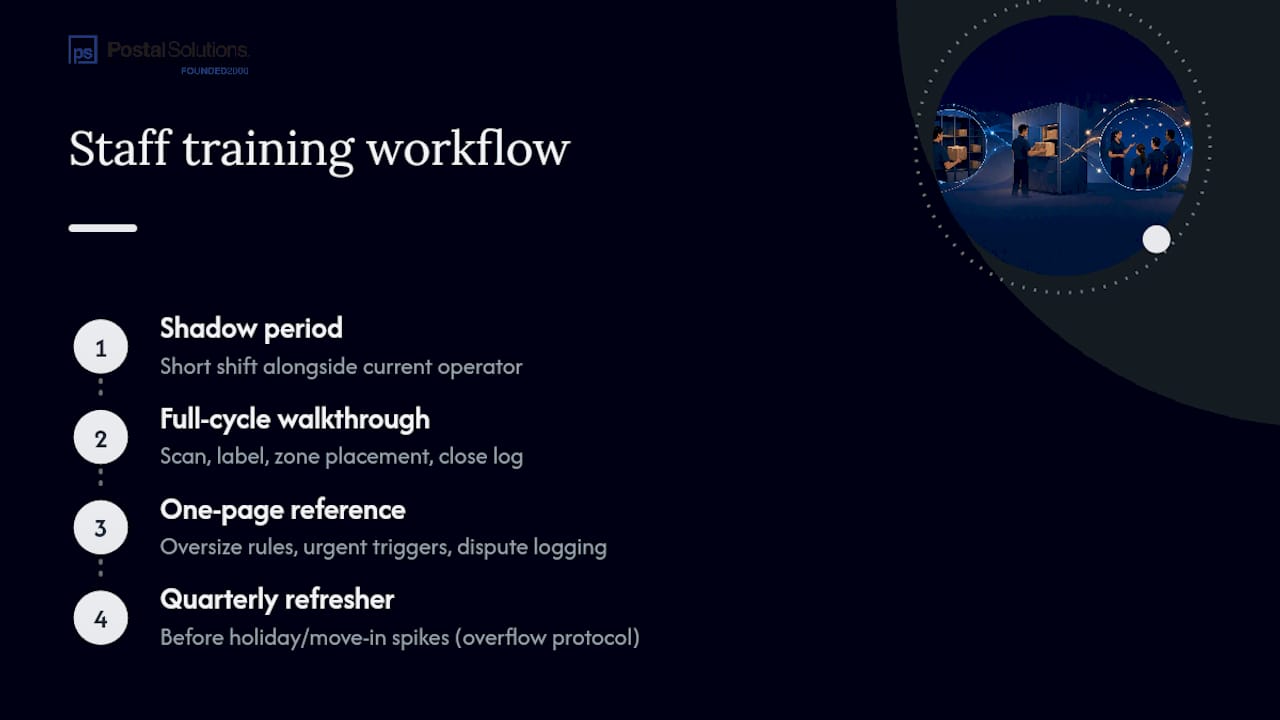
Start new hires or reassigned staff with a short shadow period alongside whoever currently runs the package operation, ideally your Package Manager if you’ve made that hire. Walk through the full cycle: scanning a package in, applying the standard label format, placing it in the correct express or standard zone, and closing out the chain-of-custody log.
Build a one-page reference sheet covering exactly where oversized items go, what triggers an urgent notification, and how to log a resident dispute over a missing package. New staff shouldn’t have to guess or ask a coworker mid-shift.
Run a quick refresher every quarter, especially before predictable volume spikes like the holiday season or a large move-in wave. Package volume during those periods can double or triple overnight, and a staff member who hasn’t reviewed the overflow protocol in six months will slow the whole system down exactly when speed matters most.
Redesigning the Package Room to Fix the Real Bottlenecks
Most pickup delays trace back to physical layout problems, not staffing gaps. Walk your package room and look for these three failure points: a single narrow entry point that creates a line during peak hours, shelving organized by delivery date instead of unit number, and no visual separation between packages ready for pickup and ones still being processed.
The fix is usually a re-sort, not a renovation. Group shelving by unit range or building section so residents and staff both know exactly where to look. Keep the express zone, packages logged within the last 24 hours, immediately visible near the entrance, with older or unclaimed items pushed further back where searching for them doesn’t block traffic for everyone else.
If your package room shares space with a mail wall or lobby area, add clear signage separating the two so residents don’t wander through mail pickup while searching for a delivery. A well-marked room with logical zones cuts staff search time dramatically, since finding a package becomes a matter of reading a label, not scanning every shelf.
Why Property Teams Underestimate How Fast This Fix Pays Off
Most property teams treat package handling as a nuisance to tolerate rather than a system to fix, and that’s the real problem. Every hour a leasing agent spends chasing a missing box is an hour not spent on a renewal conversation or a tour. Residents notice slow pickup fast, and it shapes how they talk about the property to friends deciding where to sign a lease next.
Try one change this week, express pickup zones or instant notifications, and track the difference in complaint calls before you decide whether it’s worth going further.
Let a Dedicated Package Manager Handle What’s Slowing You Down
Every tactic in this article, express pickup zones, instant notifications, standardized labeling, chain-of-custody logging, is exactly what a Postal Solutions on-site Package Manager runs for you, up to six days a week, without adding a headcount to your own payroll.
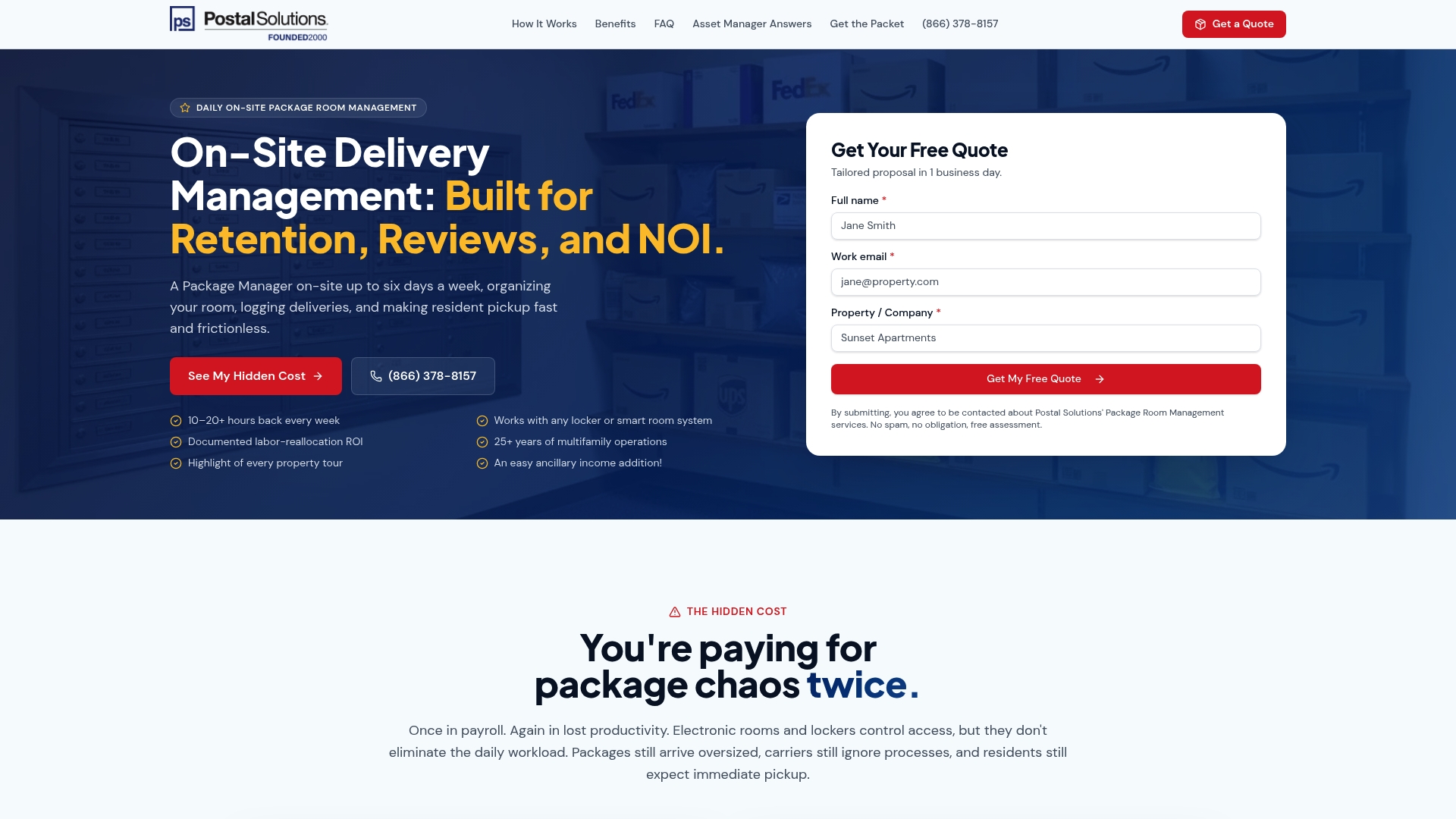
Properties that hand off package operations typically see leasing staff freed from sorting and chasing deliveries almost immediately, hours that go straight back into tours, renewals, and resident relationships instead. Because Postal Solutions works within whatever package room or locker system you already have, there’s no hardware overhaul required to start. Compare how on-site management stacks up against off-site alternatives for your specific property, and get a sense of what a dedicated Package Manager could take off your team’s plate this month.
Sources
- The Hidden Cost of Manual Package Management - Smart Package Room
- Multifamily Package Management | Accessa Case Study
- Lift the Burden of Package Management from On-Site Teams - The Multifamily Journal
- Reasons apartment managers love smart lockers - Signifi
FAQ
What Is the Fastest Way to Reduce Pickup Wait Time?
Assigning a dedicated on-site Package Manager and turning on instant, photo-backed notifications produces the fastest measurable drop in resident wait time and staff hours spent on packages.
How Much Staff Time Does Manual Package Handling Actually Cost?
At an average of five minutes per package, a property receiving 75 deliveries a day loses more than six staff-hours daily to intake, sorting, and pickup.
What Should I Do With Oversized or Refrigerated Packages?
Log them into a separate overflow zone immediately, flag perishables for urgent pickup notifications, and set a firm unclaimed-item deadline, typically around seven days, before follow-up or disposal action.
Does Hiring a Dedicated Package Manager Really Reduce Complaints?
Yes. Shifting package duty away from leasing staff onto a dedicated role has been shown to reduce complaint volume and improve staff job satisfaction at the same time.
How Do I Know If My Package Room Layout Is Slowing Down Pickup?
Watch for a single crowded entry point, shelving sorted by date instead of unit, and no visual split between processed and pending packages, all three point directly to a layout redesign.
Recommended
Ready when you are
Fix your package room — start with a free proposal
Daily on-site Package Manager, resident text & email pings*, and a tour-ready amenity. Tell us your unit count and we'll send a right-sized proposal — usually within one business day.
- ✓ 10–20+ hours back every week
- ✓ Works with any locker system
- ✓ Faster, friction-free resident pickup
- ✓ An easy ancillary income addition