
August 20, 2026
Shift Packages Off the Leasing Office: An Outsourcing Playbook
Discover how outsourcing package management can free your leasing team to focus on what matters—enhancing resident experience and driving leases.
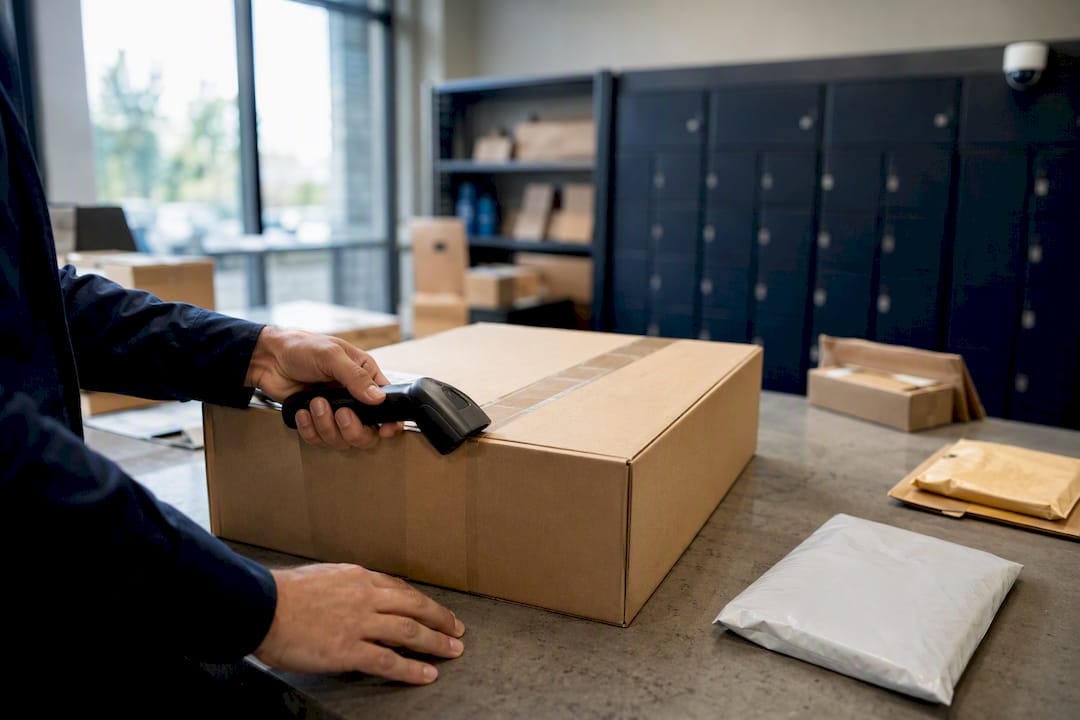
Shifting packages off the leasing office means contracting a professional on‑site package room management service to handle daily acceptance, chain‑of‑custody logging, secure storage, and resident notifications instead of your staff. Your next move: run a five‑point readiness check or request a 30‑day pilot with a provider like Postal Solutions. Groups like the National Multifamily Housing Council have flagged package logistics as one of the biggest hidden labor drains in multifamily operations, and the fix isn’t a new shelf or a bigger locker bank. It’s getting your leasing team out of the package business entirely.
Key Takeaways
Outsourcing package handling to a dedicated on‑site provider reclaims leasing staff hours, cuts resident complaints, and turns package logistics into a managed amenity instead of a daily distraction.
| Point | Details |
|---|---|
| Reclaim leasing hours | Contracting an on‑site package manager frees staff time for tours, renewals, and lead follow‑up. |
| Demand carrier compliance detail | Vendors must explain active driver management and documented exception workflows before signing. |
| Run a measurable pilot | Test for 30 days with clear KPIs: hours reclaimed, shrinkage rate, and resident satisfaction. |
| Match model to property size | High‑volume properties need automated systems; smaller sites may need lighter tracking support. |
| Package Room Management fits daily needs | Postal Solutions provides on‑site staffing, chain‑of‑custody logging, and weekly audits for properties with existing package rooms or lockers. |
Table of Contents
- Why Move Package Handling Off the Leasing Office
- What an On-Site Package Room Manager Actually Does
- Is Your Property Ready to Outsource Package Handling?
- How Do You Vet a Package Room Management Provider?
- Rolling Out the Transition: An 8-Week Path
- What Does On-Site Package Management Cost, and What’s the ROI?
- Where Package Outsourcing Programs Break Down
- What Changed After We Outsourced Package Handling
- Get Your Leasing Team Out of the Package Business
- Sources
- FAQ
Why Move Package Handling Off the Leasing Office
The math is simple once you track it: every hour a leasing agent spends scanning barcodes or hunting for a missing box is an hour not spent touring a prospect or renewing a lease. Properties that shift this work to a dedicated on‑site service typically reclaim significant time immediately, and that time flows straight back into activities that actually generate revenue.
The gains break down into three buckets:
- Staff time recovered. Leasing agents stop functioning as unpaid package clerks, which cuts distraction and improves morale on top of freeing hours.
- Lower overhead. Outsourcing avoids the capital cost of building or expanding an in‑house package room or complex locker deployment, and some operators structure the service as a paid resident amenity that offsets its own cost.
- Fewer losses, better security. Chain‑of‑custody logging replaces the “I think it’s behind the desk somewhere” search, which cuts resident complaints and reduces shrinkage risk.
Picture a mid‑size community where the front desk was fielding package questions for roughly two hours of staff time daily. Once a dedicated Package Manager takes over acceptance and sorting, that time reappears on the leasing calendar within the first week.
Pro Tip: Track tours‑to‑lease conversion for 60 days after the transition. Agents with fewer interruptions tend to close a higher share of the tours they already have, not just run more of them.
What an On-Site Package Room Manager Actually Does
Outsourcing package handling doesn’t mean a courier drops boxes at a random shelf and disappears. A properly run on‑site package room management service operates like a small logistics desk embedded in your community, working an on‑site presence multiple days a week to keep the operation current.
The day‑to‑day core includes:
- Accepting and scanning every carrier delivery as it arrives, with a timestamped log for each package.
- Sorting and shelving items by unit, with locker or hardware integration when the property already has electronic lockers.
- Sending resident text and email notifications the moment a package is logged in.
- Managing oversized items, refrigerated deliveries, and other special handling that a leasing desk simply isn’t equipped for.
- Running weekly audits to reconcile what’s on the shelf against what’s been logged.
Peak periods, move‑in weekends, and holiday shipping surges are where in‑house systems tend to buckle. A staffed, on‑site process built for volume swings absorbs that surge without swallowing leasing time.
A community that moved from front‑desk package handling to a dedicated on‑site manager described the change simply: staff stopped being interrupted by delivery questions, and residents stopped showing up frustrated about missing boxes.
| Service Component | What It Covers |
|---|---|
| Daily acceptance & logging | Carrier receipt, scan‑in, chain‑of‑custody record |
| Sorting & storage | Shelving, locker integration, unit‑level organization |
| Notifications | Resident text/email alerts on arrival |
| Special handling | Oversized, refrigerated, and peak‑period surge items |
| Audits & reporting | Weekly reconciliation, KPI tracking |
Is Your Property Ready to Outsource Package Handling?
Not every property needs the same fix on the same day, but a few signals point to urgency. Run through this checklist:
- Daily package volume regularly exceeds what one staff member can log without falling behind on other tasks.
- Leasing staff report losing an hour or more per day to package questions or searches.
- Resident complaints about missing or delayed packages have increased in the last quarter.
- Existing storage space (shelving, lockers) is at or near capacity.
- Unit count and delivery volume have grown faster than your current process was designed for.
If three or more of these apply, prioritize outsourcing now. High‑volume communities above roughly 300 units often need a fully staffed, automated smart system, while smaller properties may only need lower‑cost tracking paired with periodic on‑site support.
How Do You Vet a Package Room Management Provider?
A pilot conversation should surface real answers, not marketing language. Ask every candidate these questions directly:
- How do you enforce carrier compliance, and what happens when a driver bypasses your scan‑in process?
- What’s your documented workflow for failed scans, unauthorized drop‑offs, or oversized items that don’t fit standard storage?
- What SLAs do you commit to, and what remediation happens if you miss them?
- What’s your on‑site staffing model, how many days a week is someone physically present, and what’s your audit cadence?
- What insurance and liability coverage applies to packages in your custody?
- Can I speak with a current client running a similar unit count?
Carrier non‑compliance is the single most common cause of package system breakdowns, according to an operational framework for multifamily package management, so a vendor’s answer to that first question tells you more than the rest of the pitch combined.
Watch for these red flags before signing anything:
- Vague or evasive answers about carrier enforcement.
- No measurable SLAs or KPI reporting structure.
- No references from properties of comparable size.
- Inability to walk through what happens when something goes wrong.
Structure your evaluation around a short pilot, typically 30 days, with specific success criteria written into the agreement: hours reclaimed for leasing staff, shrinkage rate, and a baseline resident satisfaction check.
Pro Tip: Put the carrier exception process and weekly reporting cadence in writing before the pilot starts, not after. A vendor willing to document it upfront is a vendor who actually has one.
Rolling Out the Transition: An 8-Week Path
A clean rollout follows five phases, each with a clear owner and sign‑off point:
- Discovery and data collection (Week 1). Pull current package volume, staff hours spent, and complaint history.
- Pilot scoping (Week 2). Define KPIs, storage layout, and communication plan with the chosen vendor.
- Pilot execution (Weeks 3 to 6). Run the service for 30 days while tracking hours reclaimed and shrinkage.
- Review and scale (Week 7). Compare pilot results against baseline; adjust staffing or hardware integration.
- Full rollout (Week 8). Extend the service portfolio‑wide or property‑wide with finalized SLAs.
Resident and staff communication matters as much as the operational switch itself:
- Notify residents two weeks before go‑live with a short email explaining the new pickup process.
- Post signage at the mail area during transition week to reduce confusion.
- Brief leasing staff on their redefined role: pointing residents to the package room instead of handling packages directly.
- Send a follow‑up message after week one confirming the new system is running smoothly.
Ask any vendor running your pilot for a written checklist covering these same touchpoints before you agree to a start date.
What Does On-Site Package Management Cost, and What’s the ROI?
Pricing typically follows one of a few structures: a flat per‑property fee, a per‑unit per‑month fee, or occasionally a per‑package rate. Some operators layer in an optional resident amenity fee that offsets part or all of the service cost.
The ROI math is straightforward once you have real numbers:
- Labor savings, calculated as hours reclaimed multiplied by fully loaded staff cost.
- Avoided capital, meaning the locker expansion or package room build you no longer need.
- Service fee, the recurring cost of the outsourced provider.
A simplified formula: (labor savings + avoided capital) ÷ monthly service fee = payback period in months. Most operators find the labor‑savings component alone covers a meaningful share of the fee, with avoided capital and reduced turnover shortening payback further.
Don’t leave soft benefits out of the comparison. Fewer resident complaints and better tours translate into retention and leasing conversion gains that don’t show up on a labor spreadsheet but matter just as much.
Pro Tip: When you present ROI to ownership, include an amenity‑value line item alongside labor savings. Ownership groups respond to the combined number, not just the labor line.
Where Package Outsourcing Programs Break Down
Most failures trace back to a handful of predictable causes, and all of them are preventable with the right contract language.
- Carrier bypass. Drivers skip the scan‑in process, breaking chain‑of‑custody from day one.
- Weak or missing SLAs. Without measurable commitments, there’s no way to hold a vendor accountable.
- Leasing staff fallback. Old habits die hard; without clear role redefinition, agents quietly resume handling packages.
- Poor space planning. Storage that wasn’t sized for actual volume creates overflow chaos during peak weeks.
- Thin reporting. Monthly summaries instead of weekly audits let small problems compound before anyone notices.
Mitigate each one with documentation: a written carrier exception path, driver accountability tools, SLAs with remediation clauses, staff retraining during rollout, and weekly (not monthly) audits.
Pro Tip: Build an exit clause into the contract tied to specific KPI thresholds. If SLAs aren’t met for two consecutive audit cycles, you want a documented transition plan, not a renegotiation fight.
What Changed After We Outsourced Package Handling
Before the switch, our leasing team spent close to two hours a day on packages between scanning deliveries, fielding “where’s my package” calls, and searching for misplaced boxes. It was quietly eating into tour availability, and nobody had actually measured it until we started tracking staff time as part of the pilot.

Within the first month of running a dedicated on‑site package manager, that daily time dropped to near zero for leasing staff. Resident complaints about missing packages fell noticeably, and the front desk stopped being the default place people vented about deliveries. The change wasn’t dramatic to residents. It was just quieter, and that quiet is exactly what you’re paying for.
Get Your Leasing Team Out of the Package Business
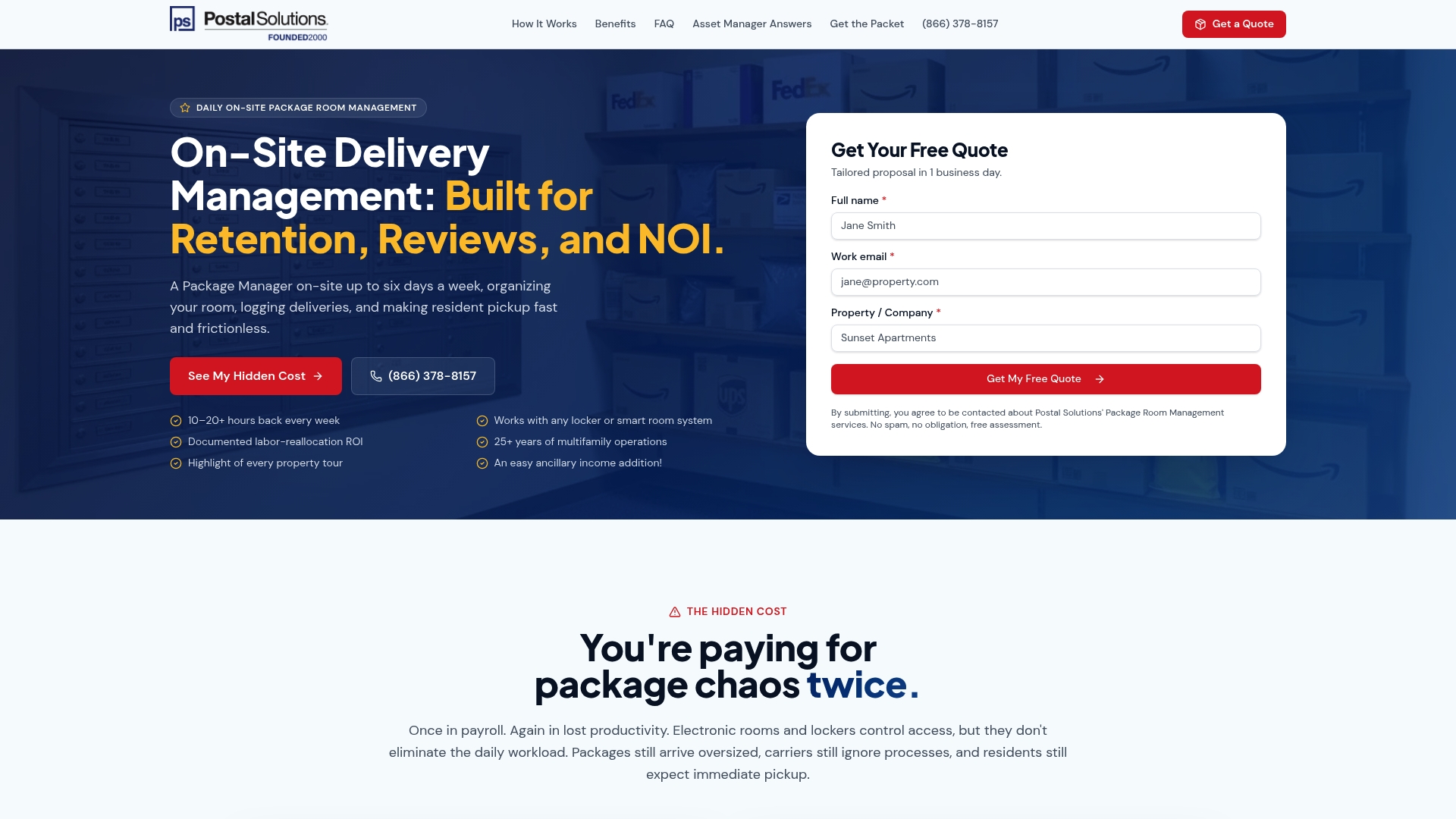
Postal Solutions runs the on‑site package operation so your team doesn’t have to. A dedicated Package Manager works your community up to six days a week, handling acceptance, sorting, chain‑of‑custody logging, resident notifications, and weekly audits, whether you’re using a package room, electronic lockers, or both.
That’s a fundamentally different arrangement than building an in‑house system or hoping leasing staff can absorb the volume between showings. You get a professionally managed amenity that shows well on tours, plus the option to structure it as a resident fee that offsets the service cost. If you’re ready to see what a pilot looks like for your property, download the free Package Room Management guide or request a cost analysis to see how the numbers work for your unit count.
Sources
- A framework for solving multifamily’s package management problem — Insights by Blueprint
- Managing the package predicament: enhancing security, saving time — The Multifamily Journal
FAQ
What Does It Mean to Shift Packages Off the Leasing Office?
It means contracting a professional on‑site package room management service to handle acceptance, sorting, logging, and resident notifications so leasing staff no longer touch packages.
How Long Does a Package Room Pilot Typically Run?
Most pilots run 30 days with defined KPIs like hours reclaimed, shrinkage rate, and resident satisfaction built into the agreement.
What’s the Biggest Cause of Package System Failures?
Carrier non‑compliance is the most common cause; vendors need documented driver enforcement and exception workflows to prevent it.
Does Outsourcing Package Handling Cost More Than Using Leasing Staff?
Not when you account for labor savings, avoided capital for locker or room expansion, and optional resident amenity fees that can offset the service fee.
Who Handles Oversized or Refrigerated Deliveries in an Outsourced Model?
A dedicated on‑site Package Manager, like the model Postal Solutions runs, handles special deliveries directly as part of daily operations rather than routing them to leasing staff.
Recommended
Ready when you are
Fix your package room — start with a free proposal
Daily on-site Package Manager, resident text & email pings*, and a tour-ready amenity. Tell us your unit count and we'll send a right-sized proposal — usually within one business day.
- ✓ 10–20+ hours back every week
- ✓ Works with any locker system
- ✓ Faster, friction-free resident pickup
- ✓ An easy ancillary income addition