
September 15, 2026
Package Shelving Organization: Scan to Shelf for Apartment Managers
Practical steps for apartment and student-housing managers to run a professional on-site package room. Includes scan-to-shelf workflows, zoning, and...
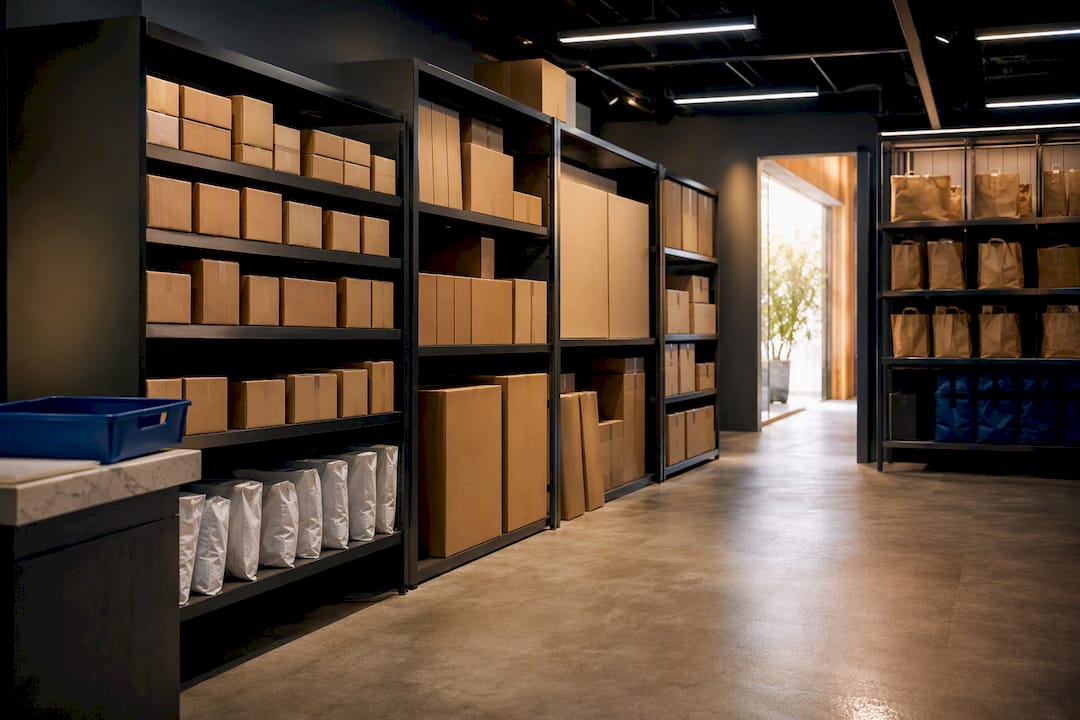
The right approach to package shelving organization is a professionally managed on-site package room built around controlled intake, scan-to-shelf logging, labeled zone shelving, and a dedicated Package Manager. That structure, paired with chain-of-custody logging, cuts lost packages, recovers staff hours otherwise lost to sorting, and turns package handling into an amenity residents actually notice, the kind that Package Room Management builds for apartment and student-housing communities.
TL;DR:
- Proper controlled intake and clear signage are essential to prevent package backlog and ensure drivers place parcels in designated drop points.
- Zoned shelving, accurate labeling, and chain-of-custody tracking protect packages and streamline staff workflows, especially during peak delivery times.
- A dedicated package manager, working five to six days a week for larger communities, reduces lost packages and improves resident satisfaction through efficient notifications.
- Shelving capacity should account for increasing package volume, peak season spikes, and include a buffer of 20 to 40 percent to prevent overflow failures.
- Integrating package logs with property management systems and updating staff training regularly ensures accountability, safety, and smooth operation.
Table of Contents
- What Makes Package Shelving Organization Actually Work?
- How Do You Set Up Shelving Layout and the Scan-to-Shelf Workflow?
- Who Should Manage the Package Room Day to Day?
- How Much Shelving Do You Actually Need?
- Daily SOP for Package Shelving Organization
- Cleaning and Maintenance of Shelving Units
- Integration With Property Management Software or Systems
- Safety Considerations and Compliance Requirements
- Training Staff on Package Handling Best Practices
- Postal Solutions’ Perspective: Why On-Site Management Wins
- How Postal Solutions Runs This So You Don’t Have To
- Sources
- FAQ
What Makes Package Shelving Organization Actually Work?
A package room fails or succeeds based on five components working together, not any single piece of hardware. Skip one and the whole system backs up, usually at the worst possible moment: move-in week or the December surge.
Controlled intake comes first. Every carrier needs one drop point, clear signage, and a defined handoff process, whether that’s a staffed desk or a scan-and-drop station. Without it, drivers stack boxes wherever is convenient, and your shelving plan is dead before it starts.
Zoned shelving follows. Standard parcels, oversized items, and refrigerated or perishable deliveries need physically separate zones, not just different shelf rows. Mixing them creates cross-contamination risk and slows staff who have to hunt for the right item.
Labeling conventions tie the physical shelf to the digital record. Zone IDs, unit-based tags, and barcode placement need to match whatever system logs the package, or the shelf becomes a guessing game.
Chain-of-custody logging and resident notifications are what separate a professionally run room from a closet full of boxes. Every scan, every shelf placement, and every pickup needs a timestamp and a name attached, which is also what protects the property when a resident disputes a delivery.
Overflow planning and physical security round it out:
- A defined overflow zone for surge days, not just stacking boxes in the aisle
- Locked or badge-access entry to the room itself
- Clear rules for who can retrieve a package and under what proof of identity
- A camera or sightline covering the intake and shelving area
Package rooms cost far less to set up than locker banks, but that lower capital cost only pays off when these process controls are actually followed.
How Do You Set Up Shelving Layout and the Scan-to-Shelf Workflow?
Start with a site walk, not a shelving catalog. Walk the space with these questions in mind before you order a single unit.
- Check entry control first. Is there one controlled door, or can carriers and residents wander in from multiple points?
- Map sightlines. Can staff or a camera see the entire shelving run from the intake point?
- Measure square footage against unit count. A 300-unit building needs meaningfully more linear shelf footage than a 150-unit building, even before you account for peak season.
- Check ventilation for perishables. Refrigerated or cold-chain deliveries need airflow and, in many rooms, a dedicated mini-fridge or cooler zone, not just a shaded shelf.
- Pick the shelving type. Adjustable open shelving is the most flexible choice for mixed package sizes and is easiest to reconfigure as delivery patterns shift. Wire shelving costs less and drains dust and moisture well, but sags under heavy, irregular loads over time. Riveted steel handles the most weight and abuse but is fixed once assembled, which hurts you if your unit mix changes.
- Assign zone IDs. Letter or number every shelving run so a tag like “C4” means the same thing to every staff member on every shift.
- Set tag rules. Temporary bin tags for oversized or unusual items, permanent unit-based tags for standard rows, and consistent QR or barcode placement on the same corner of every label.
- Build the scan-to-shelf sequence. Photo the label at intake, scan it into the log, apply the physical tag, place it in the assigned zone, and trigger the resident notification automatically.
- Confirm pickup with a second scan. This closes the loop and gives you a real audit trail, not just a guess about when something left the shelf.
- Post carrier signage and a one-page SOP at the drop point so drivers who aren’t on a regular route still follow the process.
Pro Tip: Give recurring carrier drivers a laminated QR or PIN card for your property. Simple pictorial instructions and driver credentials measurably cut non-compliance, which is the single most common reason package systems break down in the first place.
Who Should Manage the Package Room Day to Day?
A dedicated Package Manager, not a rotating front-desk staffer, is what makes this workflow durable. The role covers receiving, sorting, shelving, logging, resident notifications, exception handling for damaged or misdelivered items, and a weekly physical audit against the digital log.
Sizing coverage is simpler than it sounds. A property under roughly 150 units with light delivery volume might need coverage three or four days a week. Anything above 250 units, or any student-housing site near a campus with predictable delivery spikes, generally needs someone on site five to six days a week during the school year.
Four metrics tell you if the role is working:
- Touches per package — fewer handoffs mean less chance of loss or damage
- Dwell time — how long a package sits on the shelf before pickup
- 24-hour pickup rate — the share of packages residents retrieve within a day of notification
- Complaint frequency — the clearest signal of whether the system is actually working for residents
At a typical 370-unit community handling around 75 packages a day, manual handling with four or five touches per package at roughly five minutes each can eat over six staff hours daily when there’s no dedicated role to absorb it. That’s not staff time spent leasing or renewing residents. It’s staff time spent hunting for a box someone swears they never got.
How Much Shelving Do You Actually Need?
Package volume per resident has been climbing fast, and sizing your shelving to last year’s numbers is a mistake you’ll feel by October. Multifamily properties averaged 9.41 packages per resident per month in 2022, rising to 10.65 in 2023, a jump that pushes real pressure onto space, tracking, and staff hours.
Start with the math:
- Take your unit count, multiply by the current packages-per-resident-per-month figure, and divide by 30 for a daily baseline.
- Apply a peak multiplier of 2 to 3 times that baseline for the holiday season and move-in weeks, since a room sized only for average days will overflow the moment volume spikes.
- Estimate shelf capacity in packages per linear foot based on your typical box mix, then convert that to the number of shelving rows or bays you need.
- Build in a 20 to 40 percent capacity buffer above your peak estimate, because a shelving plan with zero slack fails on the first unusually heavy week.
- Plan overflow tactics ahead of time: temporary staging carts, a hybrid locker arrangement for overflow, or added weekend staffing during December and August move-ins.
Locker banks are fixed capacity and fail hard when undersized, which is exactly why open shelving paired with a real process scales better for oversized or irregular items than a wall of compartments ever will.
Daily SOP for Package Shelving Organization
A written SOP is what keeps a package room organized when the regular Package Manager is out sick or a temp is covering the shift. Keep it to one page and post it near the shelving.
- Morning: Log every overnight delivery, apply zone tags, place items on shelf, and trigger resident notifications before 9 a.m.
- Midday: Reconcile the physical shelf against the digital log; flag any unmatched item immediately rather than waiting for the weekly audit.
- Oversize exceptions: Move to the designated oversize zone, tag with a temporary bin number, and note it separately in the log since it won’t fit standard unit-based tags.
- Perishable exceptions: Refrigerate immediately and notify the resident by phone or text, not just email, given the shorter window before spoilage.
- Refused or misdelivered items: Photograph the label, log the exception reason, and route back to the carrier or correct unit within 24 hours.
- End of day: Confirm every logged package has a shelf location, and every picked-up package has a closing scan.
- Weekly: Full physical audit against the log, checking for any package older than seven days, and a resident-notification template review to catch bounced texts or emails.
Pro Tip: Keep your fastest-moving zone, standard-size packages, nearest the pickup counter, and rotate items front-to-back like a grocery stock room. It sounds small, but it’s the single biggest thing that keeps shelf turnover fast and prevents items from getting buried behind newer deliveries.
Cleaning and Maintenance of Shelving Units
Shelving that isn’t cleaned on a schedule turns into a liability fast, especially in rooms handling grocery deliveries or anything with condensation. Wipe down open shelving weekly with a mild disinfectant, paying particular attention to any shelf that’s held a leaking or perishable item.
Wire shelving needs more frequent attention than solid shelving because dust and packaging debris fall through the grid and collect on the shelf below it. Riveted steel holds up well structurally but check the joints twice a year for rust, especially in humid climates or rooms without climate control.
Set a quarterly deep-clean that includes pulling shelving units away from the wall to sweep behind them. Damaged shelving, bent brackets, sagging wire shelves, cracked plastic bins, should get flagged and replaced immediately rather than left in rotation, since a collapsed shelf mid-shift is both a safety incident and a fast way to damage resident property.
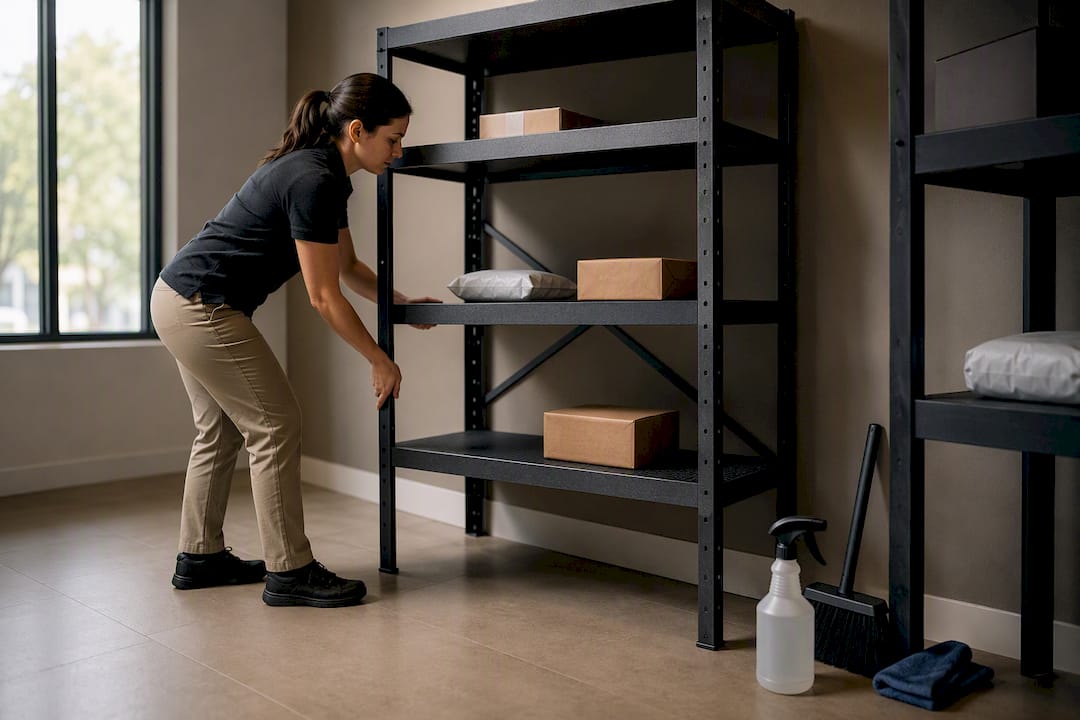
Build maintenance into the weekly audit rather than treating it as a separate task. When staff are already checking the shelf against the log, a thirty-second visual check of shelf condition costs almost nothing and catches problems before they become expensive.
Integration With Property Management Software or Systems
Scan-to-shelf logging only earns its keep when the data flows into whatever property management software your team already runs. A package log that lives in a separate spreadsheet or a standalone app creates a second system nobody checks consistently, and that’s where packages start going missing on paper even when they’re sitting right on the shelf.
The integration that matters most is resident notification. When a package scan automatically triggers a text or email through the same system residents use for maintenance requests or rent payments, pickup rates improve because residents aren’t waiting on a separate app or a paper slip taped to their door.
Audit trail data, timestamps, staff initials, photo confirmation, should sync into whatever system your leasing and operations team already uses for reporting. That gives management a single source of truth if a dispute ever escalates, rather than a package log that only the on-site team can access.
If your property runs third-party locker hardware alongside open shelving, confirm the two systems can share resident contact data and notification triggers rather than running as separate silos. A hybrid setup only saves staff time when both halves talk to each other.
Safety Considerations and Compliance Requirements
Shelving safety starts with load ratings. Every shelving unit has a maximum weight capacity, and mixing a few unusually heavy items, cases of water, pet food, appliance parts, onto a shelf rated for standard parcels is how units fail. Post weight limits on each zone and train staff to eyeball anything that looks like it’s pushing that limit.
Anchoring matters more than most operators assume. In any room accessible to staff or residents, freestanding shelving over about four feet tall should be secured to the wall or floor to prevent tip-over, particularly in a room with foot traffic near the shelving.
Fire code and egress requirements apply to package rooms just like any other interior space. Shelving can’t block a marked exit path, and stacked overflow boxes in an aisle are both a safety violation and a common inspection failure point.
Liability coverage should specifically address package handling, since a professionally managed room creates a documented chain of custody that protects the property if a resident claims a package was lost or damaged. That documentation, not just good intentions, is what actually holds up when a dispute reaches a property manager’s desk or, in rarer cases, small claims court.
Training Staff on Package Handling Best Practices
New staff should shadow a full shift before touching the log independently. Package handling looks simple until someone skips a scan step under pressure during a heavy delivery day, and that single skipped step is usually where a “lost” package complaint originates.
Training should cover the scan-to-shelf sequence step by step, not just as a one-time walkthrough but with a written reference sheet staff can check during their first two weeks. Cover exception handling specifically: what to do with a damaged box on arrival, a package addressed to a resident who’s moved out, or an item too large for standard shelving.
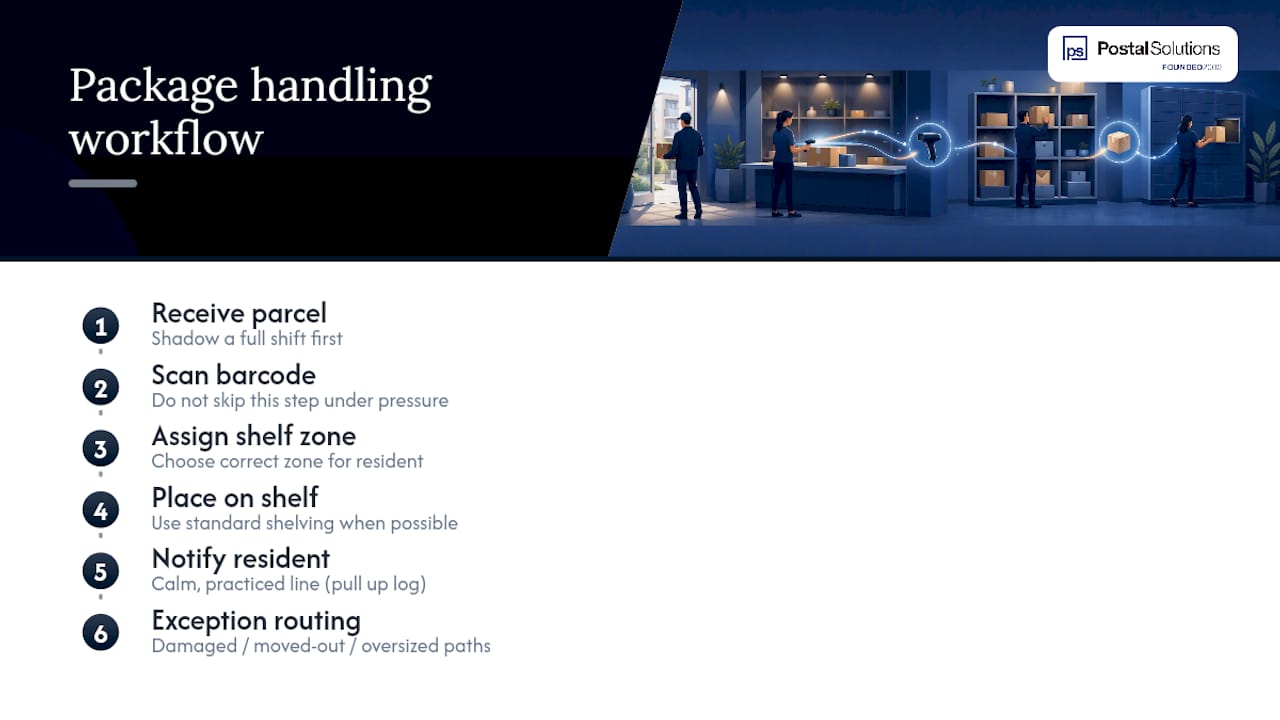
Role-play the resident interaction, too. A resident who can’t find their package needs a calm, specific response (“Let me pull up the log and check the last scan”) rather than a shrug, and that response only comes naturally after staff have practiced it.
Refresh training quarterly, especially before predictable volume spikes like the December holiday surge or fall move-in. A staff member who handled the process fine in March can still fumble it in November if the exception types they’re seeing have shifted with the season, more perishables, more oversized furniture accessories, more time-sensitive gifts.
Postal Solutions’ Perspective: Why On-Site Management Wins
Most operators treat package handling as a front-desk afterthought until it starts eating leasing hours. Twenty-five years of running on-site package rooms tells a different story: the properties that struggle least are the ones that treat shelving organization as a real operational function with a dedicated Package Manager, not a side task. Recovered staff hours matter, but the bigger shift is cultural. Once packages stop being a daily fire, front-desk teams get back to leasing and renewals, and the package room itself becomes something prospects notice on a tour.
— Postal Solutions
How Postal Solutions Runs This So You Don’t Have To
Everything in this article, controlled intake, zoned shelving, scan-to-shelf logging, resident notifications, weekly audits, oversize and perishable handling, is what a dedicated on-site Package Manager handles for your community up to six days a week. You get the process without having to build, staff, or audit it yourself.
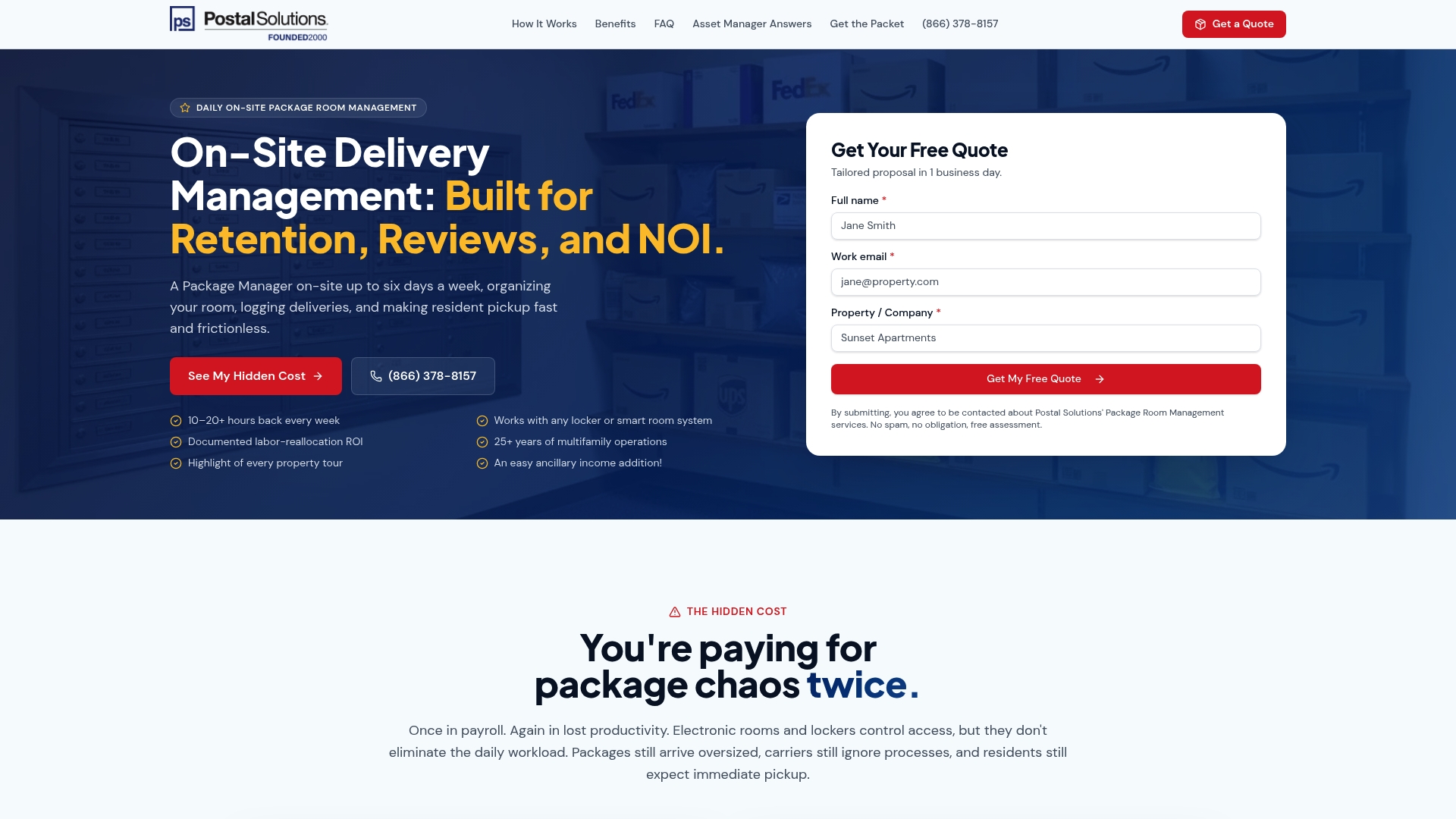
Unlike a locker-only setup, this works whether you have package room shelving, existing locker hardware, or a mix of both, since integration with existing systems avoids forcing a hardware swap. That’s the practical difference for an operator who wants the resident experience fixed this quarter, not after a capital project gets approved.
If you want the checklists and templates behind this workflow in one document, download the free Package Room Management guide and see what a staffed package room actually looks like on your property.
Sources
- Multifamily data research: package delivery pain points
- Apartment package management: multifamily operations perspective
- A framework for solving multifamily’s package management problem
FAQ
How Many Packages Per Resident Should I Plan For?
Plan on roughly 10.65 packages per resident per month as a current baseline, based on 2023 multifamily data, then apply a 2 to 3 times multiplier for holiday and move-in peaks.
Should I Use Lockers, a Package Room, or Both?
A hybrid of staffed shelving and lockers often works best for mid-size properties, since package rooms cost less to set up and handle oversized items better, while lockers add after-hours access.
What Shelving Type Is Best for a Package Room?
Adjustable open shelving is generally the most practical choice because it handles mixed box sizes and reconfigures easily; wire shelving costs less but sags under heavy loads, and riveted steel is sturdiest but fixed once built.
Do I Need a Dedicated Package Manager or Can Front Desk Handle It?
A dedicated Package Manager is worth it once volume passes a few dozen packages a day, since manual handling without a dedicated role can consume over six staff hours daily at that scale. Package Room Management staffs this role directly so front-desk teams stay focused on leasing.
What Happens if a Package Is Lost or Damaged?
A documented chain-of-custody log, scan at intake, tag applied, shelf location, pickup confirmation, is what lets staff trace exactly where a package was at each step and resolve disputes without guesswork.
Recommended
Ready when you are
Fix your package room — start with a free proposal
Daily on-site Package Manager, resident text & email pings*, and a tour-ready amenity. Tell us your unit count and we'll send a right-sized proposal — usually within one business day.
- ✓ 16–30 hours back every week
- ✓ Works with any locker system
- ✓ Faster, friction-free resident pickup
- ✓ An easy ancillary income addition