July 31, 2026
Refrigerated Delivery Management for Property Managers
Streamline your property management with effective refrigerated delivery management. Learn how to optimize space and reduce your team's workload!
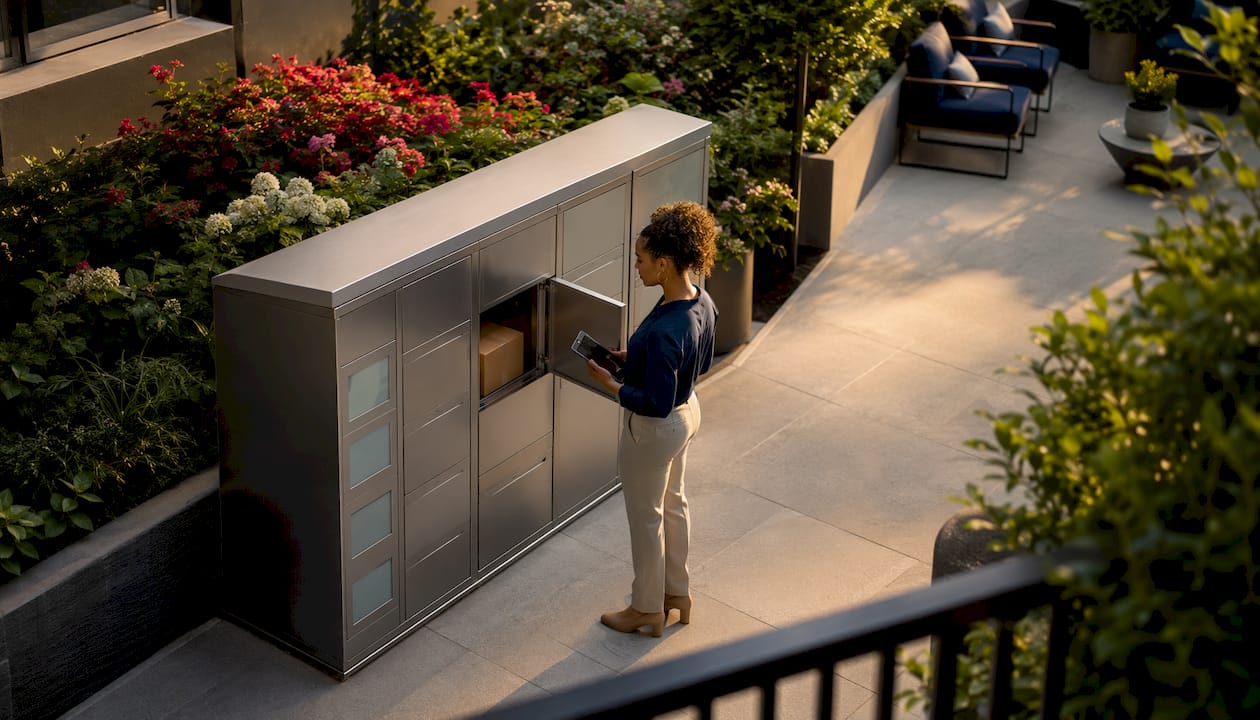
A hybrid approach works best: install refrigerated parcel lockers where your budget and footprint allow, and run a short, documented manual SOP for overflow. If you want to remove your leasing team from the chain of custody entirely, Postal Solutions’ On-Site Package Room Management handles daily refrigerated receiving, logging, and resident notifications for you.
Here’s what to do this week:
- Assess your space. Walk your package room and identify where a refrigerated unit or locker bank could go.
- Check your budget. Decide whether capital expense (lockers) or operating expense (managed service) fits your current cycle.
- Set a 24-hour disposal policy for unclaimed perishables and communicate it to residents before you receive the first delivery.
- Contact Postal Solutions for a site assessment or pilot if you want a dedicated on-site Package Manager handling refrigerated items daily.
Pro Tip: Label every perishable package with a bright orange “PERISHABLE — PICK UP BY [DATE/TIME]” sticker the moment it arrives. Staff who see it later won’t have to guess.
Table of Contents
- What does refrigerated delivery management actually look like?
- How to run a manual SOP when you don’t have automated lockers
- How automation changes liability, security, and resident experience
- What does implementation actually cost, and how long does it take?
- Why Postal Solutions is a practical choice for refrigerated delivery management
- Staff training checklist and SOP for refrigerated items
- Key Takeaways
- A practitioner’s view on what actually goes wrong
- Postal Solutions handles refrigerated deliveries on-site for you
- Useful sources
- FAQ
What does refrigerated delivery management actually look like?
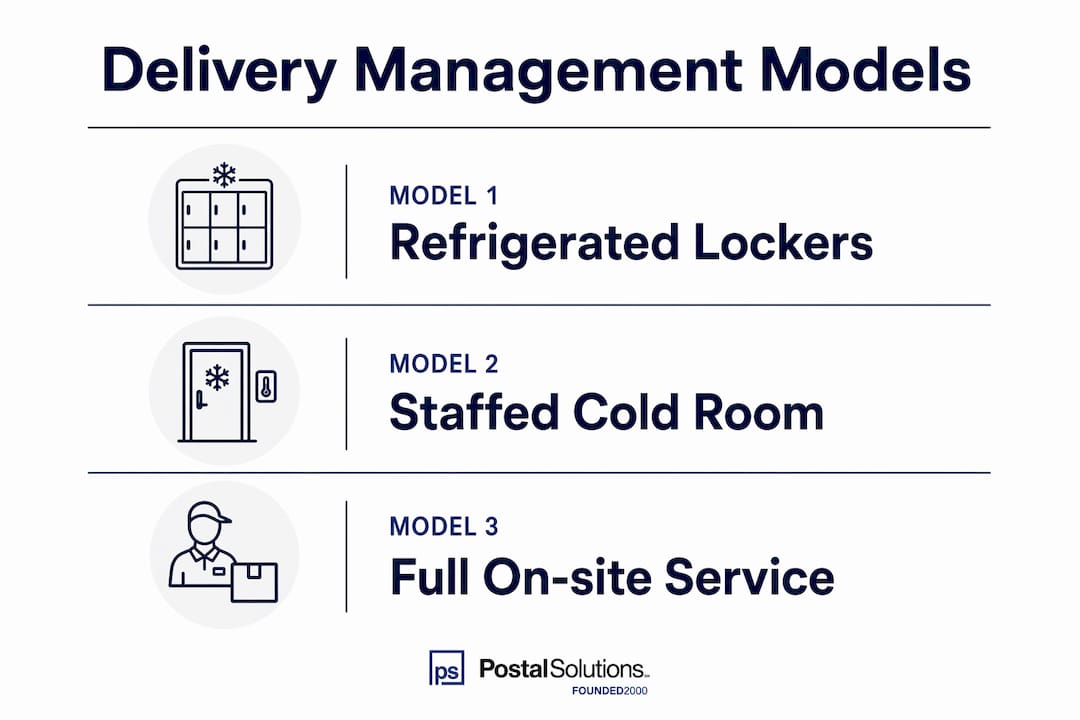
Three practical models exist for apartment and student housing communities, and the right one depends on your volume, budget, and how much staff time you can realistically dedicate.
Model 1: Integrated refrigerated parcel lockers. Refrigerated lockers give residents 24/7 access to perishable groceries, meal kits, and medications in secure individual compartments. Typical refrigerated lockers maintain safe cooling temperatures, with vendor literature citing a range of approximately 35°F to 46°F for compartment cooling. Staff never touch the package after intake. Best for: mid-size to large multifamily properties and student housing communities with high grocery and meal-kit delivery volumes.
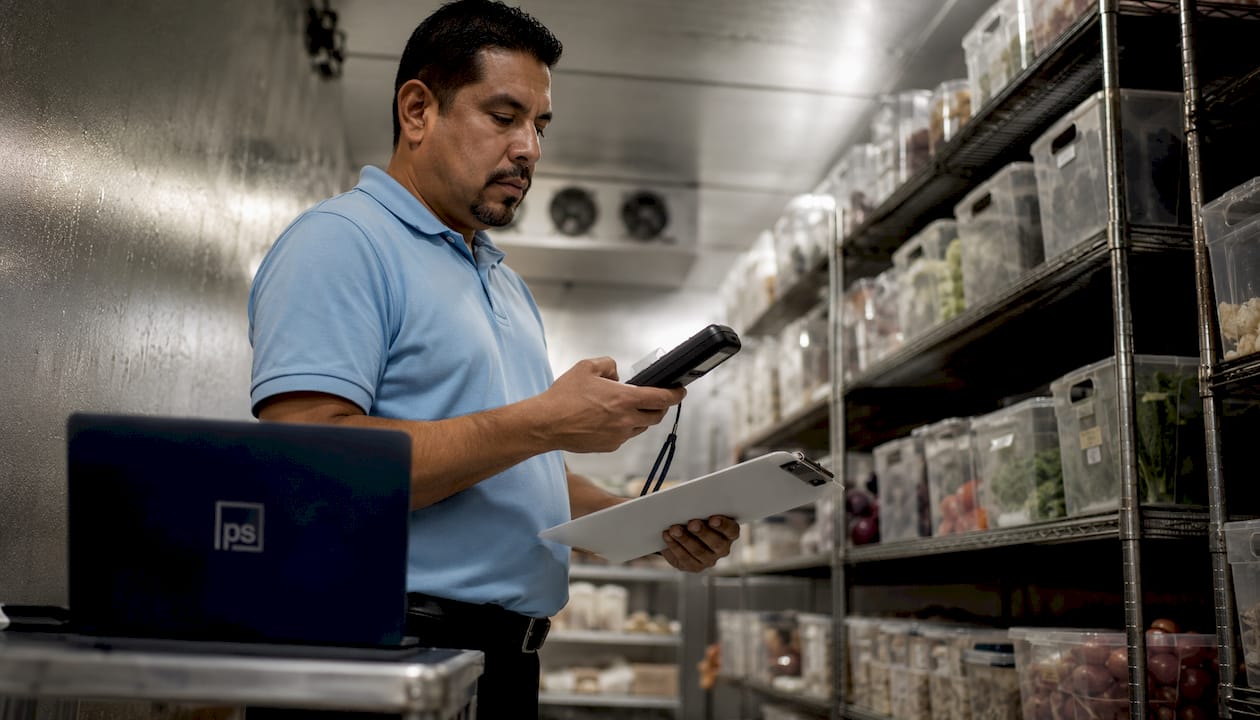
Model 2: Staffed refrigerated room with SOP and temperature logs. A dedicated refrigerator or cold room, combined with a written SOP, FIFO labeling, and twice-daily temperature checks, works for lower-volume properties or those not yet ready for locker capital expense. Best for: smaller communities or properties in a budget cycle that delays hardware.
Model 3: Fully managed on-site package room service. Postal Solutions places a dedicated Package Manager at your property up to six days a week. That person handles receiving, cold-chain logging, resident SMS and email notifications, and weekly audits. No capital outlay for hardware, and your leasing team stays out of the package room entirely. Best for: any property that wants a professional package room without adding headcount to payroll.
The hidden costs of food delivery for multifamily properties go beyond spoilage: staff time, tenant satisfaction hits, and food-safety exposure add up fast. Choosing the right model early prevents all three.
How to run a manual SOP when you don’t have automated lockers
Use this checklist as your starting point. Adapt the label template and SMS text to your property management software.
Receiving checklist (numbered steps):
- Identify perishables at intake. Look for “Keep Refrigerated,” “Pharmacy,” “Meal Kit,” or temperature-sensitive stickers on the outer packaging.
- Label immediately. Attach an arrival-time label before the package leaves the receiving area.
- Store per FIFO. Place new arrivals behind existing items. Always store perishables on the lowest shelf or in a liquid-containment bin to prevent leakage onto dry packages below.
- Log temperature. Record the refrigerator temperature in your log. Best practices call for checking and recording twice daily to keep items below 40°F.
- Notify by SMS first. Send a text alert within five minutes of intake. Follow with email. SMS outperforms email for time-sensitive perishable alerts because it reaches residents faster and creates stronger pickup urgency.
- Set a follow-up alert. If unclaimed after four hours, send a second SMS.
- Dispose at 24 hours. Discard unclaimed perishables, photograph the item and timestamp the action, and log it in your chain-of-custody record.
Sample label fields:
| Field | Example |
|---|---|
| Storage location | Refrigerator B, Shelf 1 |
| Staff initial | J.R. |
| Item type | Meal kit / Pharmacy / Grocery |
Sample SMS text: “Hi [Resident Name], a refrigerated package arrived for you at [Time]. Pick up at the package room by [Deadline]. Questions? Call [Office Number].”
A perishable goods protocol that combines instant SMS alerts with temperature-controlled staging keeps items fresh and prevents hygiene issues in high-density buildings.
How automation changes liability, security, and resident experience
Refrigerated lockers remove staff from the cold-chain handoff entirely. That single change does more for your liability exposure than any policy document. When a spoilage dispute arises, your audit log shows exactly when the package entered the locker, what temperature the compartment held, and when the resident retrieved it. Without that log, you’re arguing from memory.
Automated lockers reduce staff touchpoints and help properties avoid liability tied to spoilage and lost items. The security benefits compound: no buzzer-bombing, no delivery drivers calling residents repeatedly, and no tailgating risk from drivers pressing every button in the lobby. One-time access codes or mobile credentials mean only the right resident opens the right compartment.
Residents get 24/7 pickup, an immediate SMS with the locker number, and fewer complaints about cold food sitting in a warm hallway. The NMHC/Kingsley Apartment Resident Preferences Report found 84% of residents want secure, self-service, 24/7 package access — refrigerated lockers deliver exactly that.
Pro Tip: Integrate locker notifications with your existing property management software (Yardi, Entrata, RealPage, ResMan) so resident alerts fire automatically and your chain-of-custody log syncs without manual entry.
Trust signals to document and keep on file:
- Temperature logs (twice daily, target ≤ 40°F)
- Chain-of-custody audit reports with timestamps
- SMS notification records with delivery confirmation
- Weekly audit summaries and corrective action notes
For properties concerned about resident data privacy and access security, document your notification consent policy and store opt-in records alongside your chain-of-custody logs.
What does implementation actually cost, and how long does it take?
High-level timeline:
- Weeks 1–2: Site survey, electrical assessment, vendor or service-provider selection
- Weeks 3–6: Hardware procurement or managed-service contract execution; staff training
- Weeks 7–8: Pilot with a subset of residents; refine SOP and notification templates
- Week 9+: Full rollout; begin weekly audits
Cost considerations to budget:
| Line item | Notes |
|---|---|
| Refrigerated locker hardware | Capital expense; varies by unit count and compartment configuration |
| Electrical and installation | May require dedicated circuit; confirm with your electrician |
| Ongoing electricity | Continuous cooling adds to utility costs |
| Maintenance and service contract | Factor annual or quarterly servicing |
| Managed service fee | Monthly per-property or per-unit fee (Postal Solutions model) |
| Staff training time | One-time cost; budget a half-day for initial SOP training |
The managed-service route converts capital expense into a predictable operating line. Many properties recover staff hours that were previously consumed by package handling and redirect them to leasing and renewals. That reallocation is the ROI signal worth tracking first.
Why Postal Solutions is a practical choice for refrigerated delivery management
Postal Solutions has been running on-site package rooms for apartment and student housing communities for 25 years. The service covers daily acceptance, FIFO sorting, chain-of-custody logging, SMS and email notifications, temperature monitoring support, weekly audits, overflow handling, and integration with the locker or package room hardware you already have.
A dedicated on-site Package Manager works your community up to six days a week. Your leasing team stops fielding package questions and starts spending that time on tours, renewals, and resident relationships.
Postal Solutions gives leasing teams their time back. A professionally run package room becomes a visible amenity on tours — proof to prospects that life at your property is easier than at the one down the street. Many communities structure it as a paid resident amenity, turning a budget line item into one that helps pay for itself.
Key service features:
- Daily on-site receiving and cold-chain logging
- Resident SMS and email notifications with timestamps
- Temperature monitoring support and documented corrective actions
- Weekly audits with written reports
- Overflow and oversized package handling
- Integration with existing locker and package room systems
Staff training checklist and SOP for refrigerated items
Receiving SOP (numbered):
- Put on gloves before handling any package marked perishable or pharmaceutical.
- Check for “Keep Refrigerated,” “Pharmacy,” or meal-kit branding on the outer box.
- Attach the arrival-time label (time, date, staff initial, pickup deadline).
- Store on the lowest shelf or in a liquid-containment bin.
- Record the refrigerator temperature in the daily log.
- Send the SMS notification within five minutes.
- Set a four-hour follow-up alert in your notification system.
- At 24 hours, photograph and dispose of unclaimed items; log the action.
Staff training agenda (suggested 90 minutes):
- 0–15 min: Review the 24-hour disposal policy and why it exists (sanitation, odor, pest risk).
- 15–40 min: Walk through the label template and temperature log; practice filling both out.
- 40–60 min: Role-play the intake script: “I’m logging this as a refrigerated item. I’ll send you a text right now with your pickup deadline.”
- 60–90 min: Review the contingency plan for power outages: move perishables to an alternate refrigerated location, log the incident, notify affected residents immediately, and document corrective actions.
Weekly audit checklist:
- Verify refrigerator temperature logs are complete (twice daily, ≤ 40°F)
- Confirm all chain-of-custody records are filed and timestamped
- Check for any unclaimed items past the 24-hour window
- Review SMS notification delivery confirmations
- Document any corrective actions taken during the week
Key Takeaways
Effective refrigerated delivery management requires automation where possible, a documented manual SOP as a fallback, and a clear 24-hour disposal policy to protect residents and staff from spoilage liability.
| Point | Details |
|---|---|
| Automate where feasible | Refrigerated lockers remove staff from the cold chain and create automatic audit logs. |
| Log temperatures twice daily | For non-automated storage, record refrigerator temps twice daily and keep all items below 40°F. |
| SMS beats email for perishables | Send a text alert within five minutes of intake; follow up at four hours if unclaimed. |
| 24-hour disposal policy | Discard unclaimed perishables at 24 hours; photograph and timestamp every disposal action. |
| Postal Solutions manages it for you | Postal Solutions’ On-Site Package Room Management handles daily refrigerated receiving, logging, and notifications so your leasing team stays focused on leasing. |
A practitioner’s view on what actually goes wrong
The most common failure point isn’t equipment. It’s the unlabeled perishable that sat in a warm package room for six hours because no one recognized it as time-sensitive. The second most common is buzzer-bombing: a driver who can’t get through the front door presses every unit button, residents buzz them in without looking, and suddenly you have an unauthorized person in your building with access to every package on the shelf.
Documented chain-of-custody and temperature logs are your single best defense when a resident files a spoilage complaint. Not because they prevent every problem, but because they shift the conversation from “he said, she said” to a timestamped record. Properties that run weekly audits and keep corrective action notes rarely lose those disputes.
Power outages deserve a written contingency plan before they happen, not after. Move perishables to an alternate refrigerated location, notify affected residents immediately, and log every step. That documentation matters as much as the action itself.
Postal Solutions handles refrigerated deliveries on-site for you
Your leasing team shouldn’t be the last line of defense for a resident’s insulin delivery or meal kit. Postal Solutions places a dedicated on-site Package Manager at your property up to six days a week to handle exactly that: receiving, cold-chain logging, resident notifications, and weekly audits.
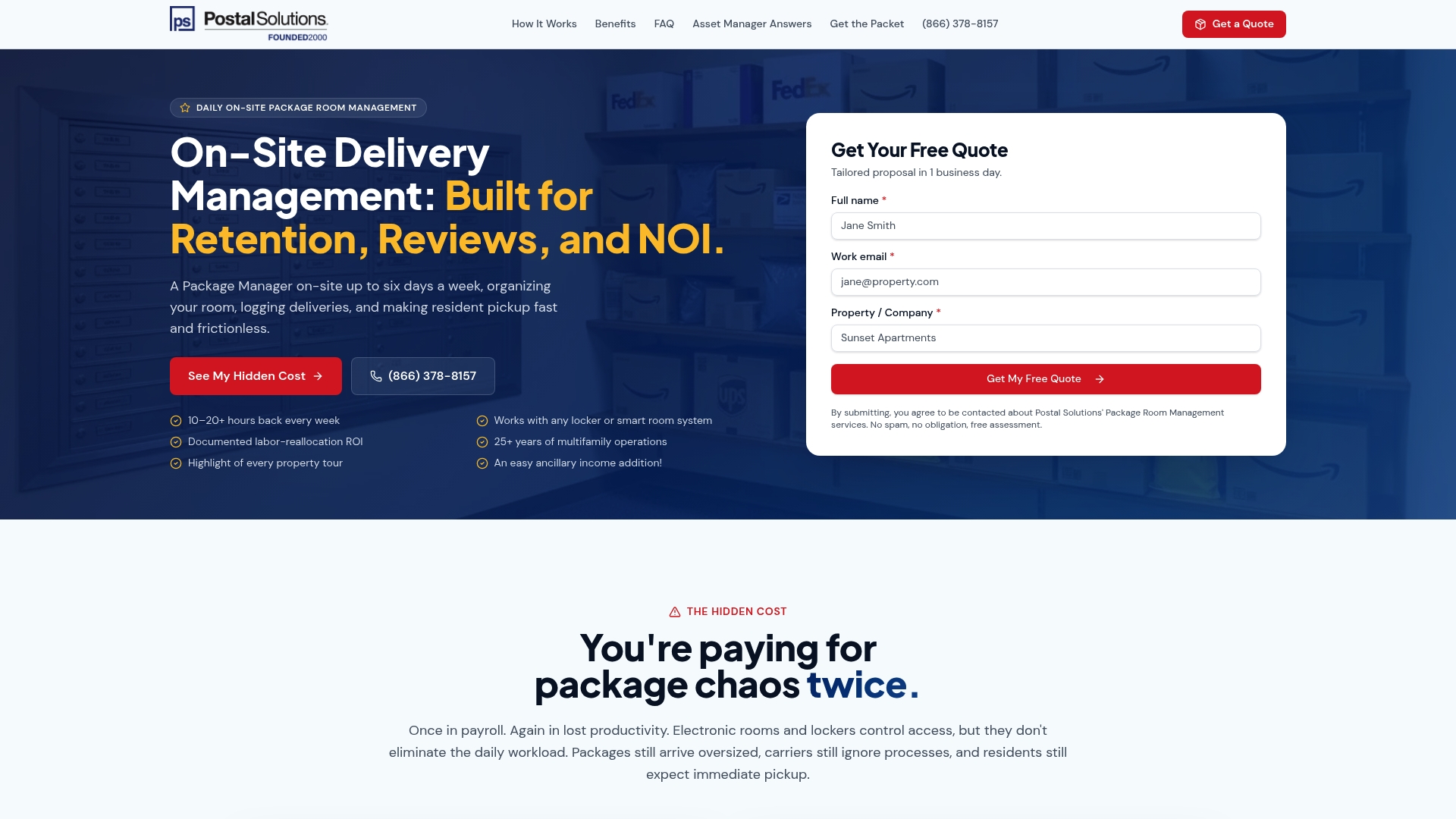
Properties that want to compare managed-service options can review how Postal Solutions differs from other approaches before committing. To request a site assessment or pilot, visit fixmypackages.com and come prepared with your unit count, existing locker or package room specs, and a rough daily delivery estimate. Both hardware integration and fully managed service options are available.
Useful sources
- NAA: How to Effectively Manage Package Acceptance — industry standards for package room design, locker scalability, and resident notification
- Parcel Tracker: What Is a Perishable Goods Protocol? — SMS notification best practices and temperature-controlled staging guidance
- Parcel Tracker: Best Practices for Logging Meal-Kit Deliveries — twice-daily temperature logging and storage rules
- Smiota: Temperature-Controlled Lockers for Apartments — liability reduction through automated cold-chain handoff
- Parcel Pending: Refrigerated Lockers — refrigerated locker compartment specs and resident access features
Key documents to keep on file at your property: daily temperature logs (target ≤ 40°F), chain-of-custody records with timestamps, SMS notification delivery confirmations, and documented staff training sign-offs.
FAQ
What temperature should refrigerated package storage stay below?
Keep perishable packages below 40°F. For non-automated refrigerators, log the temperature twice daily and document any readings outside that range with a corrective action note.
How do refrigerated parcel lockers differ from a staffed cold room?
Refrigerated lockers provide 24/7 self-service access with automatic audit logs and no staff handling after intake. A staffed cold room requires manual logging, FIFO management, and twice-daily temperature checks by on-site personnel.
What is the right notification method for perishable deliveries?
SMS is the priority channel for perishable alerts because it reaches residents faster than email and creates stronger pickup urgency. Send a text within five minutes of intake and a follow-up if the item is unclaimed after four hours.
What happens if refrigeration equipment fails during a power outage?
Move perishables to an alternate refrigerated location immediately, notify affected residents, log the incident, and document every corrective action taken. A written contingency plan prepared in advance makes this process faster and defensible.
Can Postal Solutions manage refrigerated deliveries at my property?
Yes. Postal Solutions’ On-Site Package Room Management includes daily refrigerated receiving, chain-of-custody logging, resident SMS and email notifications, temperature monitoring support, and weekly audits. Visit fixmypackages.com to request a site assessment.
Recommended
Ready when you are
Fix your package room — start with a free proposal
Daily on-site Package Manager, resident text & email pings*, and a tour-ready amenity. Tell us your unit count and we'll send a right-sized proposal — usually within one business day.
- ✓ 16–30 hours back every week
- ✓ Works with any locker system
- ✓ Faster, friction-free resident pickup
- ✓ An easy ancillary income addition