
August 8, 2026
Best Refrigerated Lockers: What Buyers Must Verify
Discover the best refrigerated lockers for grocery, pharmacy, and multifamily needs. Ensure compliance and reliability with temperature stability.
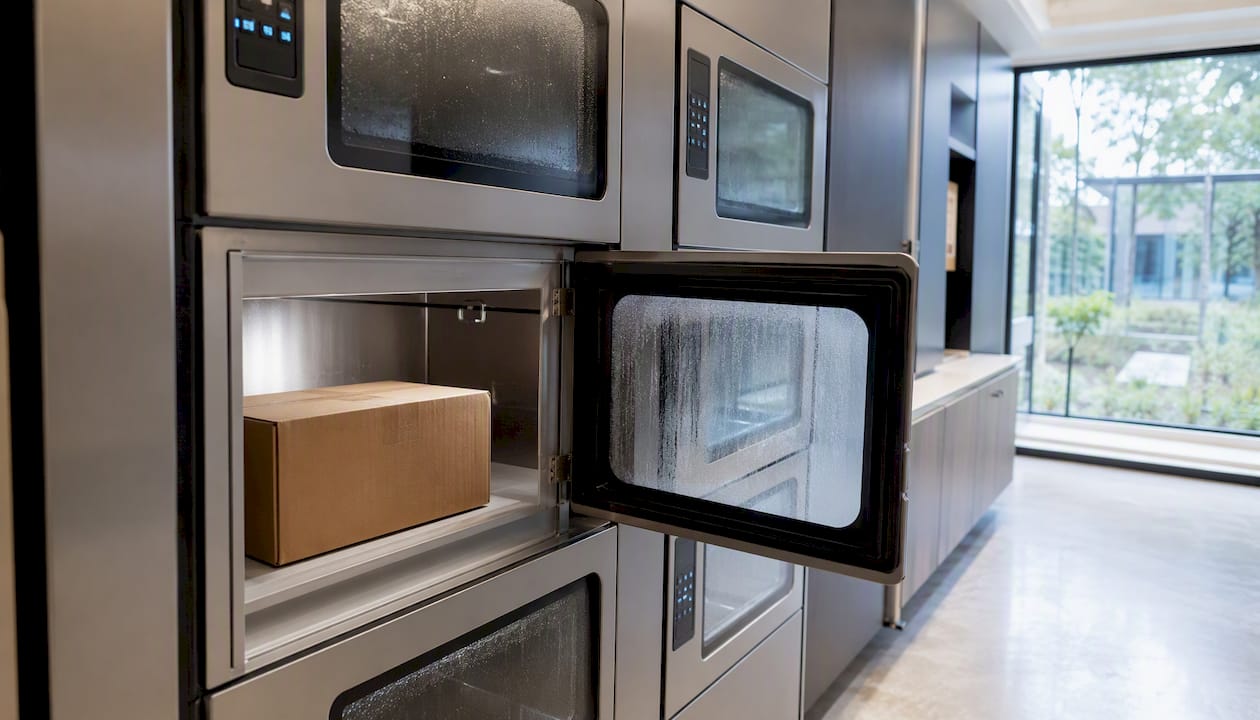
For grocery, pharmacy, and multifamily sites, modular refrigerated lockers with verified 2–8°C performance, remote monitoring, and a written SLA are the strongest starting point. The single criterion that separates a compliant deployment from a liability is documented temperature stability tied to audit-ready logs. Before you talk price with any vendor, request a time-at-temperature report and a sample SLA showing uptime guarantees and mean-time-to-repair commitments.
Shortlist by use case:
- Grocery click-and-collect: Modular outdoor refrigerated banks with 2–8°C zones and SMS/email pickup notifications
- Pharmacy prescription pickup: Pharmaceutical-grade units with per-compartment sensors, PIN/QR access, and HIPAA-aligned access logs
- Multifamily residential hub: Indoor modular cabinets integrated with property management software for cold storage packages in apartments
- Hospital or clinic: Multi-zone units with continuous temperature logging and corrective-action workflows
- Community food bank: Chest-style or modular units with 24/7 access and simple PIN authentication
Key Takeaways
Verified temperature stability tied to an SLA and audit-ready logs is the single criterion that separates a compliant refrigerated locker deployment from an operational liability.
| Point | Details |
|---|---|
| Temperature performance first | Request time-at-temperature reports from real deployments before evaluating price or capacity. |
| Match form factor to use case | Modular upright banks fit grocery and pharmacy; chest-style suits frozen food banks; multi-zone cabinets work where space is tight. |
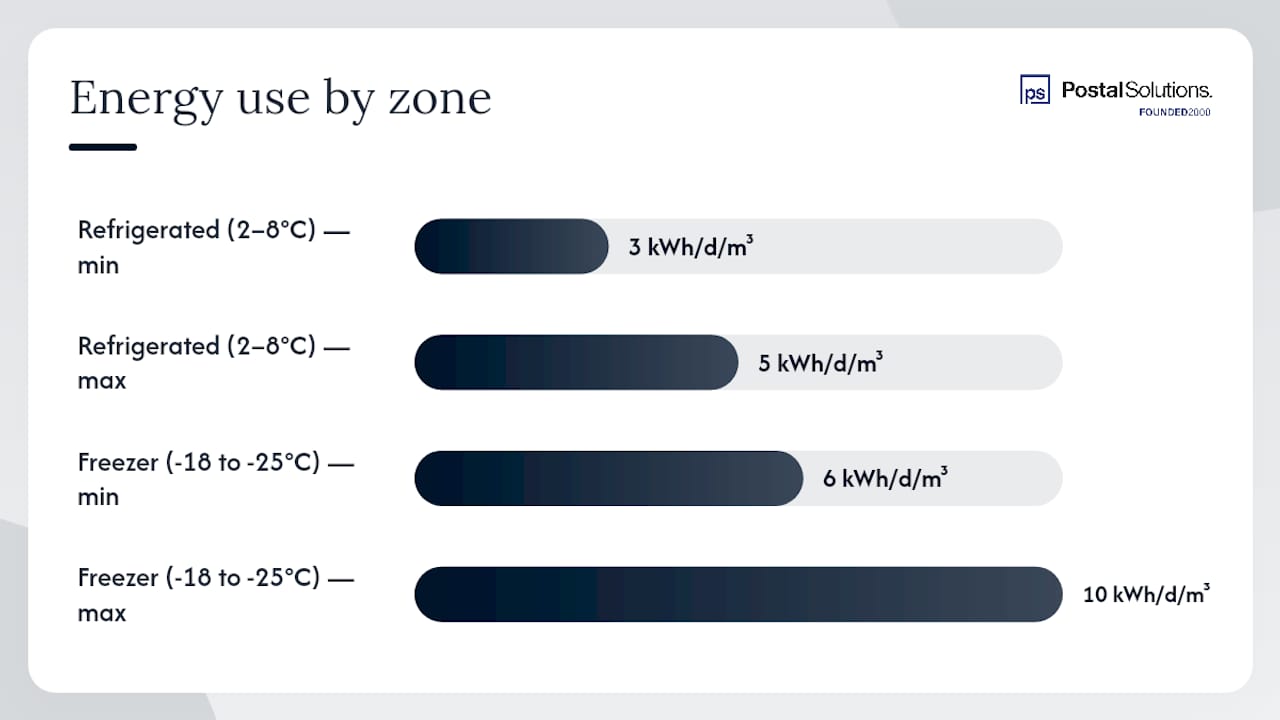
| Model TCO, not just unit price | Refrigerated units use 3–5 kWh/day/m³; freezer zones use 6–10 kWh/day/m³. Most sites with mid-to-high daily volumes recoup their investment in 18–24 months. |
| Integration is a procurement gate | Confirm API availability, webhook events, and log-export capability before signing any contract. |
| Postal Solutions as managed option | For multifamily properties, Postal Solutions’ On-Site Package Room Management handles refrigerated delivery workflows and locker integration without adding to staff workload. |
Table of Contents
- Who actually uses refrigerated lockers and why?
- What technology drives locker performance?
- Which form factors fit your site and volume?
- How do you evaluate and select the right refrigerated locker?
- What U.S. regulations govern refrigerated locker storage?
- What does a refrigerated locker system actually cost?
- How do refrigerated lockers integrate with your existing systems?
- How should you procure a refrigerated locker system?
- How do you navigate the vendor landscape?
- The part of refrigerated locker procurement most buyers get wrong
- Postal Solutions supports your refrigerated locker program
- Useful sources
- FAQ
Who actually uses refrigerated lockers and why?
The use cases are broader than most buyers expect. Grocery chains and food-service operators were early adopters, but pharmacy, healthcare, and multifamily residential are now among the fastest-growing segments, driven by the shift toward connected cold-chain infrastructure.
Grocery last-mile and click-and-collect is the highest-volume application. A store running curbside pickup outside staffed hours needs a way to hold refrigerated orders without tying up an employee. Modular outdoor banks with 2–8°C zones handle that cleanly, and the ROI case is straightforward: fewer failed deliveries, fewer spoilage write-offs.
Pharmacy and prescription pickup is more demanding. Temperature-critical medications, including insulin and certain biologics, require per-compartment sensors and access logs that can be tied to a specific patient transaction. Refrigerated medication storage at the locker level also needs to align with state pharmacy board rules, which vary.
Multifamily residential is where perishable delivery handling has become a genuine amenity differentiator. Residents ordering grocery deliveries to apartments expect cold storage packages to be held safely, not left in a lobby. A refrigerated locker bank integrated with a property management system solves that problem and gives leasing teams something concrete to show on tours.
Hospitals and clinics use temperature-controlled lockers for specimen pickup, pharmacy dispensing, and meal delivery to wards. The compliance bar here is the highest of any vertical.
Community food banks have adopted 24/7 refrigerated distribution as a dignity-preserving alternative to scheduled pickup windows. Simple PIN access and a reliable 2–8°C hold are usually sufficient.
The operational signals that indicate a dedicated unit makes sense: daily order volumes that justify the capital cost, a meaningful rate of failed or spoiled deliveries, peak pickup windows that exceed staffed hours, and a site with available electrical capacity and floor space. For low-volume sites, shared networks or a managed service often deliver better economics than a standalone purchase.
What technology drives locker performance?
The components that determine whether a locker actually holds temperature under real-world conditions are worth understanding before you evaluate any vendor’s spec sheet.
Refrigeration and thermal management:
- Compressor-based cooling (vapor-compression cycle) is standard for sustained temperature control; thermoelectric systems appear in smaller units but struggle with ambient heat loads
- Polyurethane foam insulation thickness directly affects thermal recovery time after door cycles; thicker panels recover faster
- Door seals and magnetic latching prevent warm-air infiltration, which is the most common cause of temperature drift in high-traffic units
- Freezer zones require a defrost strategy (electric or hot-gas) and condensate management to prevent ice buildup that blocks airflow
Sensors and monitoring:
- Per-compartment sensors are non-negotiable for regulated products; a single ambient sensor for the whole cabinet cannot detect a failing compartment
- IoT telemetry with time-at-temperature logging creates the audit trail that 21 CFR §117.206 requires for storage facilities
- Remote alerting should trigger within minutes of an excursion, not hours
Connectivity and access control:
- Cloud-based management platforms allow operators to view temperature logs, push firmware updates, and remotely reboot controllers without a site visit
- Access methods include PIN, QR code, one-time passcode (OTP), and NFC/card; pharmacy and healthcare deployments often require two-factor or credential-linked access
- API availability determines whether the locker integrates with your order management system or stays a siloed device
Backup and redundancy:
- A UPS or battery backup for the controller preserves access and logging during brief power interruptions
- Rapid temperature recovery after repeated door cycles is a spec to test during any pilot; some units take 20+ minutes to return to setpoint after a busy pickup window
Which form factors fit your site and volume?
Matching the physical format to the site is as important as matching the temperature range to the product.
Upright modular locker banks
The most common format for grocery, pharmacy, and multifamily deployments. Individual compartments stack vertically in a cabinet frame, and multiple cabinets can be joined to scale capacity. Indoor versions are typically powder-coated steel; outdoor-rated versions add weatherproofing, UV-resistant finishes, and sometimes a canopy. Compartment sizing matters: a standard grocery bag needs roughly 12"×12"×18" of interior space, while a prescription pouch needs far less.
Chest-style freezer lockers
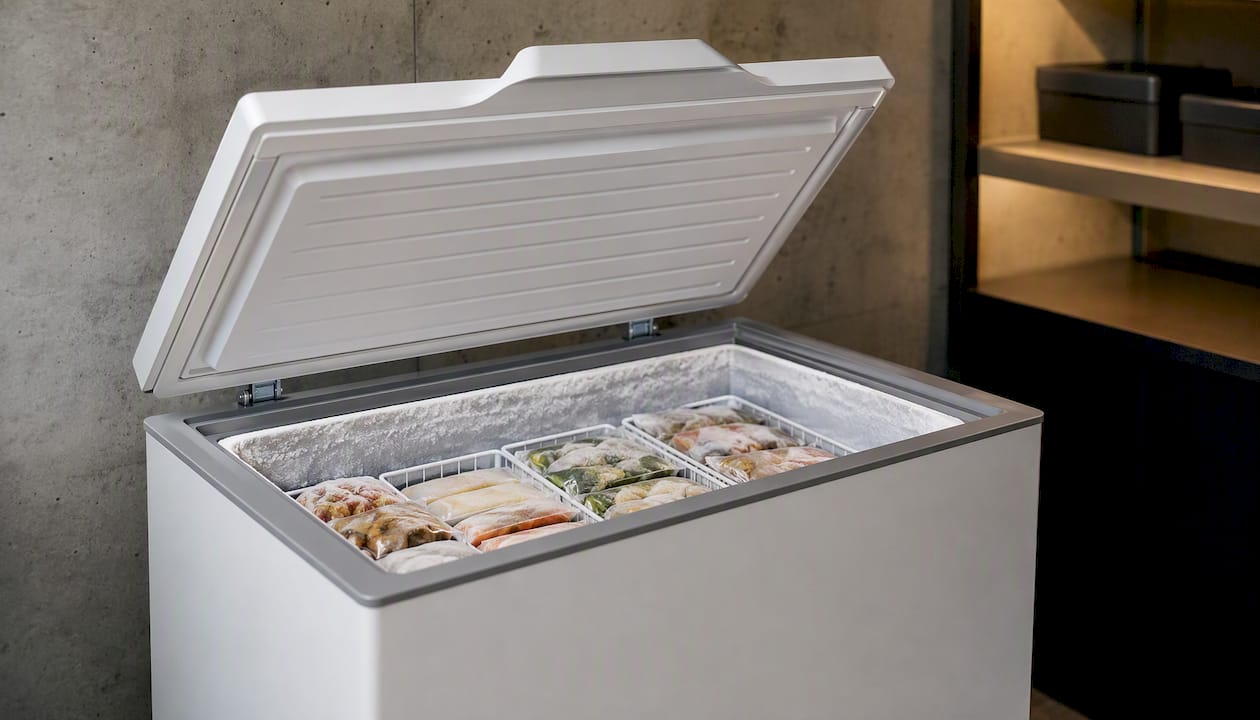
Top-loading units that maintain -18 to -25°C more efficiently than upright designs because cold air doesn’t spill when the lid opens. Better suited to food banks and frozen-food distribution than to high-frequency pickup scenarios, where the ergonomics of repeated top-loading become a friction point.
Mixed-zone modular cabinets
A single cabinet housing both refrigerated and freezer compartments. The right choice when a site handles both fresh and frozen SKUs but lacks the footprint for two separate units. The tradeoff is that a shared refrigeration system requires careful thermal isolation between zones to prevent cross-contamination of temperature ranges.
Walk-in locker rooms
High-volume centralized cold storage with individual locker-style access points inside a refrigerated room. These are a different procurement category entirely, with commercial HVAC requirements, structural considerations, and significantly higher installation costs. They make sense for large distribution hubs or high-volume grocery fulfillment centers, not for a 200-unit apartment building.
Installation basics to confirm before ordering: outdoor-rated units need a weatherproof electrical connection and a level pad; indoor units need clearance for condenser airflow (typically 6–12 inches at the rear); and placement near a loading dock or delivery entrance shortens the handling chain and reduces the time product spends outside temperature control.
How do you evaluate and select the right refrigerated locker?
This is where most procurement processes go wrong: buyers compare price and capacity without verifying the performance claims that actually matter. Use this checklist as your RFP framework.
Evaluation checklist
- Energy performance and refrigerant compliance: Commercial refrigeration guidance from the U.S. Department of Energy provides efficiency benchmarks. Ask vendors for their refrigerant type and confirm compliance with the U.S. AIM Act’s low-GWP trajectory.
Sample RFP questions
- Provide a time-at-temperature report from a comparable deployment (same product type, similar ambient conditions).
- Describe your sensor calibration schedule and provide a sample calibration certificate.
- Share your API documentation and describe the webhook/event model for pickup and loading events.
- Provide a sample SLA showing uptime commitment, MTTR, and escalation tiers for critical failures.
- What is your planned preventive maintenance cadence, and what does it include?
- What refrigerant does this unit use, and what is your roadmap for low-GWP compliance?
Pilot acceptance criteria
Run a 48–72 hour instrumented pilot before full deployment. Pass/fail metrics:
- Temperature drift of no more than 0.5°C from setpoint over the pilot window, measured across all compartments
- Remote alert triggered and received within five minutes of a simulated excursion
- Log export completed and verified for completeness and timestamp accuracy
- At least one full pickup-load simulation cycle with access credential testing
Red flags: missing per-compartment sensors, no exportable audit logs, vendor unable to produce cooling performance data from real deployments, and SLAs that cover only hardware failure but not software or connectivity outages.
Pro Tip: Ask the vendor to demonstrate a remote temperature alert during your site visit. A vendor who cannot show you a live alert within five minutes of a triggered excursion has not operationalized their monitoring platform.
What U.S. regulations govern refrigerated locker storage?
The regulatory picture has two layers: federal food-safety requirements and state-level licensing rules that vary significantly.
At the federal level, 21 CFR §117.206 sets the baseline for facilities solely engaged in storage of unexposed packaged food. The rule requires operators to establish adequate temperature controls, define monitoring frequency, document corrective actions when control is lost, and retain records of both monitoring and corrective actions. The FDA Food Code adds retail-level guidance on time-and-temperature control for safety (TCS) foods, which covers most fresh and prepared products held in refrigerated lockers.
Recordkeeping checklist for compliance:
- Continuous or affirmative temperature logs with timestamps for each compartment
- Exception records documenting every temperature excursion, its duration, and the product affected
- Corrective-action records: what was done, by whom, and when
- Calibration certificates for all sensors, renewed on the vendor’s stated schedule
- Audit-ready export capability so records can be produced during an inspection without manual transcription
Corrective actions are not optional documentation. When a temperature excursion occurs, the operator must move or quarantine affected product, assess whether safety is compromised, notify recipients if it is, and open a service ticket tied to root-cause analysis. Automated alerting from the locker’s monitoring platform is what makes this feasible at scale.
At the state level, licensing requirements add another layer. Oregon is a clear example: the Oregon Department of Agriculture requires a refrigerated locker plant license for any operation offering compartmentalized cold storage to the public for rent or compensation. Operating without that license carries penalties. Other states have analogous rules under different agency structures. Confirm your state’s requirements before deployment, not after.
Note: This article provides general regulatory information, not legal or compliance advice. Confirm current requirements with the FDA, your state agriculture or health department, and a qualified food-safety professional before deployment.
What does a refrigerated locker system actually cost?
Cost varies more than most buyers expect, and the unit price is rarely the largest line item over a five-year horizon.
Capital cost components:
- Entry-level refrigerated locker (single-zone, 4–8 compartments): lower end of the market, suitable for low-volume residential or small pharmacy deployments
- Mid-range multi-zone units: significantly higher, reflecting dual-compressor systems, larger compartment counts, and cloud-connected controllers
- Pharmaceutical-grade units with per-compartment sensors, validated logging, and NSF-certified materials: top of the range
- Shipping and installation: typically adds 10–20% to unit cost, more for outdoor installations requiring electrical work or a concrete pad
- Electrical upgrades: dedicated circuits for compressor loads are often required and may involve permit fees
Energy operating costs: According to temperature-controlled locker benchmarks, refrigerated units consume approximately 3–5 kWh per day per cubic meter of storage volume, while freezer units run 6–10 kWh per day per cubic meter. The U.S. Department of Energy’s commercial refrigeration guidance provides efficiency benchmarks useful for comparing equipment and modeling monthly utility costs against local electricity rates.
| Zone type | Energy use (kWh/day/m³) | Monthly operational cost (example 0.5 m³ unit) |
|---|---|---|
| Refrigerated (2–8°C) | 3–5 | — |
| Freezer (-18 to -25°C) | 6–10 | — |
Maintenance and service: Plan for annual preventive maintenance visits, sensor recalibration (typically every 12 months), and compressor service at manufacturer-recommended intervals. Warranty coverage distinctions matter: a five-year compressor warranty that excludes labor and travel costs is not the same as a five-year parts-and-labor SLA.
ROI and payback: Mid-to-high volume sites typically reach payback in 18–24 months, driven by failed-delivery cost avoidance, reduced spoilage, and labor savings from unstaffed pickup. Low-volume sites often find that a managed service or shared network delivers better economics than a capital purchase.
How do refrigerated lockers integrate with your existing systems?
A locker that cannot talk to your order management system is an island. Integration readiness should be a procurement gate, not an afterthought.
Integration checklist:
- API availability and documentation: REST APIs are standard; confirm whether the vendor provides sandbox access for pre-deployment testing
- Webhook or event model: the locker should push events (door open, compartment loaded, pickup completed, temperature excursion) to your systems in near real time
- User authentication: PIN and QR are table stakes; OTP via SMS is preferred for high-security applications
- Payment or reservation flows: relevant for grocery and food-service operators who need to tie a specific order to a specific compartment
Operational workflow to map before deployment:
- Store or courier loads compartment and assigns it to an order
- System sends SMS/email notification to recipient with access credential
- Recipient authenticates and retrieves order; event logged with timestamp
- Exception handling: if pickup does not occur within a defined window, the system alerts staff and logs the missed pickup
Cybersecurity items to request from vendors:
- Encryption in transit (TLS 1.2 or higher) and at rest for stored logs
- Role-based access controls distinguishing operator, technician, and admin roles
- Log retention policy (minimum 90 days is a reasonable baseline for food-safety compliance)
- SOC 2 Type II report or equivalent, particularly for cloud-hosted platforms handling access credentials
Test these scenarios during your pilot: trigger a remote temperature alert and verify receipt time; execute a door-open event and confirm it appears in the log; run a credentialed pickup flow end-to-end; and attempt a firmware update rollback to confirm the vendor’s change-management process.
How should you procure a refrigerated locker system?
Three routes, each with a different risk and cost profile.
- Capital purchase: You own the hardware. Best for high-volume, long-term deployments where TCO control matters and you have the internal capability to manage maintenance contracts and compliance documentation. Requires upfront capital and ongoing vendor management.
- Leasing: Lower upfront cost, predictable monthly payments, and typically includes a maintenance component. The tradeoff is higher total cost over the lease term and potential end-of-term complications if the hardware is outdated.
- Managed or hosted service: The operator handles compliance, maintenance, and operations. Best for low-to-mid volume sites, properties without dedicated facilities staff, or buyers who want to avoid the complexity of food-safety recordkeeping. Postal Solutions’ On-Site Package Room Management is an example of this model for multifamily properties.
What to request in proposals:
- Sample SLA with uptime, MTTR, and escalation tiers
- Third-party test reports or certifications (UL, NSF, or equivalent)
- Clear pricing for installation, recurring service, and software licensing
- References or case studies from deployments in your vertical
Pilot timeline:
- Site survey and electrical assessment (Week 1)
- Delivery and installation (end of Week 1 to start of Week 2)
- Instrumented 48–72 hour performance run with temperature logging active
- Pickup-load simulation and access credential testing
- Data export review and log verification
- Acceptance or remediation (total window: 2–4 weeks)
Decision criteria matrix: temperature stability (primary), integration readiness (API and workflow fit), operational fit (footprint, traffic flow, staffing), and commercial terms (warranty, spare parts, SLA).
How do you navigate the vendor landscape?
The market includes four distinct supplier types, and knowing which you are talking to changes what you should ask for.
Hardware-first manufacturers build and sell the physical cabinet. Their strength is thermal engineering and build quality; their weakness is often software. Ask for time-at-temperature data from real deployments, not just lab certifications.
Software or platform providers integrate with third-party cabinets and provide the cloud management layer, access control, and analytics. Evaluate their API documentation, uptime history, and data-portability commitments. If the platform goes away, can you export your logs?
Full-stack providers offer hardware plus a proprietary SaaS platform. Convenient, but creates vendor lock-in. Negotiate data-export rights and API access into the contract before signing.
Managed-service operators handle the entire operation, including compliance and staffing. The right fit for properties and operators who want the outcome without the operational overhead.
Validation steps regardless of vendor type: request time-at-temperature data from comparable deployments, check references in your vertical, require audit-ready logs and calibration certificates, and confirm refrigerant compliance with the U.S. AIM Act’s low-GWP requirements. The refrigerated lockers market is shifting toward connected, remotely monitored systems as a baseline expectation, which means vendors who cannot demonstrate remote monitoring capability are already behind the curve.
For a broader look at smart locker alternatives for U.S. properties, the procurement considerations extend beyond temperature control to integration depth and service model.
The part of refrigerated locker procurement most buyers get wrong
The spec sheet is not the product. Every vendor in this category can produce a document showing their unit holds 2–8°C under controlled lab conditions. What that document cannot tell you is how the unit performs after 40 door cycles in a hot parking garage in July, or what happens when the cloud platform goes down and the access controller loses its session.
The buyers who end up with a compliance problem are almost never the ones who chose the wrong temperature range. They are the ones who skipped the pilot, accepted a vendor’s assurance that “logs are available on request,” and discovered six months later that the logs were stored locally on the unit and had been overwriting themselves every 30 days.
Audit-ready means exportable, timestamped, tamper-evident, and retained for a period that satisfies your regulatory obligations. If a vendor cannot show you that capability in a live demonstration, the product is not audit-ready regardless of what the marketing materials say.
There is also a tendency to underestimate the operational side. A refrigerated locker bank is not a set-and-forget appliance. It needs daily checks, a clear escalation path when an alert fires at 2 AM, and someone who knows the difference between a sensor fault and a compressor fault. For multifamily properties, pairing locker hardware with an on-site package management service is often what makes the difference between a locker program that residents trust and one that generates complaints.
The best refrigerated lockers are the ones that perform under your conditions, integrate with your systems, and come with a vendor who can prove it before you sign.
Postal Solutions supports your refrigerated locker program
Running a refrigerated locker program at a multifamily property is more than a hardware decision. The daily workflow of receiving cold deliveries, logging chain of custody, notifying residents, and handling exceptions is where most properties lose time and generate complaints.
Postal Solutions’ On-Site Package Room Management handles exactly that layer. A dedicated Package Manager works your community up to six days a week, receiving and sorting all deliveries including refrigerated items, maintaining logs, sending resident notifications, and integrating with whatever locker hardware you already have or plan to install. Properties that have tried to manage this with leasing staff know the math: the hours spent on packages are hours not spent on leasing, renewals, or resident relationships.
For properties evaluating managed-service procurement as an alternative to a direct hardware purchase, see how Postal Solutions compares to other package management approaches, or download the free Package Room Management guide to understand the full workflow before your next vendor conversation.
Useful sources
These primary sources support the regulatory, energy, and market claims in this article. Procurement and compliance teams should consult them directly when building documentation for vendor RFPs or internal approvals.
- Complete guide to temperature-controlled lockers
- 21 CFR § 117.206 - Modified requirements that apply to a facility solely engaged in the storage of unexposed packaged food. | Electronic Code of Federal Regulations (e-CFR) | US Law | LII / Legal Information Institute
- Refrigerated Lockers Market by Type, Temperature Control Type, Material Construction, Access Technology, Connectivity, End-User Industry - Global Forecast 2026-2032
- The Ultimate Guide to Refrigerated Lockers | Click n Collect
- Refrigerated locker plant licensing — Oregon Department of Agriculture
FAQ
What temperature range do the best refrigerated lockers maintain?
Most refrigerated lockers hold 2–8°C for fresh and chilled products; freezer compartments run -18 to -25°C. Multi-zone units combine both ranges in a single cabinet.
What certifications should you require from a refrigerated locker vendor?
Request NSF/ANSI 2 certification for food-contact surfaces, UL listing for electrical safety, and third-party time-at-temperature test reports. For pharmaceutical applications, confirm alignment with USP storage standards and ask for sensor calibration certificates.
Who makes smart refrigerated lockers for commercial use?
The market includes hardware-first manufacturers, full-stack providers combining cabinets with proprietary SaaS platforms, and software providers that integrate with third-party cabinets. Evaluate vendors by temperature performance data, API documentation, and SLA terms rather than brand name alone.
How do refrigerated lockers differ from a cold room?
A cold room is a single large refrigerated space accessed by a door; a refrigerated locker bank provides individually secured compartments with electronic access control and per-compartment temperature logging. Lockers are better suited to multi-user pickup scenarios; cold rooms work for centralized bulk storage.
Can Postal Solutions manage refrigerated locker programs at apartment properties?
Yes. Postal Solutions’ On-Site Package Room Management integrates with existing locker hardware and handles the daily workflow of receiving, logging, and notifying residents for refrigerated deliveries, reducing the operational burden on leasing staff.
Recommended
- Best Smart Locker Alternatives for US Properties in 2026 — Postal Solutions Blog
- Refrigerated Delivery Management for Property Managers — Postal Solutions Blog
- The Best Package Concierge Alternatives for 2026 — Postal Solutions Blog
- Luxer One + Postal Solutions — Package Room Management for Multifamily
Ready when you are
Fix your package room — start with a free proposal
Daily on-site Package Manager, resident text & email pings*, and a tour-ready amenity. Tell us your unit count and we'll send a right-sized proposal — usually within one business day.
- ✓ 10–20+ hours back every week
- ✓ Works with any locker system
- ✓ Faster, friction-free resident pickup
- ✓ An easy ancillary income addition