
August 7, 2026
USPS Apartment Delivery Rules: A Manager's Guide
Master USPS apartment delivery with essential guidelines. Centralize intake, manage packages efficiently, and optimize staffing today!
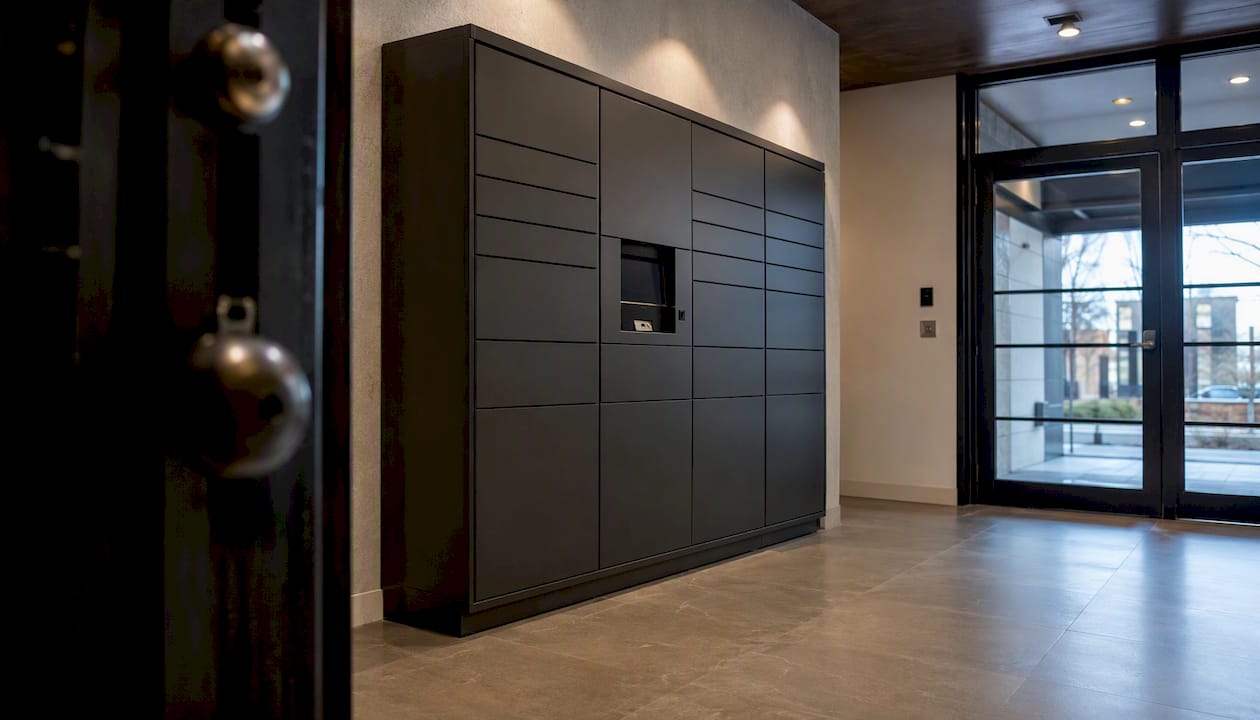
Centralize your USPS intake, install STD-4C-compliant mailboxes and parcel lockers, log every package with a signed chain-of-custody record, and decide now whether you’ll staff the package room in-house or contract it out. That’s the whole job. Everything else in this guide is the detail behind those four moves.
This week, do three things:
- Call or email your local USPS Growth Manager or Postmaster to confirm your receptacle type, parcel-locker ratio, and any required upgrades in writing.
- Adopt a signed intake log for every package your staff touches, starting today.
- Run a package-volume audit by unit to decide whether in-house staffing or a contracted managed service makes financial sense.
Table of Contents
- What USPS apartment delivery rules actually require from you
- How USPS carriers actually handle deliveries at your property
- In-house staffing vs. contracted package room management
- Daily intake-to-pickup workflow and chain-of-custody controls
- Who to contact at USPS and what to ask for
- Budget factors and timeline for parcel lockers or staffed package management
- Key Takeaways
- The compliance burden most managers underestimate
- What Postal Solutions does for your package room
- Useful sources
- FAQ
What USPS apartment delivery rules actually require from you
The Postal Operations Manual is clear: mail receptacles and parcel lockers in multi-unit buildings must sit close to the building entrance, positioned so carriers can reach them without interference from swinging doors or other obstructions. Owners are responsible for purchase, installation, maintenance, and repair. USPS provides the master access lock. That’s the baseline.
STD-4C and CBU requirements
All new or remodeled apartment buildings must install USPS-approved 4C centralized mailbox equipment with at least one parcel locker for every five mailbox compartments. That 1:5 ratio is the current regulatory minimum per the Postal Operations Manual. For exterior installations, Cluster Box Units (CBUs) are the standard option. CBUs are designed to be “package friendly” with parcel lockers built in, and USPS considers centralized delivery its preferred delivery mode.
The 1:5 parcel-locker minimum is a regulatory floor, not a planning target. Modern e-commerce volumes routinely exceed it. Build in extra capacity from the start.
Placement and lighting rules
Handbook PO-632 specifies that equipment must be near the main entrance (vestibule, lobby, or hall), with unobstructed carrier access. Exterior CBUs require a canopy and adequate lighting. Where applicable, maintain a 15-foot clear zone from the street or sidewalk. Buildings with 15 or more mailbox compartments must provide a resident directory.
Owner responsibilities
Per the Operations, Developers and Builders Guide, you own every cost: purchase, installation, ongoing maintenance, and replacement. USPS furnishes the master access lock and will not accept private master keys for carrier access. Keep your own key records, but never externalize the master. When equipment falls out of repair, the Postmaster can require replacement or withhold mail service entirely.
Pro Tip: Get every approval from your Growth Manager or Postmaster in writing before construction drawings are finalized. Verbal agreements don’t survive staff turnover.
How USPS carriers actually handle deliveries at your property
Carriers must attempt in-person delivery for accountable items, delivering to the addressee, an authorized agent, or a designated delivery location. USPS delivery policy includes one notable exception: in buildings with more than three floors and no working elevator, carriers may limit delivery to a designated first-floor location and leave a PS Form 3849 notice rather than climbing stairs.
For parcels, carriers will use USPS-certified parcel lockers when the package fits. Non-certified smart locker hardware is a real problem here: USPS-approved lockers integrate with the Arrow lock system, and carriers will bypass any hardware they haven’t tested and certified. Oversized or overscale parcels that don’t fit any locker require manual intake, which means someone on your staff or a contracted Package Manager needs to be there to accept them.
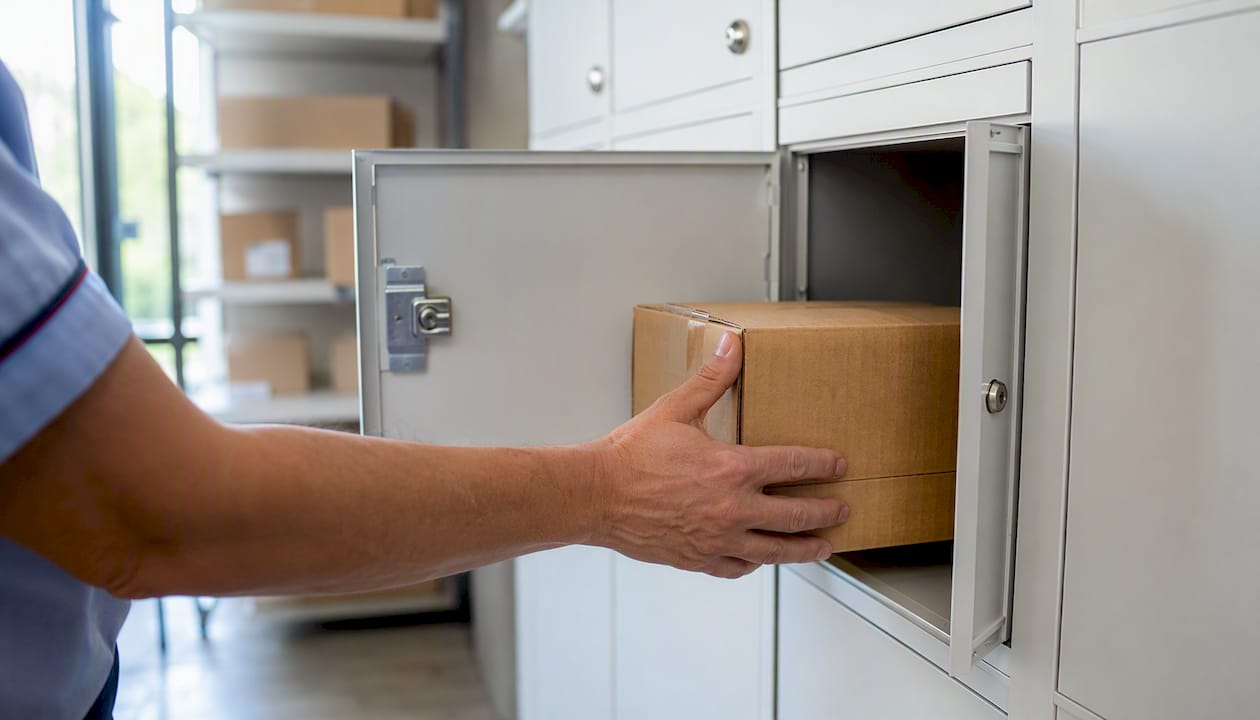
Section 631 of the Delivery Growth Management guidelines explicitly authorizes property managers to arrange delivery to a central office or desk for distribution by building staff. That’s the legal foundation for a staffed package room.
Pro Tip: Track every PS Form 3849 notice-left event by unit and date. A pattern of repeated notices signals either a carrier access problem or a staffing gap at your intake point, and it’s the right data to bring to your Growth Manager.
In-house staffing vs. contracted package room management
The right answer depends on four variables: daily package volume per unit, your labor cost structure, peak-season load, and how much compliance risk you’re willing to carry internally.
Evaluation criteria:
- Package volume per unit (high volume favors contracted expertise)
- Labor cost vs. service level (in-house is cheaper at low volume; contracted scales better)
- Peak-season surge capacity (move-in, holidays)
- Technology integration needs (tracking software, resident SMS/email notifications)
- Audit and chain-of-custody compliance requirements
| Factor | In-house | Contracted managed service |
|---|---|---|
| Cost at low volume | Lower | Higher |
| Scalability at peak | Limited | Built-in |
| Chain-of-custody consistency | Depends on training | Standardized |
| Compliance risk | Carried by property | Shared with provider |
| Resident experience | Variable | Consistent |
| Audit-readiness | Manual | Systematic |
A mid-rise property with high e-commerce volume that shifts from repeated notice-left complaints to a contracted daily intake model with SMS notifications typically sees resident satisfaction improve and leasing staff recover hours per week previously spent sorting packages. The package room becomes a tour-worthy amenity rather than a complaint magnet.
Postal Solutions provides turnkey on-site package room management for properties that want a compliant, professionally run operation without building the staffing model internally.
Pro Tip: Before choosing in-house, calculate the true loaded labor cost: wages, benefits, training time, and the hours your leasing staff currently spend on packages. That number usually surprises property managers.
Daily intake-to-pickup workflow and chain-of-custody controls
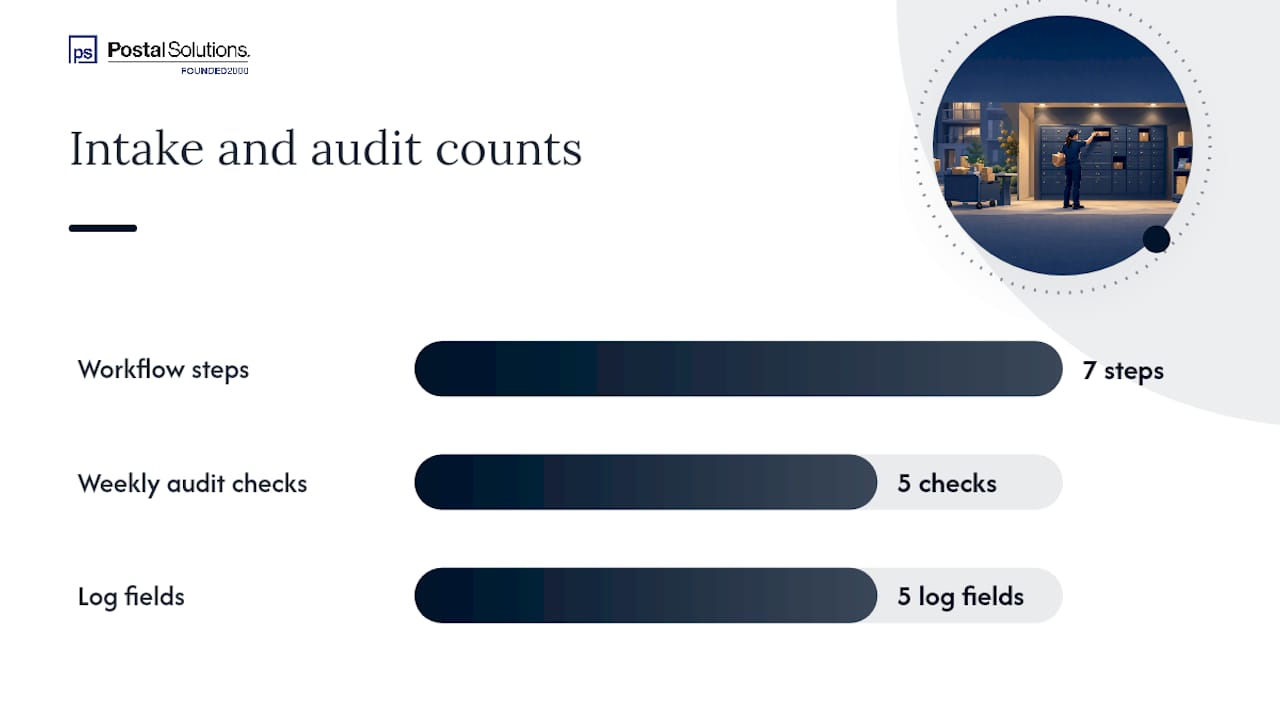
A reliable workflow has seven steps:
- Arrival acceptance: Carrier delivers to the central desk, locker bank, or designated intake point.
- Inspect and log: Record date/time, carrier name, sender, recipient name and unit, tracking number, size, and custody initials.
- Tag and shelve or assign locker: Attach a property-specific label; place in the assigned locker or on the correct shelf.
- Resident notification: Send SMS and email immediately after intake. For a resident notification system that automates this step, see the linked guide.
- Pickup verification: Resident signs or scans out; log pickup time and staff initials.
- Unclaimed items: Flag packages held beyond your retention period (align with USPS rules and your lease terms); notify resident again and document.
- End-of-shift reconciliation: Match physical inventory to the log before closing.
Weekly audit checklist:
- Reconcile log entries against physical inventory
- Spot-check five random packages for complete log fields
- Review any discrepancies with a supervisor sign-off
- Confirm CCTV coverage of the intake area is functional
- Document and resolve any chain-of-custody gaps
For a detailed look at package sorting systems that support this workflow, the linked resource covers both manual and software-assisted approaches.
| Log field | Purpose |
|---|---|
| Date/time received | Establishes custody timeline |
| Carrier name/route | Identifies delivery source |
| Tracking number | Links to carrier record |
| Locker/shelf location | Enables fast retrieval |
| Pickup date and initials | Closes the custody chain |
Who to contact at USPS and what to ask for
Your primary contacts are the local USPS Growth Manager, the Postmaster, and the carrier supervisor for your route. Handbook PO-632 recommends engaging Growth Managers early in the design process, before final site plans go to the municipality.
What to verify in writing:
- Delivery mode (centralized vs. curb) and any required changes
- Approved receptacle type and parcel-locker ratio for your property
- Carrier master-lock procedure and key responsibilities
- Whether your designated delivery location (central desk or package room) is formally recognized
- Whether carriers will use any third-party smart lockers on-site, or only USPS-certified hardware
Sample request email (adapt as needed):
Pro Tip: Ask specifically whether your smart locker vendor’s hardware is on the USPS-certified list. Non-certified hardware can cause carriers to bypass the locker system entirely, leaving packages at the carrier’s discretion.
Budget factors and timeline for parcel lockers or staffed package management
Cost drivers to budget:
- STD-4C or CBU hardware purchase (varies by unit count and configuration)
- Parcel locker hardware beyond the 1:5 minimum
- Electrical, lighting, and canopy installation for exterior units
- Permitting and USPS Growth Manager plan review (allow 2–6 weeks)
- Staffing labor (in-house or contracted)
- Package management software and resident notification integration
- Retrofit contingency for legacy equipment upgrades
Sample implementation timeline:
- Site review and USPS Growth Manager sign-off: 2–6 weeks
- Equipment procurement: 4–8 weeks
- Installation and USPS inspection: 1–3 weeks
- Staff training and pilot operation: 1–2 weeks
Estimation approach: Add per-unit hardware cost plus fixed installation cost plus the first three months of staffing. That sum gives you a realistic up-front budget and a monthly-per-unit ongoing cost to benchmark against your operating budget.
Plan for overflow storage solutions and seasonal surge capacity. Holiday and move-in periods can double or triple normal package volume, and the 1:5 locker minimum will not absorb that load without overflow procedures and additional staffing.
Key Takeaways
Compliant USPS apartment delivery requires STD-4C or CBU equipment at the 1:5 parcel-locker minimum, written Growth Manager approval, signed chain-of-custody intake, and a staffing model that can handle overflow and peak-season volume.
| Point | Details |
|---|---|
| STD-4C and CBU compliance | New and remodeled buildings must install USPS-approved equipment with at least one parcel locker per five mailbox compartments. |
| Growth Manager approval | Confirm receptacle type, locker ratio, and delivery mode in writing before finalizing any design or retrofit. |
| Chain-of-custody logging | Log every package at intake with tracking number, location, and custody initials; reconcile weekly. |
| Certified hardware only | USPS carriers will only use Arrow-lock-compatible, certified locker hardware; non-certified units get bypassed. |
| Postal Solutions | On-Site Package Room Management by Postal Solutions provides daily intake, chain-of-custody logs, resident notifications, and overflow handling for properties that want a compliant, professionally run package room. |
The compliance burden most managers underestimate
Property managers tend to treat the package room as a logistics problem. It’s actually a compliance problem that happens to have a logistics solution. The USPS rules around STD-4C equipment, parcel-locker ratios, certified hardware, and carrier access aren’t suggestions. A Postmaster can withhold mail service from a building with non-compliant or broken equipment. Carriers will bypass non-certified smart lockers entirely. Those aren’t edge cases.
What’s less obvious is that the same compliance infrastructure, when it’s run well, becomes a genuine competitive advantage. A staffed package room with daily intake, signed chain-of-custody logs, and same-day resident notifications is something a leasing agent can walk a prospect through and point to as proof that the property is managed at a higher level. The compliance work and the amenity work are the same work. Most properties just haven’t connected those two things yet.
What Postal Solutions does for your package room
Your leasing team shouldn’t be sorting boxes. Postal Solutions puts a dedicated on-site Package Manager at your property up to six days a week: receiving every carrier’s delivery, logging chain-of-custody records, shelving or assigning lockers, sending resident SMS and email notifications, and handling overflow and oversized parcels that don’t fit standard lockers.
The service works with the package room or locker hardware you already have, including Luxer One locker systems. Properties that structure it as a resident amenity fee can recover the management cost entirely. Download the free Package Room Management guide for checklists, workflow templates, and a labor-cost comparison worksheet, or contact Postal Solutions directly for a site evaluation.
Useful sources
The USPS documents below are the primary references for the rules covered in this guide:
- Postal Operations Manual : Issue 9 (Updated With Revisions Through July 31, 2020 )
- Delivery Services
- Parcel lockers — USPS Employee News
- Operations, developers and builders guide
- 5 Multi-point Residential Deliveries — PO-632
Next steps: Schedule a site review with your Growth Manager, run a package-volume audit by unit, and download the Postal Solutions package room guide to scope your staffing and hardware budget.
FAQ
What USPS mailbox standard applies to new apartment buildings?
New and remodeled apartment buildings must install USPS-approved 4C centralized mailbox equipment with at least one parcel locker for every five mailbox compartments, per the current Postal Operations Manual.
Can USPS deliver packages directly to a building’s package room?
Yes. Section 631 of the USPS Delivery Growth Management guidelines authorizes property managers to arrange delivery to a central office or desk for distribution by building staff, making a staffed package room a fully compliant intake point.
What happens if my parcel lockers aren’t USPS-certified?
Carriers will bypass non-certified hardware entirely. USPS-approved lockers must integrate with the Arrow lock system; any smart locker that doesn’t meet that standard will be ignored by carriers, leaving packages undelivered or returned.
Who pays for mailbox installation and repairs at an apartment property?
Property owners and developers are responsible for purchase, installation, maintenance, repair, and replacement of all mailbox equipment. USPS furnishes only the master access lock for carrier delivery.
When should I contact the USPS Growth Manager about my property?
Contact your local Growth Manager before finalizing construction drawings or any retrofit plan. Handbook PO-632 requires Growth Manager engagement before final site plans are submitted, and written approval protects you from rework or delivery interruptions later.
Recommended
Ready when you are
Fix your package room — start with a free proposal
Daily on-site Package Manager, resident text & email pings*, and a tour-ready amenity. Tell us your unit count and we'll send a right-sized proposal — usually within one business day.
- ✓ 10–20+ hours back every week
- ✓ Works with any locker system
- ✓ Faster, friction-free resident pickup
- ✓ An easy ancillary income addition