
August 3, 2026
RFID Package Tracking for Property Managers: 2026 Guide
Discover if RFID package tracking is right for your property management. Evaluate your needs to enhance efficiency and accuracy!
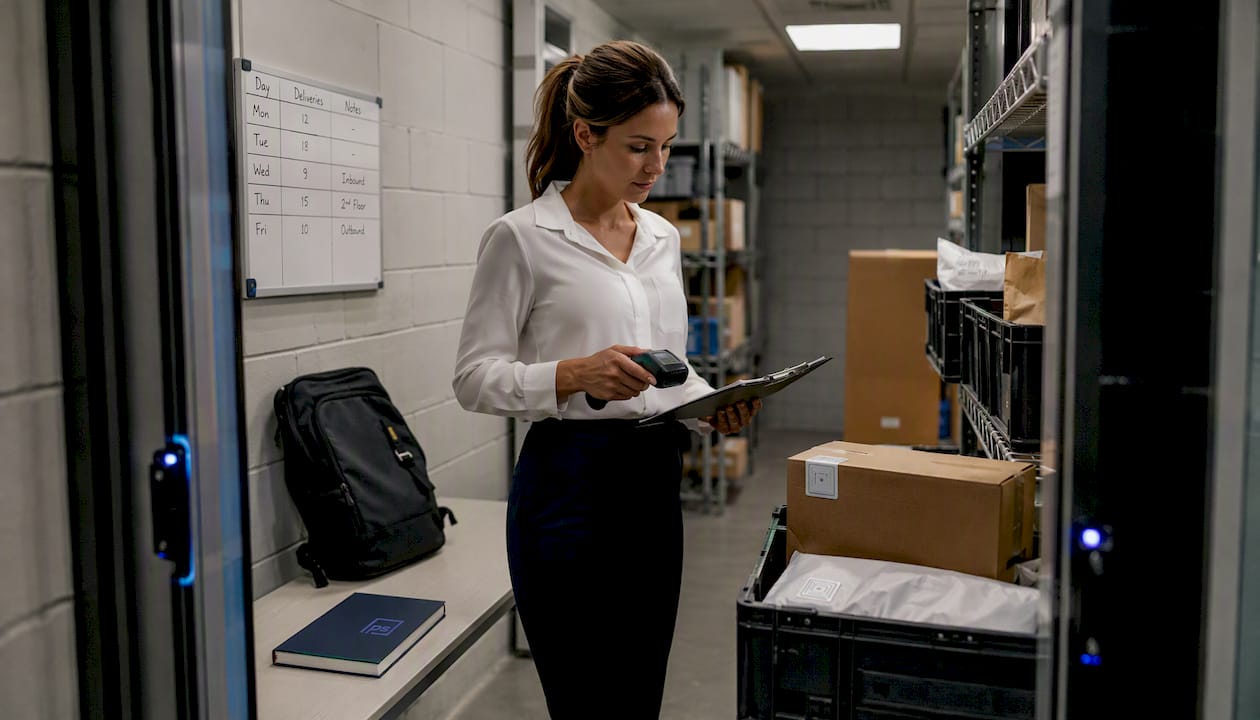
RFID package tracking works well for high-volume apartment and student housing communities, but it is not the right fit for every property. Here is a fast decision check before you go further.
Is RFID right for your property?
- Daily volume threshold: Properties with high daily package volumes see the strongest return. Below that, barcode scanning or a managed package room typically costs less and delivers comparable accuracy.
- Controlled space: You need a dedicated, enclosed package room or locker bay. Open hallway staging kills read reliability.
- Carrier compliance capacity: RFID only works if couriers follow intake procedures. If you cannot enforce a consistent drop-off workflow, read rates will disappoint regardless of hardware quality.
If you check all three boxes, a 30–60 day pilot is your logical next step. If you clear only one or two, a barcode-based or managed on-site approach will likely serve you better at lower cost and complexity.
Table of Contents
- How does RFID package tracking work inside a package room?
- What are the real benefits and limits of RFID for multifamily?
- Step-by-step implementation checklist and a practical rollout plan
- What does RFID deployment actually cost, and what is the ROI?
- What integrations does an RFID system need to work day-to-day?
- Alternatives to RFID and when to choose them
- How do you protect resident privacy in an RFID package system?
- What should you ask vendors before signing a deployment contract?
- What are the practical next steps for your property?
- Key Takeaways
- What most RFID articles get wrong about package rooms
- Postal Solutions handles the package room so your team does not have to
- FAQ
How does RFID package tracking work inside a package room?
RFID shipment tracking relies on four core components working together: tags, readers, middleware, and a software dashboard.
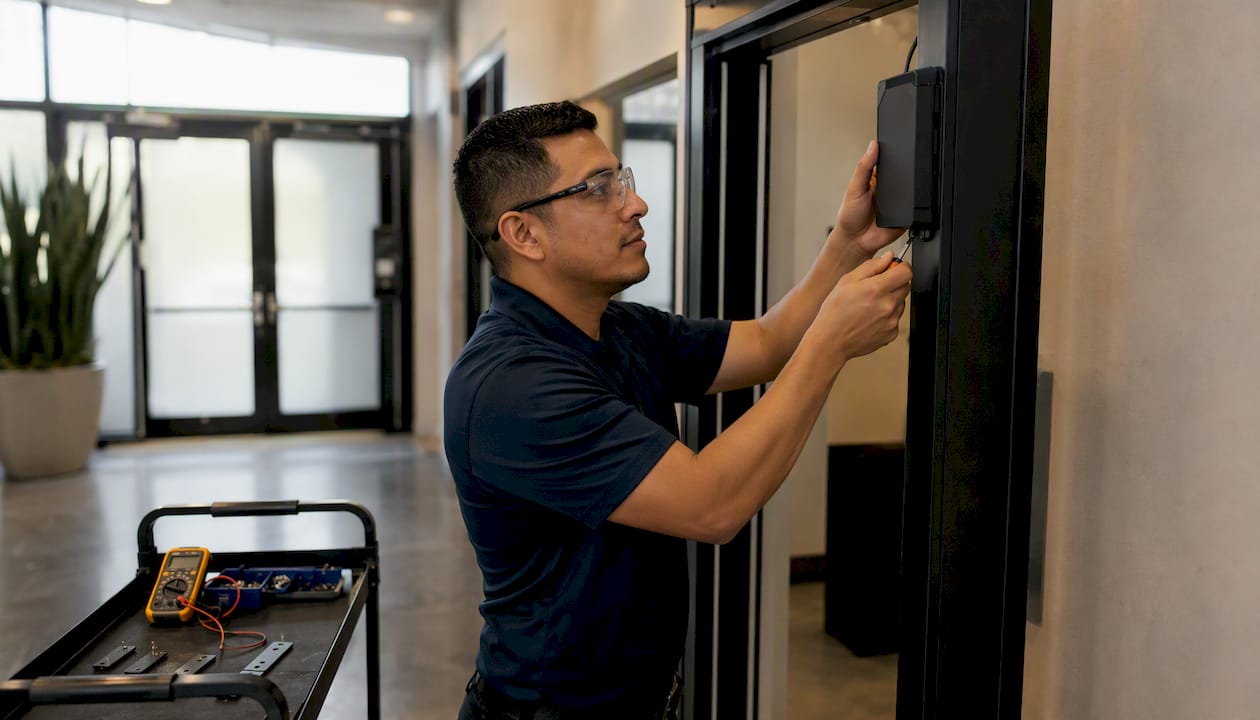
Tags are small chips attached to a package label or affixed at intake. Fixed readers (often mounted as portal frames at room entry points) emit radio waves that energize passive tags and capture their unique IDs as packages pass through. Handheld readers let staff scan individual items on shelves. Middleware is the translation layer that matches a raw tag read to a specific package record, resident, and delivery event. The dashboard surfaces that data to leasing staff and triggers resident notifications.
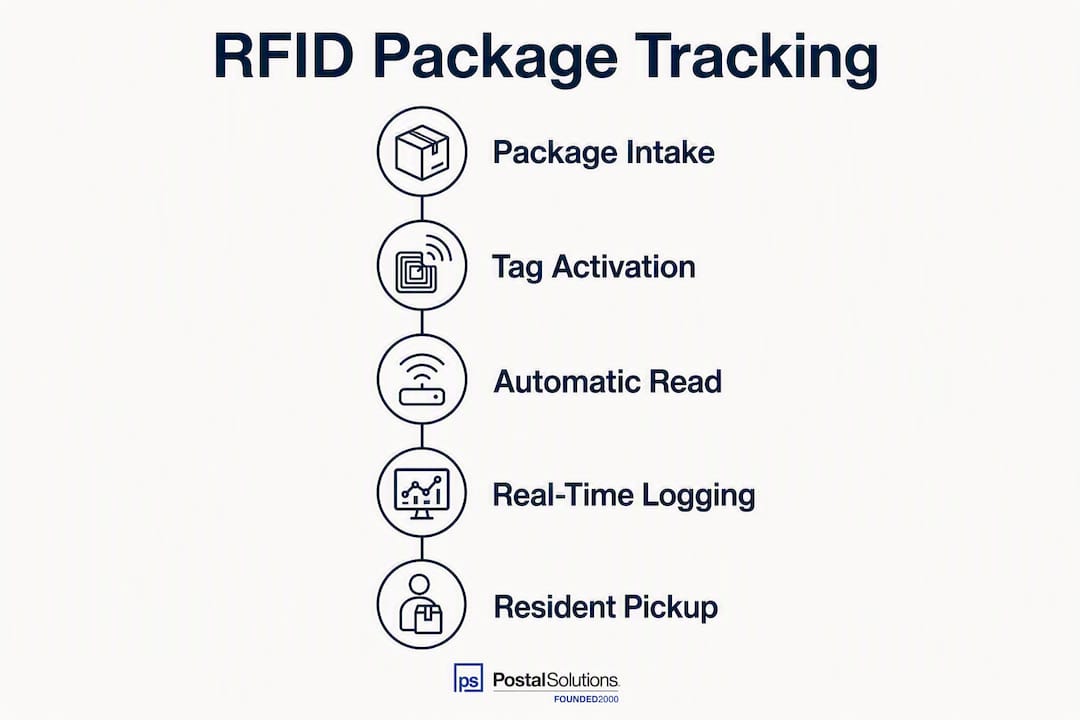
The operational flow looks like this: a carrier scans the package at a kiosk or intake station, staff affix or activate an RFID tag, the package passes through a reader portal, middleware logs a time-stamped chain-of-custody event, and the resident receives an SMS or email. Pickup is logged the same way in reverse.
| Technology | Range | Cost per Tag | Best Use Case |
|---|---|---|---|
| Passive UHF RFID | 10–30 ft | $0.10–$0.50 | Bulk package room portals, high-volume intake |
| Active RFID | — | $5–$5 | High-value asset tracking, large warehouses |
| NFC | <2 inches | $0.10–$0.50 | Individual item tap-to-confirm, resident self-pickup |
Passive UHF is the standard choice for apartment package rooms. It reads multiple tags simultaneously at portal speed, costs a fraction of active tags, and does not require a battery. NFC works well as a pickup confirmation layer but cannot handle bulk intake efficiently. Automated systems record every delivery and pickup event in a time-stamped log visible on the staff dashboard.
What are the real benefits and limits of RFID for multifamily?
Benefits:
- Touchless, fast intake. A portal reader logs 20–30 packages in seconds as a cart rolls through, compared to scanning each barcode individually.
- Chain-of-custody accuracy. Every read creates a time-stamped record that replaces manual sign-in sheets and closes liability gaps.
- Staff time returned. Smart package rooms reduce the headcount dedicated to package handling in large portfolios, freeing leasing staff for resident-facing work.
- Amenity value. A visible, tech-forward package room is a leasing differentiator prospects notice on tours.
Limitations:
- Tag cost adds up. At $0.10–$0.50 per passive UHF tag, a property receiving 50 packages daily spends $1,825–$9,125 per year on tags alone, before any hardware costs.
- Metallic and foil packaging degrades reads. Packages wrapped in foil insulation, metallic film, or dense liquid containers can absorb or reflect UHF signals, causing missed reads.
- Oversized items create staging problems. A pallet-sized delivery or a bicycle box may not clear a standard portal frame, requiring a manual fallback scan.
- Carrier compliance is the weakest link. Driver bypass of digital intake is the most common reason package tracking data breaks down, regardless of technology. RFID does not fix a compliance problem; it amplifies it.
Smart lockers provide secure, self-service pickup with automated notifications but are limited by fixed compartment sizing and can overflow during surge periods. RFID-tagged open shelving handles size variability better.
Step-by-step implementation checklist and a practical rollout plan
Phase 1: Planning (weeks 1–2)
- Map your package room layout and identify portal mounting points.
- Audit daily package volume by carrier and time of day for four weeks.
- Draft a carrier communication SOP with pictorial instructions for intake scanning.
Phase 2: Pilot (weeks 3–10)
- Install one fixed portal reader at the room entry and one handheld for shelf audits.
- Brief all regular-route drivers with a one-page pictorial SOP. Standardized carrier communication distributed centrally prevents uneven implementation.
- Tag every incoming package at intake for 30 days.
Phase 3: Evaluation (weeks 11–12)
- Pull pilot metrics and compare against acceptance criteria.
| Pilot Metric | Target | Red Flag |
|---|---|---|
| Read rate | ≥95% | <90% |
| Time per package (intake) | <30 seconds | >60 seconds |
| Missed-read rate | <5% | >10% |
| Staff hours saved per week | Positive vs. baseline | Flat or negative |
Phase 4: Scale or pivot
- If metrics pass, expand readers to additional rooms or buildings.
- If metrics fail, diagnose carrier compliance before adding hardware.
Pro Tip: Issue numbered QR or PIN codes to regular-route drivers during the pilot. This creates a compliance audit trail and makes it easy to identify which carrier routes are bypassing intake, so you can address the problem at the source rather than blaming the hardware.
What does RFID deployment actually cost, and what is the ROI?
Cost components to budget:
- Passive UHF tags: $0.10–$0.50 each (consumable, replaced per package)
- Fixed portal readers: $2,000–$5,000 per unit installed
- Handheld readers: $1,000–$3,000 per device
- Middleware and software subscription: $200–$600 per month
- Installation and cabling labor: $1,500–$4,000 one-time
- Staff training: typically one to two days, internal cost only
| Cost Component | Typical Range |
|---|---|
| Portal reader (installed) | $2,000–$5,000 |
| Handheld reader | $1,000–$3,000 |
| Tags (annual, 50 pkg/day) | $1,825–$9,125 |
| Software subscription (annual) | $1,500–$4,000 |
| Installation labor | $1,500–$4,000 |
| First-year total | $8,725–$28,325 |
Simple ROI example: A 200-unit property where leasing staff spend 10 hours per week on package handling at a fully loaded rate of $25/hour generates $13,000 in annual labor cost on packages. If RFID reduces that by 60%, the annual labor saving is $7,800. Against a first-year cost of $12,000 (mid-range), payback arrives in roughly 18 months. Year two costs drop to software and tags only, typically $4,225–$16,325, making the ongoing ROI significantly stronger.
What integrations does an RFID system need to work day-to-day?
PMS integration is not optional. Lease-status validation prevents move-out residents from retaining pickup privileges and keeps resident contact data current for notifications.
| Integration Target | Required Data Flow | Why It Matters |
|---|---|---|
| Electronic locker controller | Tag ID → locker assignment | Triggers correct compartment unlock |
| Property management system (PMS) | Resident sync, lease-status check | Blocks access for move-outs; accurate notifications |
| Notification engine (SMS/email) | Delivery event → resident alert | Reduces “where is my package” calls |
| Access control system | Staff/courier credential → room entry log | Closes physical security gaps |
| Chain-of-custody export | Time-stamped read log → audit file | Supports dispute resolution and liability |
Ask every vendor these questions before signing: Does the system support webhooks for real-time PMS sync? What is the SLA for a missed-read alert? How long are pickup logs retained, and who owns that data?
Alternatives to RFID and when to choose them
Not every property needs RFID. Here is where the alternatives genuinely win.
- Barcode scanning costs a fraction of RFID hardware and works well for properties under 30 packages per day. Staff scan each package individually, which is slower but accurate and requires no tag consumables.
- QR codes follow the same logic as barcodes with the added benefit that residents can scan their own pickup confirmation on a smartphone, reducing staff touchpoints at retrieval.
- NFC is best as a supplemental layer, not a primary intake method. Tap-to-confirm at pickup adds a verification step without replacing portal-speed intake.
- Smart lockers handle secure, self-service pickup well and generate complete audit trails with timestamps and photo evidence, but fixed compartment sizing creates overflow risk during peak periods.
For smart locker alternatives and hybrid approaches, a common configuration pairs RFID portal readers for bulk room intake with smart lockers reserved for high-value or refrigerated deliveries. This keeps locker costs manageable while giving RFID the volume it needs to justify the hardware.
How do you protect resident privacy in an RFID package system?
The core privacy principle is minimal data in the tag payload. A passive UHF tag should carry only a package ID that maps to a resident record in the middleware database, never a name, unit number, or contact detail stored on the tag itself.
Automated systems generate time-stamped delivery and pickup logs that establish a verifiable chain of custody. Those logs should be encrypted in transit and at rest, with access restricted to authorized staff roles. Retention policies matter: most operators keep pickup logs for 90 days, which covers dispute resolution without accumulating unnecessary resident data.
Physical controls are equally important. Restrict package room access to staff and credentialed couriers, log every entry event, and run a weekly shelf audit to catch misdirected or unclaimed packages before they become disputes. For a deeper look at how chain-of-custody records support liability questions, the chain-of-custody guide on the Postal Solutions blog covers the legal dimensions in detail.
This article is general operational guidance, not legal advice. Confirm your specific data-retention and privacy obligations with a qualified professional familiar with your state’s laws.
What should you ask vendors before signing a deployment contract?
Carrier non-compliance is the most common rollout failure. Operators that prioritize vendor answers on non-compliance detection have fewer deployment problems. Make it the first question you ask.
| Vendor Question | What a Strong Answer Looks Like |
|---|---|
| How does your system detect carrier non-compliance? | Flags untagged packages via camera or weight sensor; alerts staff in real time |
| What read-rate guarantee do you offer in writing? | ≥95% under normal conditions with SLA remedies |
| What is your response SLA for a missed-read incident? | Same-day alert; on-site response within 24–48 hours |
| Can you provide PMS integration references? | Named properties using the same PMS you run |
| Who owns the tags after installation? | Clarify replacement cost and responsibility |
| What is the data retention policy for pickup logs? | Defined period (e.g., 90 days), encrypted storage, exportable |
Pilot acceptance criteria to require in writing: read rate ≥95%, missed-read rate <5%, time per package at intake <30 seconds, and a user-acceptance test with both leasing staff and at least two regular-route couriers before final sign-off.
What are the practical next steps for your property?
- Run a 30–60 day pilot in one building or package room. Document carrier communication in advance, issue driver credentials, and establish a baseline of staff hours spent on packages before the pilot starts.
- Collect and score pilot metrics against the acceptance criteria above: read rate, time per package, resident pickup latency, and staff hours saved. Compare results to your pre-pilot baseline, not to vendor marketing claims.
- Scale or pivot based on evidence. If the pilot passes, expand portal readers to additional rooms and negotiate a volume tag contract. If it fails on read rate, diagnose carrier compliance first. If it fails on ROI, a barcode or managed-service model will likely serve you better.
Key Takeaways
RFID package tracking delivers the strongest ROI at properties receiving 30 or more packages daily, with enclosed package rooms, enforced carrier intake procedures, and PMS integration in place.
| Point | Details |
|---|---|
| Volume threshold matters | Properties under 30 packages per day rarely justify RFID hardware costs over barcode alternatives. |
| Carrier compliance is the top risk | Driver bypass of intake is the most common failure point; enforce it with pictorial SOPs and driver credentials. |
| First-year costs vary widely | Expect $8,725–$28,325 for a single-room deployment; year-two costs drop significantly to software and tags. |
| Privacy requires minimal tag payloads | Store only a package ID on the tag; keep resident PII in encrypted middleware, not on the chip. |
| Postal Solutions manages it for you | Postal Solutions’ On-Site Package Room Management handles daily intake, tagging, chain-of-custody logging, and carrier training so your leasing team never has to. |
What most RFID articles get wrong about package rooms
The technology conversation almost always centers on read rates and hardware specs. That is the wrong place to start. After 25 years of managing on-site package operations, the pattern is clear: the properties that struggle with RFID are not struggling because of antenna placement or tag frequency. They are struggling because a UPS driver skipped the kiosk on a Tuesday surge day, and nobody caught it until three residents filed missing-package complaints.
Carrier compliance is an operational problem, not a technology problem. RFID amplifies whatever intake discipline already exists at your property. A well-run package room with consistent carrier workflows will see strong read rates. A chaotic one will see gaps, and those gaps will be blamed on the hardware.
The other thing most guides underweight is surge capacity. Peak periods like move-in week, the holiday season, and back-to-school at student housing communities can triple daily volume in 48 hours. A system sized for average daily volume will fall behind fast. Build overflow policy and temporary staff support into your pilot plan before you need it, not after.
Postal Solutions handles the package room so your team does not have to
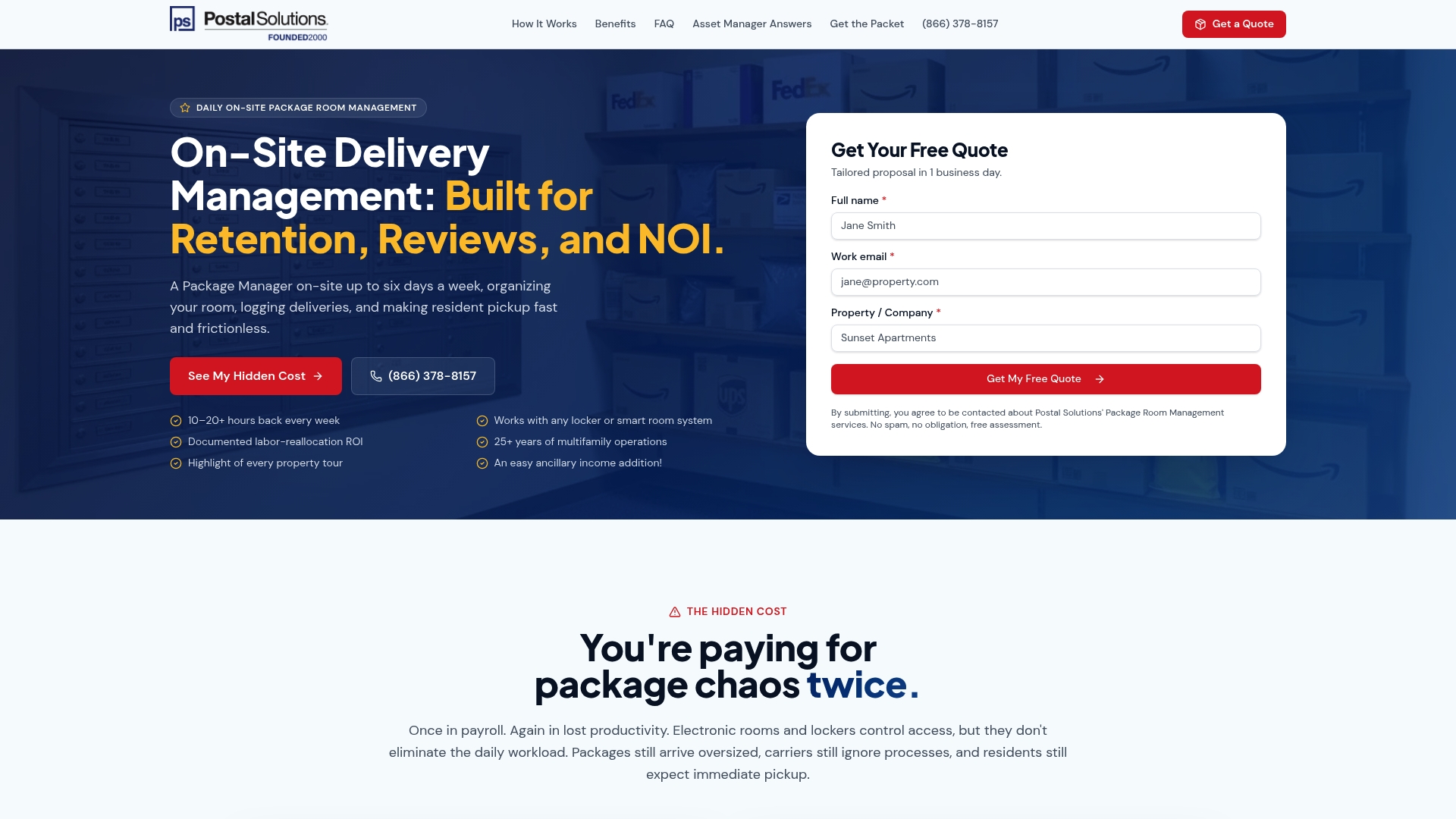
Postal Solutions’ On-Site Package Room Management puts a dedicated Package Manager at your property up to six days a week: receiving, sorting, tagging, logging chain-of-custody records, training carriers on intake procedures, and running weekly audits. Every package is tracked from drop-off to pickup, and your leasing staff never touches a box.
The service integrates with the locker or package room hardware you already have. If you are evaluating an RFID deployment, Postal Solutions can support the pilot, enforce carrier compliance from day one, and give you the operational baseline data you need to make a confident scale decision. Many communities structure the service as a paid resident amenity, turning a cost center into a revenue line.
Download the free package room guide to get the pilot checklist, carrier SOP template, and ROI worksheet, or reach out directly to discuss what a managed on-site service looks like for your property.
FAQ
What is RFID package tracking?
RFID package tracking uses radio-frequency tags and fixed or handheld readers to log package intake, location, and pickup events automatically, creating a time-stamped chain-of-custody record without manual barcode scanning.
How much does an RFID system cost for an apartment building?
First-year costs for a single package room typically range from $8,725 to $28,325, covering portal readers, handheld devices, tags, software, and installation. Year-two costs drop to software subscriptions and tag consumables.
What read rate should I require from a vendor?
Require a minimum read rate of 95% in writing, with a missed-read rate below 5% and a same-day alert SLA for any incident. Test these thresholds during a formal pilot before signing a full deployment contract.
Is RFID better than barcode scanning for package rooms?
RFID handles bulk intake faster and without line-of-sight requirements, but barcode scanning costs less and works well for properties under 30 packages per day. The right choice depends on volume, budget, and carrier compliance capacity.
Can Postal Solutions manage a package room that uses RFID?
Yes. Postal Solutions’ On-Site Package Room Management integrates with existing locker and package room hardware, including RFID systems, and handles daily intake, tagging, chain-of-custody logging, and carrier training on-site.
Recommended
- Blog — Package Room Management Insights for Multifamily
- Package Security for Multifamily Communities: 2026 Guide — Postal Solutions Blog
- Best Smart Locker Alternatives for US Properties in 2026 — Postal Solutions Blog
- Solving Lost Packages in Apartments: 2026 Operations Guide — Postal Solutions Blog
Ready when you are
Fix your package room — start with a free proposal
Daily on-site Package Manager, resident text & email pings*, and a tour-ready amenity. Tell us your unit count and we'll send a right-sized proposal — usually within one business day.
- ✓ 16–30 hours back every week
- ✓ Works with any locker system
- ✓ Faster, friction-free resident pickup
- ✓ An easy ancillary income addition