
September 6, 2026
Hotel Quality Intake Stops Wrong Name Package Disputes for Apartments
Use hotel quality intake workflows for apartment properties: isolate misaddressed packages, keep staff audit logs, escalate to leaseholders, and use PMS...
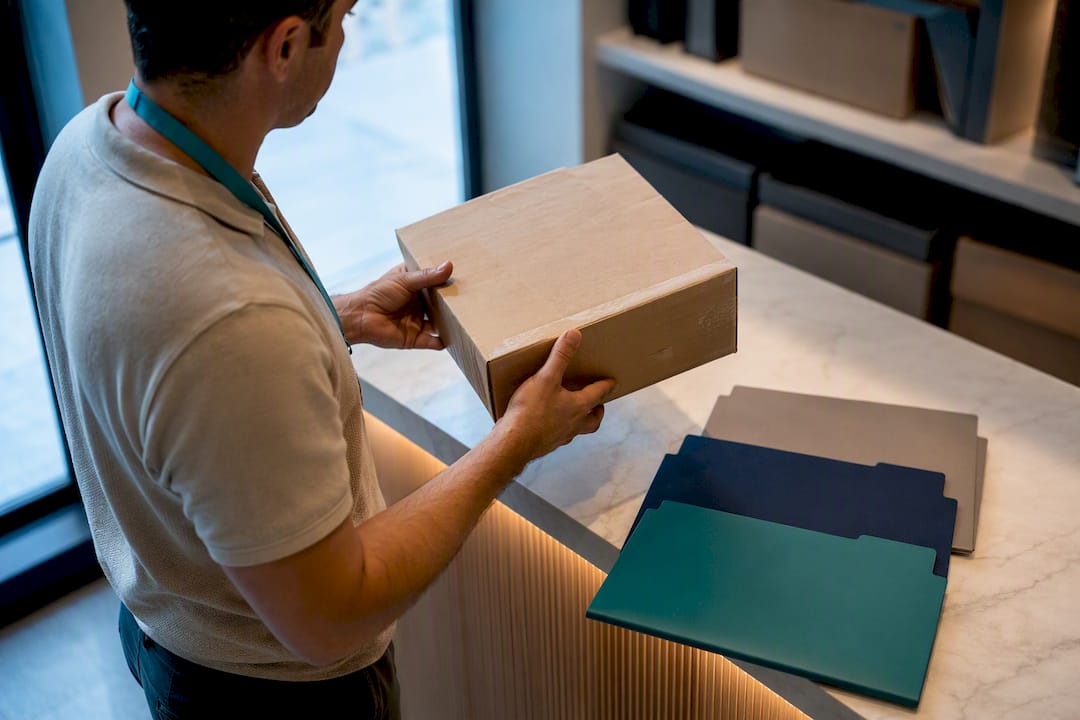
When a package arrives with the wrong resident name, isolate it immediately, log it, and check it against your property management system before doing anything else. Notify the leaseholder or the intended resident, and follow your mark-and-return policy if nobody claims it. Never open it. Document every step you take so there’s a clear record if anyone questions what happened.
TL;DR:
- Moving packages to an isolated intake buffer and tagging them UNVERIFIED reduces the risk of errors and maintains a clear record of all received items.
- An organized intake zone near delivery doors with color-coded tags and set processing windows ensures packages are flagged and verified before reaching storage.
- Staff must log every detail of wrong-name packages, including arrival, carrier, tracking, and verification results, to create an audit trail for potential disputes.
- For packages addressed to non-residents or former residents, contacting the leaseholder or following a strict hold and return process prevents misdelivery and reduces ghost packages.
- Outsourcing package management to a dedicated on-site service ensures consistent protocols, reducing disputes and freeing staff from handling mismatches during busy periods.
Table of Contents
- What’s the First Step to Handle Wrong Name Packages Correctly?
- How Should You Set Up an Intake Zone to Catch These Early?
- What Verification Steps Create a Defensible Paper Trail?
- Who Do You Contact When the Name Doesn’t Match a Resident?
- How Do You Resolve Packages for Former Residents?
- Can Prevention Stop Wrong-Name Packages Before They Arrive?
- What Belongs in a Written Wrong-Name Package Policy?
- How Postal Solutions Runs This Workflow Daily
- Why Consistency Beats Cleverness Here
- Let Postal Solutions Manage Your Package Room Workflow
- Sources
- FAQ
What’s the First Step to Handle Wrong Name Packages Correctly?
The first five minutes decide whether a misaddressed package becomes a two-minute fix or a two-week dispute. Here’s the sequence that keeps it from escalating:
- Pull it aside. Move the item to a designated intake buffer, separate from your sorted shelves or lockers, the moment you notice the name doesn’t match a current resident.
- Tag it. Mark it UNVERIFIED or WRONG NAME with a visible label before it goes anywhere near active inventory.
- Log the basics. Record the carrier, tracking number, arrival time, your initials, and the exact name printed on the label.
- Check your PMS. Search the name against current and recent residents. No match means you move straight to leaseholder contact, not the shelf.
- Handle the human part carefully. If someone is standing at the counter claiming the package, ask them to leave it sealed and let you verify first. Don’t argue or accuse. Just document who asked, what they said, and what you told them.
Pro Tip: Keep a laminated one-page version of this checklist at the intake counter. New staff make fewer mistakes in week one when the steps are staring at them instead of buried in a policy binder nobody reads twice.
How Should You Set Up an Intake Zone to Catch These Early?
A property that catches wrong-name packages at the door, not three days later on a shelf, has one thing in common: a real physical buffer between “just arrived” and “ready for pickup.”
- Locate intake near your loading or delivery entrance, not tucked behind the sorted shelving where it gets lost in the shuffle.
- Sort by carrier and size the moment it lands, and mark the unit number visibly before anything moves toward storage.
- Use color-coded tags. Red for UNVERIFIED works well because it’s impossible to miss during a rushed afternoon rush.
- Post carrier-specific return instructions right in the intake area so staff aren’t hunting for the FedEx versus UPS return process mid-shift.
- Set defined processing windows, say, twice daily, instead of stopping every task the second a delivery truck pulls up.
Following step-by-step package organization practices that separate intake from storage cuts resident inquiries substantially, largely because packages get flagged and resolved before they ever reach a shelf where a name mismatch would otherwise sit for days. Pairing lockers with immediate resident notifications, and clear return windows, is standard NAA guidance for exactly this reason.
What Verification Steps Create a Defensible Paper Trail?
If a resident disputes a package later, your log is the only thing standing between “here’s exactly what happened” and “we’re not sure.” Every entry needs these fields, no exceptions:
- Arrival date and time
- Carrier and tracking number
- The addressee name exactly as printed
- Result of the PMS check (match, no match, former resident)
- Staff initials
- Every notification attempt and its outcome
Staff, not residents, should always make these entries. Letting a resident scrawl their own log line at pickup defeats the point of an audit trail entirely, and risk-reduction guidance for accepting resident packages makes this explicit: staff-performed intake and sign-out is what keeps records legible and credible later.
Pro Tip: Any locker override or remote unlock needs manager-level sign-off, logged with a reason. That single rule stops more disputes than any amount of extra paperwork elsewhere.
Who Do You Contact When the Name Doesn’t Match a Resident?
Guest packages and simple name mismatches call for different playbooks, so don’t treat them the same.
- If the name doesn’t match your records but the unit does, notify the listed occupant through your PMS messaging channel and require them to confirm or claim it.
- If the name belongs to nobody in your system, a guest, a roommate not on the lease, contact the primary leaseholder directly. They’re responsible for reaching their guest, not your staff.
- Log every notification with a timestamp and whatever response you get back.
- Require ID or a portal confirmation at pickup, every time, no exceptions for “regulars.”
NAA’s package management guidance is direct on this point: when a package is addressed to a guest whose contact information nobody has, the leaseholder is the channel, not your front desk. Post clear pickup windows on your resident portal and at the package room itself so items don’t linger for weeks waiting on a response.
How Do You Resolve Packages for Former Residents?
Ghost packages, boxes addressed to someone who moved out months ago, are their own category of headache, and they need their own short, repeatable workflow:
- Confirm the move-out date in your PMS. If the database wasn’t updated when they left, fix that immediately so this doesn’t keep happening.
- Attempt one documented outreach using the last contact information on file, and log that attempt regardless of the outcome.
- Hold the item for the period set by your written policy, then mark-and-return through the carrier if nobody responds.
- Never open it. Federal law prohibits opening mail or packages not addressed to you or a current resident, no matter how long it’s been sitting there.
A documented mark-and-return protocol removes the guesswork that usually causes these items to pile up in a back corner for months.
Can Prevention Stop Wrong-Name Packages Before They Arrive?
Fixing the problem after the fact only gets you so far. The bigger win is stopping wrong-name deliveries before a carrier ever hands one over.
- Make the unit number a required, validated field on every resident portal and move-in form. No unit number, no submission.
- Integrate your package log with your PMS so a name mismatch flags automatically at intake instead of relying on a staff member to catch it manually.
- Give residents the exact addressing format you want them to use, and push preferred-name updates through the PMS rather than letting people scrawl nicknames on delivery instructions.
- Add “remove from package system” to your standard move-out checklist. This single step prevents most ghost packages before they ever start.
University housing guidance is blunt about the tradeoff: packages addressed incorrectly, missing a unit number or using the wrong name, risk getting returned to sender. That’s a real cost for the resident and a real headache for your team. If you’re evaluating how your PMS talks to your locker or sorting hardware, property management software integrations built for real estate operations can close that gap directly.
Pro Tip: A single field validation rule on your move-in form eliminates more wrong-name packages than any amount of staff training ever will. Fix the input, and the output problem shrinks on its own.
What Belongs in a Written Wrong-Name Package Policy?
A policy that lives only in someone’s head disappears the day that person calls out sick. Write it down, and keep it short enough that staff actually read it.
- Core rules: do-not-open, intake buffer procedures, logging standards, carrier-specific return steps, hold timelines, and criteria for authorized release.
- Onboarding checklist: intake processing windows, tagging conventions, PMS verification steps, notification templates, and signature or ID rules at pickup.
- Assign one person as the exceptions owner, and schedule recurring spot audits so the policy doesn’t quietly drift over a busy season.
| Policy Element | What It Prevents |
|---|---|
| Do-not-open rule | Legal exposure from opening mail not addressed to staff |
| Logging standards | Disputes over what happened and when |
| Hold timelines | Packages piling up indefinitely |
| Authorized-release criteria | Wrong-person pickups |
A ready-to-adopt package room policy template gives you a starting draft instead of building one from scratch.
How Postal Solutions Runs This Workflow Daily
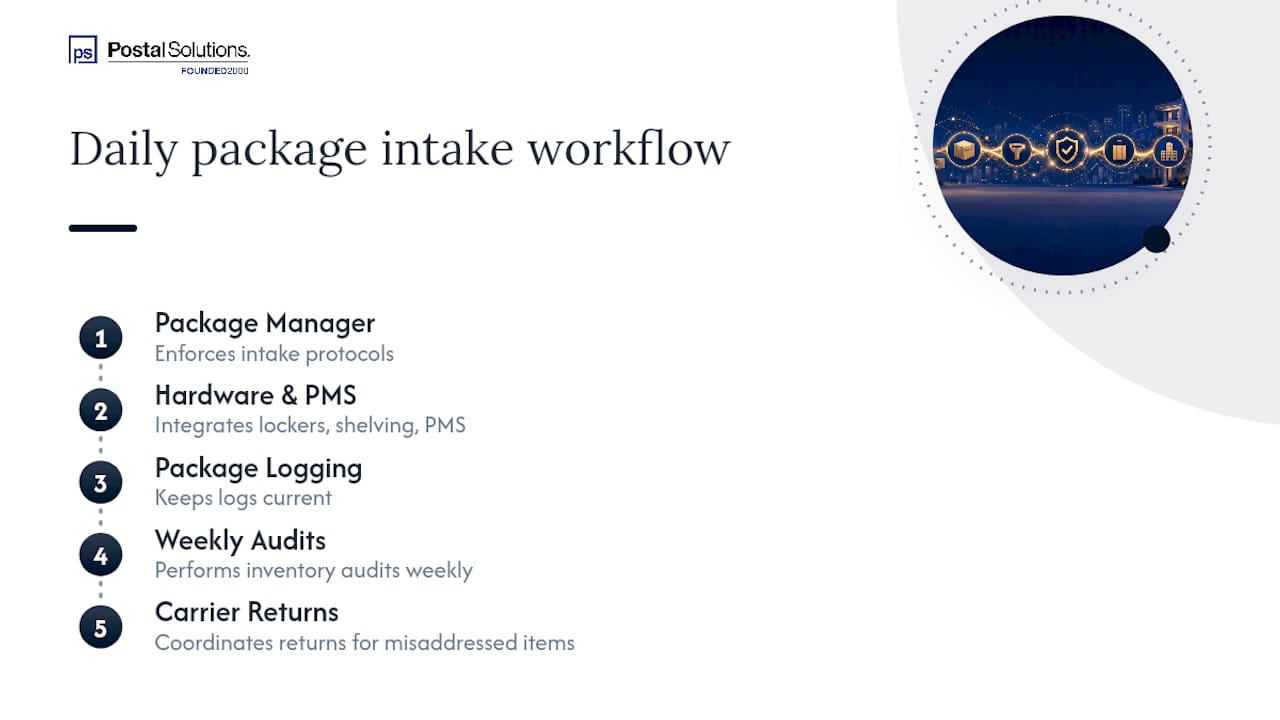
A dedicated on-site Package Manager enforces intake protocols and keeps logs current without leasing staff having to referee every mismatched name. The service integrates with locker or shelving hardware and PMS systems, runs weekly audits, and coordinates carrier returns for former-resident and misaddressed items. Handing this off to a specialist means fewer interruptions for your leasing team and faster retrieval for residents, and it turns your package room into something you can point to on a tour as a real amenity instead of a liability.
Why Consistency Beats Cleverness Here
The properties that handle this well aren’t the ones with the smartest software. They’re the ones where every staff member follows the same three steps every single time. That consistency is what frees your team to focus on renewals instead of playing detective, and it’s what protects staff when a resident pushes back on a decision they didn’t like.
— Postal Solutions
Let Postal Solutions Manage Your Package Room Workflow
The service provides a dedicated on-site Package Manager handling daily acceptance, chain-of-custody logging, resident notifications, weekly audits, and carrier coordination for wrong-name and ghost-package situations. Instead of your leasing team splitting attention between tours and tracking numbers, a specialist runs the intake buffer, checks names against your PMS, and follows the mark-and-return process without missing a step during move-in season or the holiday rush.
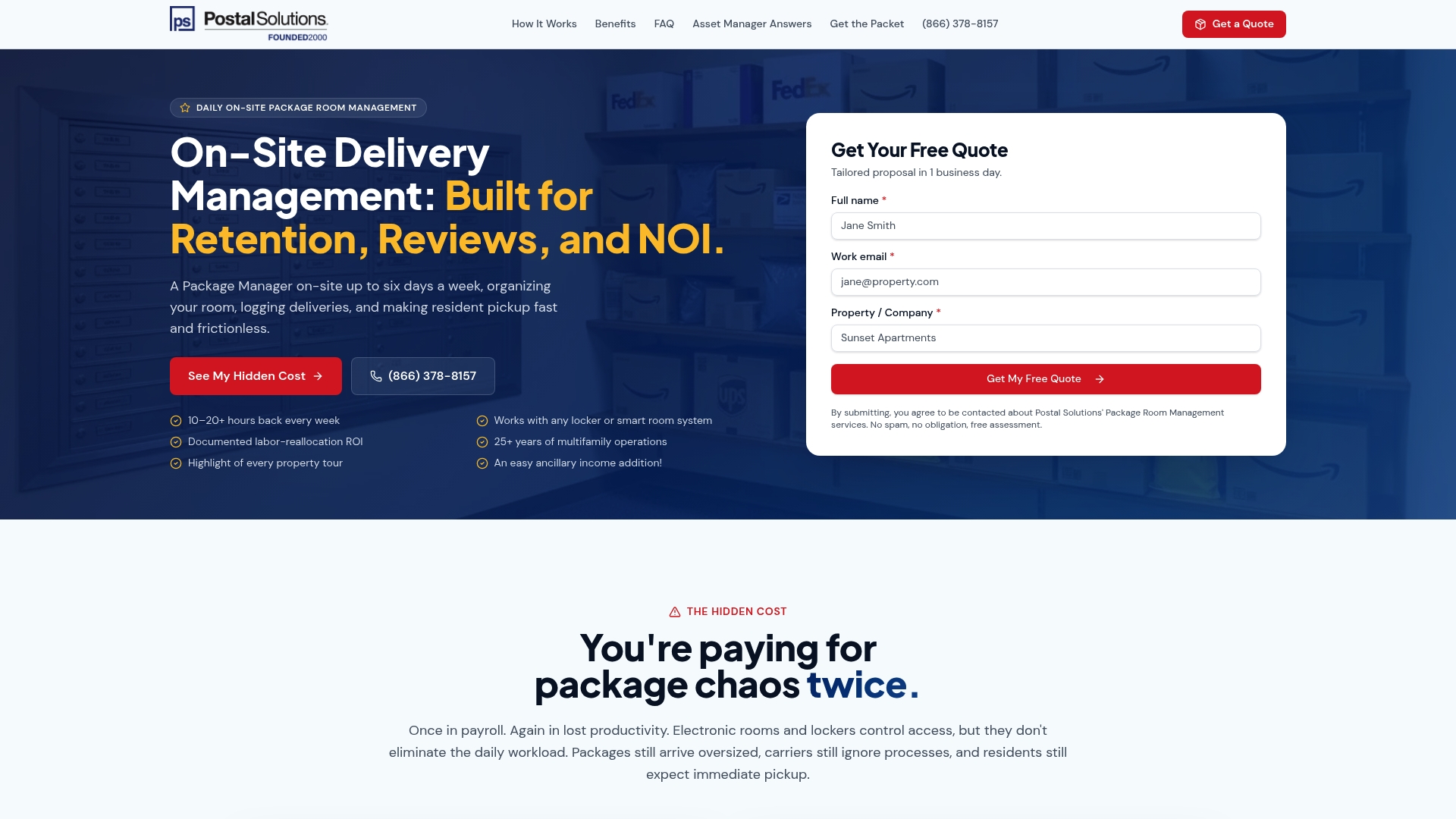
If your property already runs an electronic locker system or a traditional package room, the workflow above plugs in directly. Compare what on-site management delivers versus an off-site alternative, and if you want the full protocol in writing before you talk to anyone, grab the free package room management guide and see exactly how the checklists, logs, and templates fit your building.
Sources
- How to Effectively Manage Package Acceptance: NAA guidance
- NCSU housing mail and packages guidance
- Step by Step Package Organization for Apartment Properties — Postal Solutions
- Strategies for managing ghost packages from former residents — Smart Package Room
FAQ
What Should I Do First When a Package Has the Wrong Name?
Move it to an isolated intake buffer, tag it UNVERIFIED, and log the carrier, tracking number, and time received before checking it against your PMS.
Can I Open a Package Addressed to a Former Resident?
No. Federal law prohibits opening mail or packages not addressed to you or a current resident, regardless of how long the person has been gone.
Who Should I Contact for a Guest’s Package?
Contact the primary leaseholder, not the guest directly. NAA guidance recommends the leaseholder notify and authorize pickup for their own guest.
How Long Should I Hold a Ghost Package Before Returning It?
Follow your written policy’s hold timeline and any applicable state guidance, then use your carrier’s mark-and-return process if the former resident never responds to your documented outreach attempt.
Does Outsourcing Package Management Reduce Wrong-Name Disputes?
Yes. A dedicated on-site Package Manager, like the service Postal Solutions provides, enforces intake and logging protocols consistently, which cuts down on the mismatched entries and missed notifications that usually cause disputes.
Recommended
Ready when you are
Fix your package room — start with a free proposal
Daily on-site Package Manager, resident text & email pings*, and a tour-ready amenity. Tell us your unit count and we'll send a right-sized proposal — usually within one business day.
- ✓ 16–30 hours back every week
- ✓ Works with any locker system
- ✓ Faster, friction-free resident pickup
- ✓ An easy ancillary income addition