
August 14, 2026
Package Addendum Lease: A Landlord's Drafting Guide
Learn how to effectively draft a package addendum lease that enhances your rental agreements with clear rules and liability limits.

A package addendum lease is a written document attached to an existing residential lease that adds specific package-handling rules, liability limits, and operational procedures without altering the original lease’s other terms. Draft it, reference the original lease by date and parties, set a clear effective date, collect signatures from every adult tenant and the landlord or authorized agent, and file a copy with the master lease.
Quick-start checklist:
- Draft the addendum as a standalone document with a clear title (e.g., “Package Handling Addendum”)
- Reference the original lease by full date and tenant/landlord names
- State the effective date explicitly
- Collect dated signatures from all adult tenants and the landlord or authorized agent
- Give tenants a signed copy at execution and retain one with the lease file
Legal caveat: enforceability depends on valid signatures, applicable state landlord-tenant law, and HUD program requirements when the property participates in a federally assisted housing program.
Key Takeaways
A package addendum lease is enforceable when it includes all required elements, is signed by every adult tenant and the landlord, references the original lease by date, and uses precise language backed by a daily chain-of-custody log.
| Point | Details |
|---|---|
| Required elements are non-negotiable | Include party names, property address, original lease reference, effective date, conflict clause, and all signatures. |
| Mid-lease addenda require mutual consent | Both parties must sign, or the original lease must reserve the right; otherwise wait for renewal. |
| State and HUD law can override your addendum | Check state landlord-tenant statutes and HUD program requirements before enforcing fees or waivers. |
| Audit trails protect enforceability | Store the executed PDF and e-signature audit trail with the master lease in both physical and electronic records. |
| Postal Solutions handles the daily operation | On-site package room management backs your addendum with documented chain-of-custody logs and resident notifications. |
Table of Contents
- What is a lease addendum, and how does it differ from an amendment?
- When should you create a package addendum for your property?
- What elements does a legally enforceable package addendum require?
- How do you draft, deliver, and execute a package addendum correctly?
- Sample clauses and a signature block you can use today
- Are package addenda legally binding, and what can they not do?
- Where can you find templates and sign addenda electronically?
- Why clear package addenda matter more than most managers realize
- On-site package room management as an alternative to DIY enforcement
- Sources
- FAQ
What is a lease addendum, and how does it differ from an amendment?
The industry term is lease addendum (sometimes called a lease rider or attachment). It adds new subject matter to an existing lease without rewriting or replacing any existing clause. An amendment, by contrast, modifies or deletes a term that already exists in the lease. An embedded clause is language written directly into the master lease at the time of drafting.
The practical decision rule is straightforward. Use an addendum when you need to introduce a topic the original lease never addressed, such as a package-room access policy. Use an amendment when you need to change something already in the lease, such as adjusting the rent amount or extending the term. Use a clause when you are drafting the master lease from scratch and can build the language in from the start.
In a package-management context: if your lease is silent on locker assignments, you add a package addendum. If your lease already has a package clause but you want to change the pickup window from 48 hours to 24 hours, that is an amendment. If you are writing a new lease for a newly built property with lockers, you write the package rules directly into the lease as a clause.
When should you create a package addendum for your property?
The most common trigger is a gap between what the lease says and what the operation actually requires. Package volumes at multifamily properties have grown to the point where a generic lease clause, or no clause at all, leaves managers exposed to disputes, liability claims, and operational chaos.
Specific situations that call for a package addendum:
- Package-room or locker access rules: Define who may enter, during what hours, and what ID is required at pickup
- Liability waiver language: Limit the property’s exposure for lost, stolen, or damaged packages once accepted on behalf of a resident
- Signature-required deliveries: Clarify whether staff will sign for packages and under what conditions
- Oversized or refrigerated items: Set rules for items that cannot fit standard lockers, including notification timelines and storage limits
- Amenity fees or locker assignment fees: Specify any monthly or per-use charge and how it is collected
- Chain-of-custody logging: Require residents to acknowledge a log-based acceptance system at pickup
Timing matters. Adding package rules at lease signing or renewal is the lowest-friction approach because tenant assent is freely given when setting new terms. A mid-lease addendum is enforceable only when both parties agree and sign it, when the lease already reserves the right to make the change, or when a statute requires it; otherwise, wait for renewal. Trying to impose new package fees mid-lease without tenant agreement is a common and costly mistake.
What elements does a legally enforceable package addendum require?
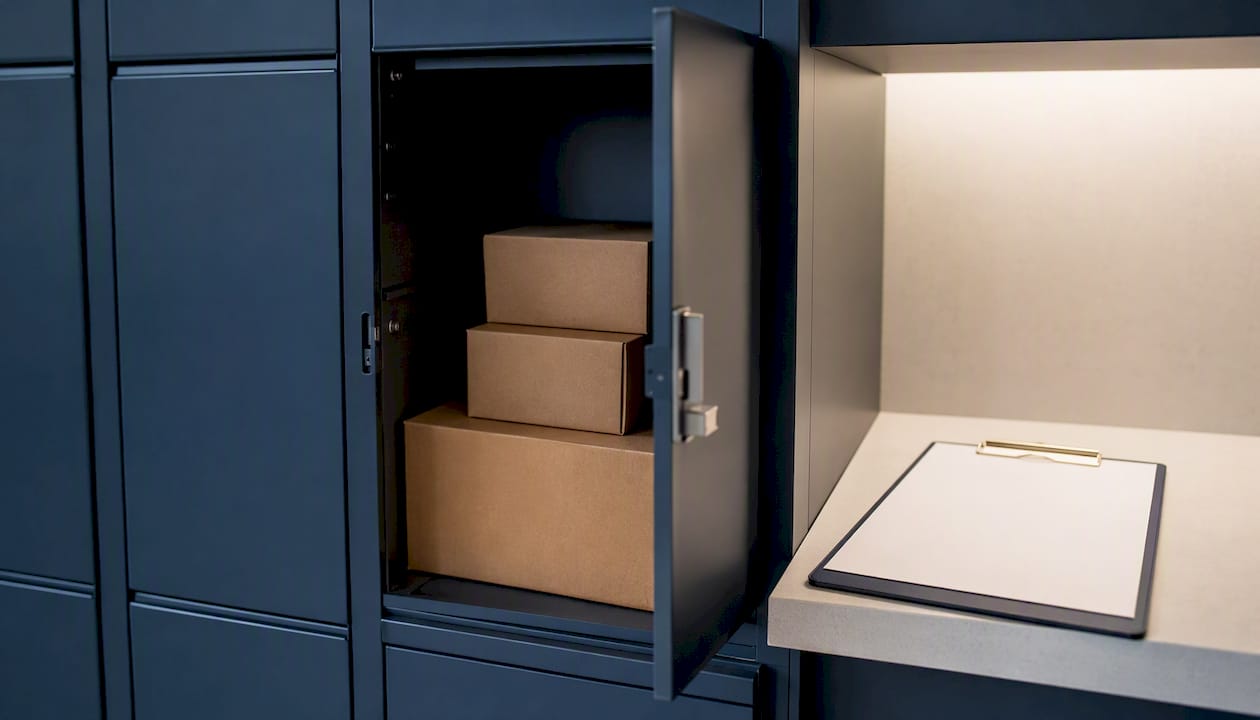
| Element | Why it matters |
|---|---|
| Names of all parties | Ties the addendum to the exact tenants bound by the original lease |
| Full property address and unit number | Prevents ambiguity if the landlord manages multiple units |
| Clear title and stated purpose | Signals the document’s scope and prevents a court from treating it as part of the master lease |
| Reference to original lease (date and parties) | Establishes the addendum as subordinate to and connected with the master agreement |
| Precise description of added terms | Vague language is the single most common drafting error that undermines enforceability |
| Effective date | Defines when the new rules take effect, especially critical for mid-lease additions |
| Conflict/integration clause | Resolves which document controls if the addendum and the lease appear to conflict |
| Signature and date lines for all adult tenants and landlord/agent | Mutual assent is the legal foundation of any contract |
| Retention instructions | Protects both parties in a dispute by confirming who holds copies |
Sample integration/conflict clause you can paste into your addendum:
Pro Tip: Keep each addendum to a single topic. An addendum that covers package rules, pet policies, and parking in one document is harder to enforce and harder to update. One topic per document is the standard recommended by the American Apartment Owners Association.
How do you draft, deliver, and execute a package addendum correctly?
The workflow has six steps, and skipping any one of them creates a gap that tenants or courts can exploit.
- Draft the addendum as a standalone document. Give it a clear title, list all parties, and reference the original lease by date. Write in plain language. One topic, one document.
- Write precise, single-topic language. Avoid phrases like “reasonable notice” or “as needed.” Specify hours, timelines, fees, and procedures in concrete terms.
- Set the effective date. State it explicitly. If you are attaching the addendum at lease signing, the effective date is typically the lease commencement date. Mid-lease addenda should state the date both parties sign.
- Collect signatures from all adult tenants and the landlord or authorized agent. Every adult listed on the lease must sign. Missing one signature is enough to make the addendum unenforceable against that tenant.
- Provide tenant copies immediately. Practical landlord resources recommend supplying tenants a signed copy at the time of execution to prevent later disputes about what was agreed.
- Store the executed addendum with the master lease. Keep both a physical copy in the property file and an electronic copy in your property management system.
On mid-lease changes: mutual agreement is required unless the original lease explicitly reserves the landlord’s right to modify package policies, or a state statute permits the change unilaterally. When in doubt, wait for renewal.
On e-signatures: the federal Electronic Signatures in Global and National Commerce Act (ESIGN) and the Uniform Electronic Transactions Act (UETA), adopted in most states, make e-signed addenda as enforceable as wet-ink signatures. The critical requirement is preserving the audit trail: timestamps, IP addresses, and identity verification records. Store the final executed PDF alongside that audit trail.
Pro Tip: Notarization is not required for residential lease addenda in most US states, but check your state’s landlord-tenant statute before skipping it for commercial leases or high-value fee provisions.
Sample clauses and a signature block you can use today
These clause starters are written for package-management addenda. Adapt names, fees, and timelines to your property before use. Have counsel review before deploying at scale.
Package acceptance procedure:
Resident pickup and ID rule:
Liability waiver / limited liability:
Locker assignment and fee:
Oversized item handling and notification:
Signature block template:
The National Apartment Association recommends documenting all package interactions, using a package log, and considering a resident waiver-of-liability form as a first defense against negligence claims. Pair your addendum language with a daily log and same-day resident notifications to close the gap between what the addendum says and what the operation actually does.
Pro Tip: Reference your resident notification system directly in the addendum. Naming the notification method (text, email, app) removes ambiguity and gives you a documented record of every pickup prompt.
Are package addenda legally binding, and what can they not do?
Yes, with conditions. DocuSign’s guidance confirms that addenda are legally binding when signed by all parties, and the same mutual-assent principle that governs the master lease applies here. The integration/conflict clause and precise language are what make them defensible in a dispute.
What addenda cannot do is equally important. No addendum can:
- Waive a tenant’s right to habitable conditions (the implied warranty of habitability exists by statute in every US state)
- Override statutory security-deposit protections or notice requirements
- Circumvent fair-housing rights or create discriminatory access rules
- Impose fees that violate state rent-control or fee-limitation ordinances
State law variance is real. Texas, for example, has the Texas Real Estate Commission’s Addendum Regarding Residential Leases with jurisdiction-specific requirements. California, New York, and Oregon each have their own landlord-tenant statutes that affect what fees and waivers are enforceable. Always check your state’s landlord-tenant law and local ordinances before enforcing a fee or liability waiver.
HUD considerations: Properties participating in HUD-insured multifamily programs must use or comply with HUD’s model Lease Addendum, which includes recording obligations, estoppel-certificate requirements, and consent-for-mortgage language that can preempt a landlord’s own addendum language. For Section 8 project-based voucher properties, HUD’s Tenancy Addendum (Form HUD-52530C) controls where it conflicts with other lease terms. If your property is HUD-assisted, consult your HUD program administrator before adding any addendum that touches fees, access, or liability.
Where can you find templates and sign addenda electronically?
Three resources cover most of what US landlords and property managers need:
- DocuSign: Offers lease addendum guidance and e-signature workflows that comply with ESIGN and UETA. The audit trail includes timestamps, IP addresses, and signer authentication records, which is what you need if the addendum is ever disputed.
- EZLandlordForms: Publishes state-specific addendum templates for all 50 states, including package and amenity addenda. Templates are attorney-reviewed and updated for state law changes.
- SignEasy: A mobile-first e-signature platform suited for property managers who execute addenda in the field or during lease signings. Supports ESIGN/UETA-compliant signing with full audit logs.
Pro Tip: Store the fully executed addendum PDF alongside the e-signature audit trail in the same folder as the master lease, both in your property management software and in a secure cloud backup. A signed PDF without the audit trail is harder to enforce if a tenant disputes the signature.
Why clear package addenda matter more than most managers realize
Most disputes about packages are not really about packages. They are about expectations that were never written down. A tenant who believes the property is responsible for a stolen package, when the lease says nothing about it, has a reasonable grievance. A manager who accepted the package without a log entry, a notification record, or a signed waiver is in a weak position.

The addendum is not the whole solution, but it is the foundation. Operational teams that pair a clear written package addendum with disciplined chain-of-custody logs and resident notifications reduce liability exposure and tenant disputes significantly. The addendum sets the rules; the daily log proves they were followed. Without both, the addendum is just paper.
One recommendation worth stating plainly: require tenant sign-off on the package addendum at move-in and at every renewal. Not as a formality, but as a conversation. Walk the tenant through the pickup procedure, the notification method, and the liability limits. A tenant who understands the rules at move-in is far less likely to dispute them six months later. That five-minute conversation at move-in is worth more than any clause you can draft.
On-site package room management as an alternative to DIY enforcement
Writing a solid package addendum is step one. Actually running the operation behind it, every day, at scale, is where most leasing teams run out of bandwidth.
Postal Solutions provides on-site package room management for apartment and student housing communities across the United States. A dedicated on-site Package Manager receives, sorts, logs, and secures packages up to six days a week, handles resident notifications, manages overflow and oversized items, and keeps a chain-of-custody record that backs up your addendum language in any dispute. For properties dealing with peak-season volume, limited on-site staff, or a high rate of package complaints, outsourcing the operation removes the daily burden from your leasing team entirely.
The service works with any existing package room or locker system and can be structured as a resident amenity fee, turning a cost center into a revenue line. Download the free Package Room Management guide to see how the operation works and whether it fits your property.
Sources
- Crafting a Perfect Lease Addendum: Your Guide to Drafting a Bulletproof Agreement + 5 Common Use Cases
- How to Effectively Manage Package Acceptance (National Apartment Association) — includes sample package acceptance addendum, package log, and waiver
- Lease Addendum - Multifamily (HUD)
- How to Add an Addendum to a Lease: A Landlord’s Step-by-Step Guide (2026)
This article is general information, not a substitute for advice from a qualified lawyer. Consult a qualified legal professional about your own circumstances before acting on anything here.
FAQ
How does a lease addendum work?
A lease addendum attaches to an existing lease and adds new terms without changing the original document. It becomes part of the lease once all parties sign it, and the conflict clause determines which document controls if the two appear to disagree.
How do I write an addendum to an existing lease?
Draft a standalone document with a clear title, list all parties and the property address, reference the original lease by date, describe the new terms precisely, set an effective date, include a conflict/integration clause, and collect dated signatures from every adult tenant and the landlord or authorized agent.
Are lease addenda legally binding?
Yes, when signed by all parties, written with clear and specific language, and compliant with applicable state law. DocuSign’s guidance confirms that vague language and missing signatures are the two most common reasons addenda fail in disputes.
What are common examples of a lease addendum?
Common addenda cover package handling and liability, pet policies, parking assignments, smoking restrictions, and move-in/move-out procedures. For multifamily properties, a package addendum typically addresses acceptance procedures, pickup rules, locker assignments, liability limits, and fees.
Can a landlord add a package addendum mid-lease?
Only if the tenant agrees and signs, the original lease reserves the right to add such terms, or a state statute requires the change. Otherwise, the standard guidance is to introduce package rules at lease signing or renewal, when tenant assent is freely given.
Recommended
- Ancillary Income Property Management: 2026 Guide — Postal Solutions Blog
- Apartment Package Management Services: 2026 Guide — Postal Solutions Blog
- Move-In Packages: A Property Manager’s Operations Plan — Postal Solutions Blog
- Package Notification System for Apartments: A Manager’s Guide — Postal Solutions Blog
Ready when you are
Fix your package room — start with a free proposal
Daily on-site Package Manager, resident text & email pings*, and a tour-ready amenity. Tell us your unit count and we'll send a right-sized proposal — usually within one business day.
- ✓ 10–20+ hours back every week
- ✓ Works with any locker system
- ✓ Faster, friction-free resident pickup
- ✓ An easy ancillary income addition