
August 30, 2026
24 Hour Meal Kit Protocols for Apartment Property Managers
A playbook for apartment property managers: perishable protocols with refrigerated staging, instant SMS alerts, and a 24 hour disposal rule.
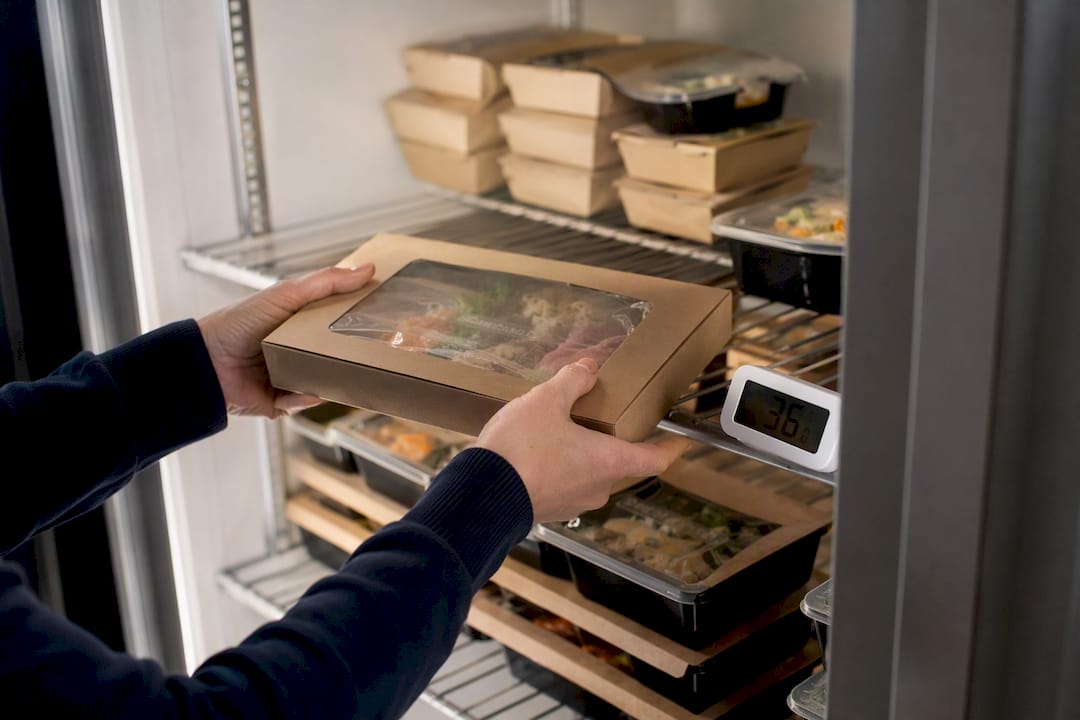
Meal-kit deliveries at apartment properties should only be accepted through a perishable-aware intake process, whether that’s a documented cold-chain protocol or daily on-site package-room management. Without designated cold staging, instant resident alerts, and a firm disposal timeline, a spoiled box of proteins becomes a hygiene complaint, a liability question, and an hour of staff cleanup. Professional on-site management handles all three at once, protecting residents while keeping the burden off your leasing team.
TL;DR:
- Properties must implement a strict perishable goods protocol, including immediate cold storage, leak-proof packaging, and real-time resident notification.
- Staffing should include a dedicated Package Manager working daily during peak volume times to ensure proper intake, logging, and disposal of meal kits.
- Cold zones must be kept below 40°F with FIFO and leak-proof practices to prevent spoilage and contamination among packages.
- Carrier compliance efforts, such as signage and recurring driver training, are essential to prevent missed scans and mishandling that lead to spoilage and complaints.
- Tracking metrics like spoilage rates, staff hours, and resident complaints helps properties measure, manage, and improve meal-kit delivery processes over time.
Table of Contents
- Why Meal-Kit Deliveries at Apartments Need Different Handling
- How Do You Set Up a Perishable Goods Protocol?
- Integrating Meal-Kit Workflows Into Daily Package-Room Operations
- Staffing, Roles, and SOPs for Meal-Kit Handling
- Choosing the Right Storage: Refrigerators, Cold Zones, Lockers, or Smart Rooms
- What Metrics Should You Track for Meal-Kit Delivery Success?
- FIFO and Leak-Proof Handling in the Package Room
- Carrier Compliance and Intake Workflows That Actually Hold Up
- Planning for Peak Periods: Holidays and Move-In Season
- Security and Liability Considerations With Meal-Kit Deliveries
- Resident Preferences and Opt-In Communication for Meal Kits
- Handling Meal Kits With Allergens or Special Dietary Needs
- Postal Solutions’ Take on Managing Meal-Kit Deliveries
- How Postal Solutions Supports Meal-Kit Delivery Management
- Sources
- FAQ
Why Meal-Kit Deliveries at Apartments Need Different Handling
A stack of Amazon boxes can sit in a package room for three days without consequence. A box of thawing salmon cannot. That difference is the entire problem with treating meal-kit deliveries like any other parcel.
Food deliveries arrive at unpredictable hours, often clustered around dinner-prep windows, and every one of them is racing a clock that regular packages don’t have to worry about. Time- and temperature-sensitive shipments demand a level of urgency most package rooms weren’t built for.
The failure points show up fast once volume increases:
- Drivers skip scanning or logging because meal-kit boxes don’t fit standard locker slots
- Delayed pickup on hot days accelerates spoilage in ice-pack coolers that were only rated for a few hours
- Leaking gel packs or juice from raw meat contaminate neighboring dry-goods packages on the same shelf
- Odor buildup in enclosed package rooms drives resident complaints even before anything actually spoils
The downstream cost isn’t just a ruined dinner. It’s a resident filing a complaint about smell in the lobby, a pest issue traced back to an unclaimed box, or a liability question about who’s responsible for a moldy, leaking container nobody caught in time.
How Do You Set Up a Perishable Goods Protocol?
A working perishable goods protocol has five parts, and skipping any one of them tends to be where properties get burned.
- Identify and label at intake. Staff flag meal-kit boxes with a high-visibility sticker the moment they’re scanned, so nobody downstream mistakes them for a standard parcel.
- Stage in a designated cold zone. Cold items go into a dedicated refrigerator or insulated staging area immediately, never left on a general shelf “for a few minutes.”
- Place leak-proof. Anything with ice packs or raw ingredients sits on a lower shelf, away from other residents’ packages, in case it leaks.
- Log temperature on a set cadence. Cold zones should stay under 40°F, checked and logged at each staff visit, not just at the start of the day.
- Follow the notification and disposal timeline. SMS fires the instant the item is scanned in, an automated reminder follows around the four-hour mark, and a final notice goes out ahead of a 24-hour disposal cutoff.
Pro Tip: Photograph every disposed item with a timestamp before you throw it out. If a resident disputes the disposal later, that photo is the difference between a two-minute conversation and a drawn-out complaint.
SMS outperforms email for this use case because speed of notice directly affects pickup speed — a resident who sees a text within seconds of drop-off is far more likely to grab dinner before it spoils than one who checks email once that evening.
Integrating Meal-Kit Workflows Into Daily Package-Room Operations
The protocol only works if it’s built into the daily rhythm of the package room, not treated as a special case that trips up whoever’s on shift that day.
Start with a physical intake lane reserved for anything flagged as perishable, so it moves straight to the cold zone instead of sitting in the general sorting queue behind forty Amazon boxes. A daily on-site Package Manager who works the property up to six days a week is what keeps that lane from becoming a bottleneck or an afterthought.
Carrier behavior is the other half of the equation. Carrier non-compliance is the single biggest driver of package system breakdowns, and meal-kit couriers who aren’t familiar with your property’s layout are especially prone to skipping scans or leaving boxes in the wrong spot. Fixing this means:
- Posting a pictorial SOP at the delivery entrance showing exactly where perishables go
- Issuing a QR code or PIN to recurring drivers from meal-kit services so intake gets logged automatically
- Training staff on an exception path for oversized coolers or unscannable multi-box orders
- Reviewing carrier compliance weekly, not just when something goes wrong
Properties that document these steps as part of a broader package sorting system tend to see fewer intake errors across every delivery type, not just meal kits.
Staffing, Roles, and SOPs for Meal-Kit Handling
Someone has to own this every single day, and “whoever’s at the front desk” isn’t an answer that survives a busy Tuesday.
A dedicated Package Manager’s daily duties should include receiving and triaging every delivery, logging chain of custody on perishables specifically, sending resident alerts, and running a weekly audit of the cold zone and general package room together. Staffing cadence should scale with volume:
- Low volume (under 30 packages daily): a few hours of coverage, several days a week, is usually enough
- Medium volume (30 to 100 daily): near-daily coverage with a set morning triage window
- High volume (100-plus daily, common in large communities or student housing): full daily coverage with a second staff member during peak hours
Training should cover four things specifically: how to visually triage a perishable at intake, safe handling of leaking or damaged containers, disposal documentation, and a resident communication script for the “your delivery was disposed of” conversation, which is never a fun one to have without a template.
Some communities offset the added labor by structuring refrigerated package handling as a paid amenity, charging a modest monthly fee that covers staffing and equipment while still landing well below what residents would spend on missed or replaced groceries.
Choosing the Right Storage: Refrigerators, Cold Zones, Lockers, or Smart Rooms
Not every property needs a walk-in refrigerator, and not every property can get away with an insulated bin in the corner.
A dedicated refrigerator makes sense for properties running consistent daily volume of cold meal kits, groceries, or pharmacy deliveries. For lower, less predictable volume, an insulated staging area with strict leak-proof shelving covers the same risk at a fraction of the cost. Refrigerated locker banks split the difference, giving residents after-hours self-service pickup without staff needing to hand off every item personally.
- Smart package rooms offer the highest storage density, often holding significantly more volume than a comparable locker bank, but they depend on drivers actually adopting the scan-in workflow to work as intended.
- Locker banks suit mid-size properties well and give residents 24/7 access without staff intervention
- Managed package rooms with staff oversight tend to fit smaller communities or those with unpredictable delivery patterns
- Insulated bins with priority pickup windows are a legitimate interim fix for properties with no refrigeration budget yet, provided they’re paired with an aggressive notification cadence
Matching the solution to the property’s actual profile, unit count, daily volume, available space, resident demographics, matters more than chasing whichever option looks the most impressive on a spec sheet.
What Metrics Should You Track for Meal-Kit Delivery Success?
You can’t manage what you’re not measuring, and meal kits are one of the few package categories where the cost of poor tracking shows up as a smell in the hallway.
| Metric | What to track | Target improvement |
|---|---|---|
| Delivery failure rate | Spoiled, missing, or mishandled perishable items per week | Reduce toward zero within a month |
| Staff hours on packages | Time spent per day on intake, sorting, and alerts | Under 30 minutes daily for most mid-size properties |
| Resident complaints | Complaints tied to spoilage, odor, or missed pickup | Track monthly, aim for a downward trend |
| Weekly audit completion | Cold zone and general room audits completed on schedule | 100% completion, no skipped weeks |
| Overflow incidents | Oversized or unscannable items requiring manual exception | Track and review causes monthly |
Documented SOPs and weekly audits are what turn a one-time cleanup into a sustained improvement. If you’re charging an amenity fee for refrigerated handling, weigh that revenue against staffing and equipment costs on a simple monthly basis. As meal-kit subscriptions keep skewing younger, the share of your parcel mix that’s perishable is only going to grow, and the properties tracking these numbers now will have an easier time scaling later.
FIFO and Leak-Proof Handling in the Package Room
First-in, first-out sounds obvious until you’re staring at a shelf with six meal-kit boxes that all arrived within an hour of each other and none of them are labeled with a time.
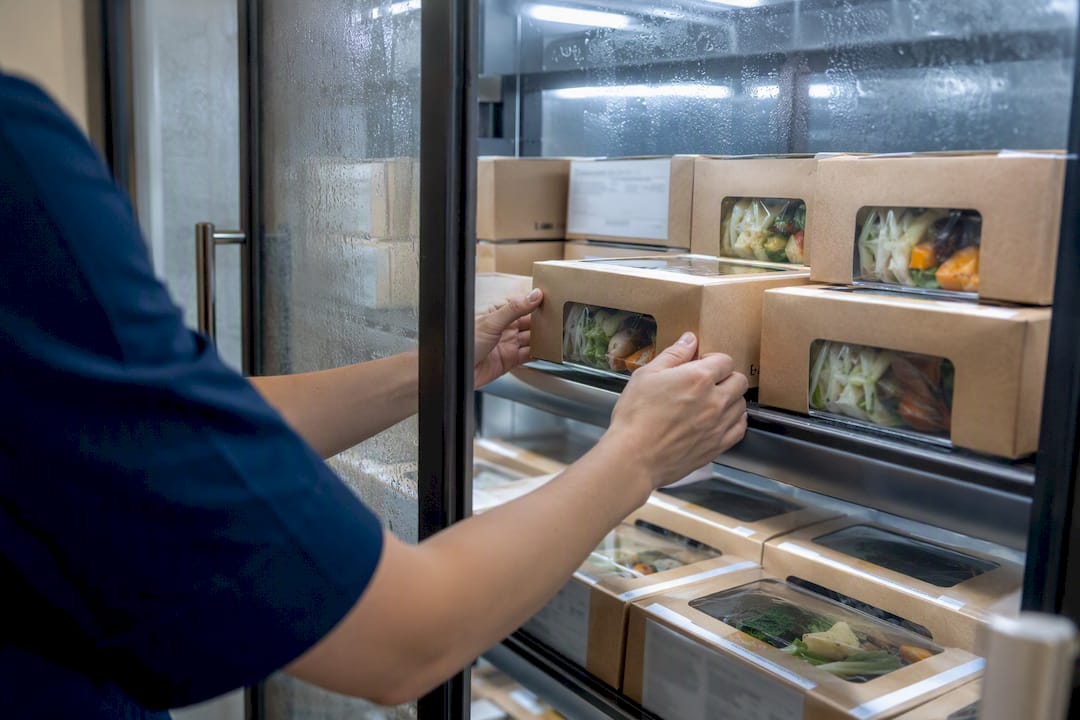
The fix is simple but easy to skip under pressure: every perishable item gets a scan timestamp at intake, and staff pull the oldest items forward during each triage pass so nothing sits forgotten behind newer deliveries. In a cold zone with limited shelf space, FIFO isn’t just good practice, it’s what prevents a resident from picking up a three-day-old box because it got pushed to the back.
Leak-proof handling runs alongside FIFO rather than replacing it. Every cold-zone shelf should assume something will eventually leak, whether it’s a punctured ice pack or a container that shifted in transit. Practical steps include:
- Lining lower shelves with disposable trays or liners that catch drips before they spread
- Keeping raw-ingredient boxes separated from ready-to-eat items, even within the same cold zone
- Wiping down shelving during every staff visit, not just during the weekly audit
- Flagging any box that arrives already damp or dented for immediate resident notification rather than storage
The combination matters more than either piece alone. FIFO without leak-proofing just means you’re rotating contaminated boxes on schedule. Leak-proofing without FIFO means clean shelves holding spoiled food nobody noticed sitting for four days behind newer deliveries.
Carrier Compliance and Intake Workflows That Actually Hold Up
Most meal-kit delivery failures trace back to the same root cause: a driver who didn’t follow the property’s intake process, usually because nobody told them what it was.
Carrier non-compliance is consistently cited as the leading cause of package system breakdowns across multifamily properties, and meal-kit couriers are especially prone to it because they’re often contracted through third-party logistics providers who rotate drivers frequently. A driver who’s never been to your property before doesn’t know your cold zone exists unless you’ve made it impossible to miss.
A workable intake workflow needs three things. First, signage at the delivery entrance that’s pictorial rather than text-heavy, since a driver glancing at it for three seconds needs to understand it instantly. Second, a standardized scan-in process, whether that’s a QR code, a PIN pad, or a manual log a staff member checks against, so every perishable item has a documented time of arrival. Third, an escalation path for drivers who repeatedly bypass the process, which usually means a direct conversation with the delivery service’s regional contact rather than hoping the next driver does better.
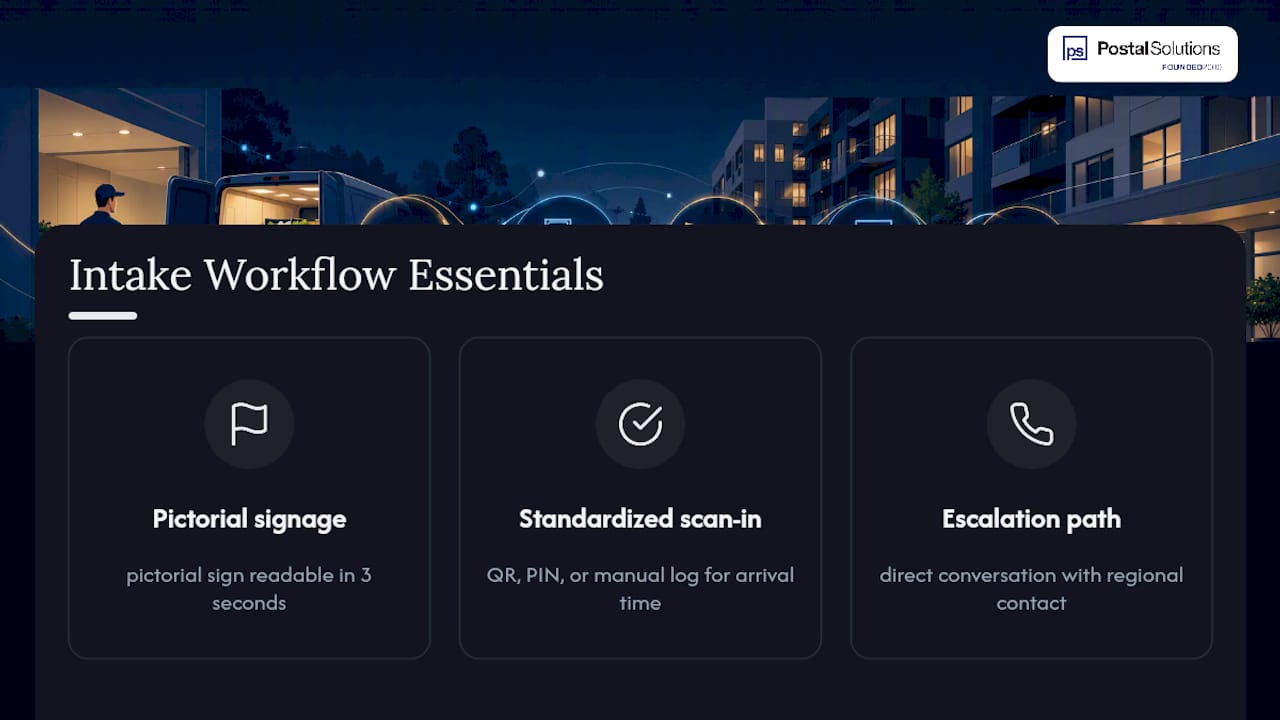
Signage and carrier-facing materials are genuinely low-cost investments relative to what they prevent. A single laminated sign at the loading dock costs less than one afternoon of staff time spent tracking down a mislabeled, leaking box.
Planning for Peak Periods: Holidays and Move-In Season
Meal-kit volume doesn’t arrive evenly across the calendar, and the weeks you’re least prepared for it are usually the weeks you need the protocol most.
Holiday periods bring a spike in gift-subscription meal kits alongside the usual surge in general package volume, which means your cold zone is competing for staff attention against a lobby full of standard deliveries. Move-in season and the back-to-school rush at student housing properties bring a different challenge: a wave of new residents who haven’t yet set up their delivery preferences, combined with new subscriptions they’re testing out in their first few weeks on-site.
The practical response is to treat peak periods as their own planning cycle rather than scaling up the everyday routine. That means confirming cold zone capacity ahead of the surge, not during it, and adding staff coverage hours specifically around known peak windows like the week before a holiday or the first two weeks of a fall semester. It also means pre-briefing carriers on expected volume increases so drivers aren’t improvising when the loading dock is busier than usual.
Student housing has its own wrinkle worth planning around separately: a large percentage of new residents moving in within the same 48 to 72 hour window, often with parents helping unpack, means the package room needs a triage process that can handle both moving boxes and the first wave of meal-kit orders new residents place once they’re settled. Properties that treat move-in week like any other week tend to spend the following month cleaning up the backlog.
Security and Liability Considerations With Meal-Kit Deliveries
A box of raw chicken sitting in a package room for two days isn’t just a spoilage problem, it’s a liability question the moment a resident claims it made them sick.
Documentation is your primary protection here. A chain-of-custody log that records when an item was scanned in, where it was stored, its logged temperature readings, and when it was either picked up or disposed of gives you a clear record if a dispute ever escalates. Without that log, a disagreement over what happened to a delivery becomes a matter of one person’s word against another’s.
Tampering is a smaller but real concern, particularly in open package rooms without camera coverage or in overflow situations where boxes sit outside the secured area. Meal kits are especially vulnerable because their contents are often visible or identifiable from the outside, making them a more obvious target than a plain cardboard box. Storing perishables in a locked cold zone rather than an open shelf addresses most of this risk directly.
Privacy is worth a mention too. Meal-kit boxes often display the resident’s name, order contents, and sometimes dietary information directly on the label. Staff handling these deliveries should treat that information the same way they’d treat any other personal data, which means not discussing a resident’s dietary choices or delivery habits with other residents or staff outside of what’s operationally necessary.
The tenant management best practices that apply to general liability and documentation apply just as directly here: clear procedures, consistent logging, and a paper trail protect the property as much as they protect the resident.
Resident Preferences and Opt-In Communication for Meal Kits
Not every resident wants the same level of involvement in how their meal-kit deliveries are handled, and assuming a one-size-fits-all notification approach tends to generate complaints from both directions.
Some residents want an immediate text the second a delivery is scanned in, full stop. Others find that intrusive and would rather set a preference for a single daily digest of everything waiting for them. Giving residents a simple opt-in or opt-out choice during move-in, rather than defaulting everyone into the same notification cadence, heads off a meaningful share of the “why didn’t you tell me” and “stop texting me” complaints property staff otherwise field.
The same logic applies to packaging preferences. A resident who’s traveling for a week benefits from being able to flag that in advance so staff know to hold or dispose of perishables differently than they would for someone checking their phone constantly. A simple preference form, whether digital or a one-page card during lease signing, covering notification method, disposal authorization, and any special handling requests, solves most of this before it becomes a recurring back-and-forth.
Building this into your onboarding process rather than treating it as an afterthought is what separates properties with smooth meal-kit handling from ones fielding the same three complaints every month. It’s a small addition to a move-in packet that already covers parking, trash, and amenity access.
Handling Meal Kits With Allergens or Special Dietary Needs
A leaking meal-kit box is a hygiene problem. A leaking meal-kit box containing peanut products stored next to another resident’s groceries is a different category of problem entirely.
Staff handling perishable deliveries should treat any meal kit as a potential allergen risk by default, rather than trying to identify which boxes actually contain problem ingredients. That means keeping perishable items separated from each other on cold-zone shelves whenever space allows, using disposable liners that get replaced between deliveries rather than reused, and washing hands or using gloves when handling any box that shows signs of leakage.
Cross-contamination risk is highest in cramped cold zones where boxes are stacked or pressed against each other. If your storage space is limited, prioritize physical separation over convenience, even if that means fewer items fit per shelf. A resident with a severe allergy who receives a box that leaked against another delivery containing an allergen has a legitimate safety concern, not just a preference issue.
Staff training should include a basic script for what to do if a resident reports a suspected cross-contamination issue: document it immediately, note which items were stored nearby, and communicate transparently with the resident about what happened. This isn’t about diagnosing anything, it’s about having a documented, honest response ready rather than scrambling in the moment.
Postal Solutions’ Take on Managing Meal-Kit Deliveries
Twenty-five years of managing on-site package rooms have shown us the same pattern play out at property after property: meal kits expose whatever weaknesses already exist in a package operation. A property with loose intake procedures and inconsistent staffing will struggle with spoiled boxes and resident complaints. A property with a daily Package Manager, consistent logging, and a real cold-chain process handles the same volume without drama.
The properties that get this right treat meal kits as a training issue, not a technology purchase. Buying a refrigerator solves nothing if nobody’s checking its temperature or logging what’s inside. What actually moves the needle is a person on-site, working the property up to six days a week, who treats a leaking box the same way every single time.
We’ve also seen how much this affects perceived value during peak periods like move-in and the holidays, when residents are watching closely to see whether the property actually delivers on the amenities it advertised.
— Postal Solutions
How Postal Solutions Supports Meal-Kit Delivery Management
If your property is fielding complaints about spoiled meal kits or your leasing team is spending hours a week untangling delivery issues, the fix isn’t a bigger refrigerator. It’s a dedicated person managing the process every day.
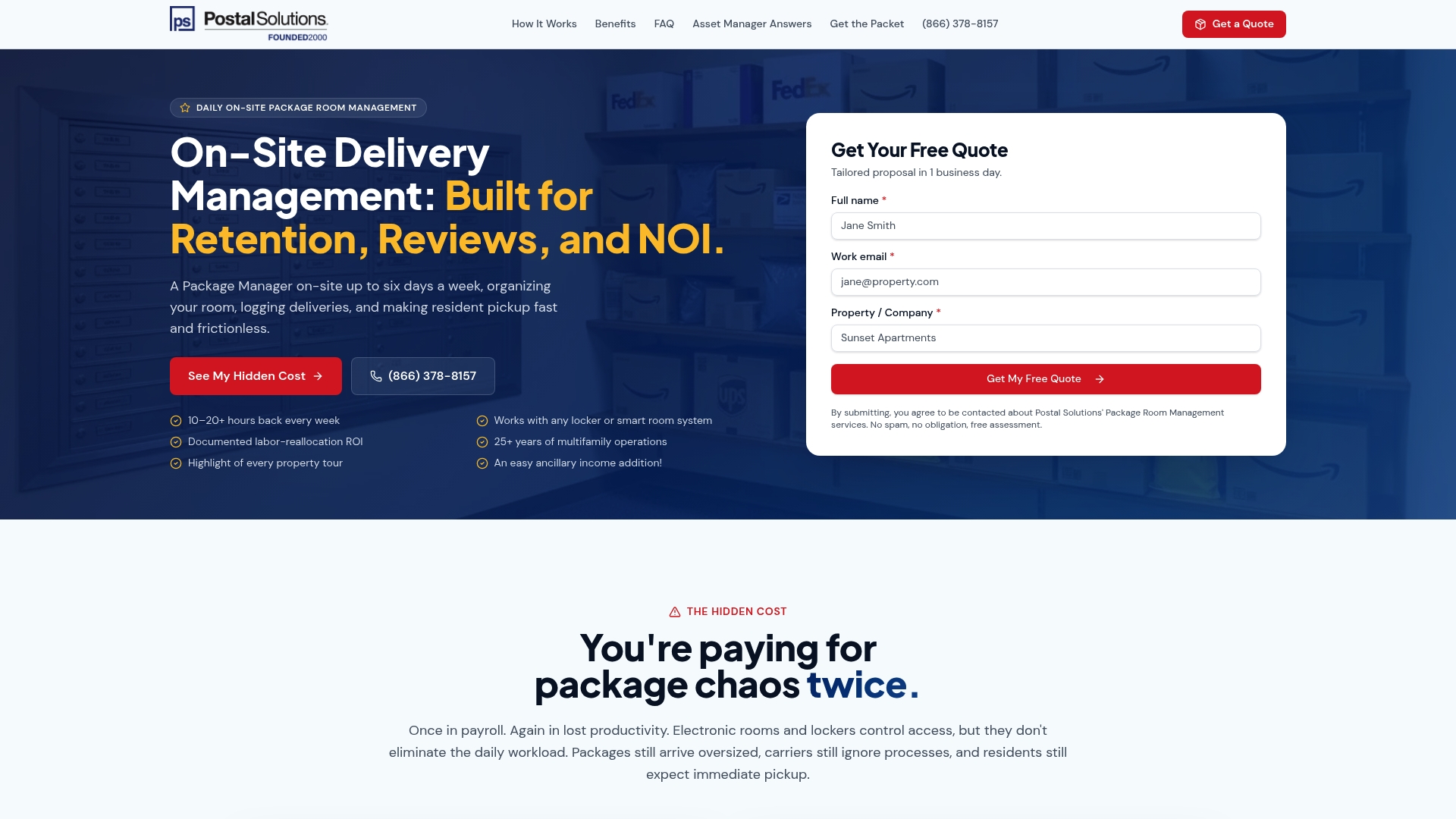
Postal Solutions provides daily on-site Package Room Management, including refrigerated staging for perishables, chain-of-custody logging on every delivery, instant resident SMS alerts, and weekly audits that keep the whole operation accountable. Unlike a locker system alone or an occasional check-in from front desk staff, a dedicated Package Manager working your property up to six days a week catches problems before they become complaints, and many communities structure the service as a paid amenity that offsets its own cost. See how on-site management outperforms off-site alternatives for perishables specifically, or download the free package-room management guide to start building your own protocol today.
Sources
- A framework for solving multifamily’s package management problem
- Avoiding food delivery chaos and hangry tenants: Why buildings need a food delivery management solution
FAQ
Should apartments accept meal-kit deliveries at the package room?
Yes, but only with a perishable goods protocol in place, including designated cold storage, immediate resident notification, and a firm disposal timeline for uncollected items.
How long can a meal-kit box sit before it needs to be disposed of?
Most properties follow a 24-hour disposal policy for uncollected perishables, backed by photo documentation to protect against disputes.
What temperature should a cold storage zone maintain for meal kits?
Cold zones should stay under 40°F, checked and logged at each staff visit rather than once a day.
Does Package Room Management handle refrigerated or perishable deliveries?
Yes. Postal Solutions’ daily on-site Package Manager model includes refrigerated staging, chain-of-custody logging, and instant SMS alerts built specifically for perishable items like meal kits.
Who is responsible if a meal kit spoils before pickup?
Liability typically depends on documented handling. A logged chain of custody with timestamps and photos protects the property if a resident disputes what happened to a delivery.
Recommended
Ready when you are
Fix your package room — start with a free proposal
Daily on-site Package Manager, resident text & email pings*, and a tour-ready amenity. Tell us your unit count and we'll send a right-sized proposal — usually within one business day.
- ✓ 16–30 hours back every week
- ✓ Works with any locker system
- ✓ Faster, friction-free resident pickup
- ✓ An easy ancillary income addition