
August 28, 2026
Package Room Best Practices: A Manager's Action Plan
Discover essential package room best practices that cut theft, reduce staff time, and boost resident satisfaction with automated solutions.
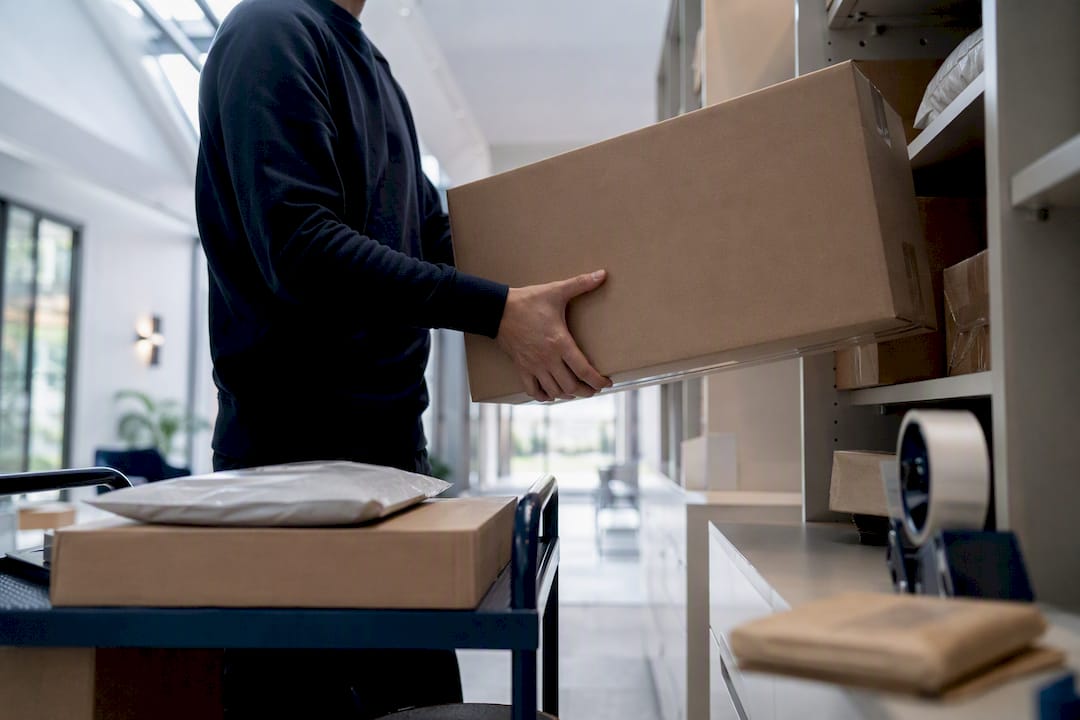
Treat your package room as a daily operational discipline, not a storage closet you check when residents complain. The properties that cut theft claims and staff hours share three habits: automated notifications, tiered access control, and weekly audits. Get those three right first, and pickup times shrink, staff time drops, and resident satisfaction climbs almost immediately.
TL;DR:
- Automated notifications at intake significantly reduce resident complaints and front-desk interruptions, especially when sent immediately upon package arrival.
- Proper layout with separate zones for carrier drop-off, intake, long-term storage, and resident pickup minimizes errors and improves efficiency.
- Cloud-managed access codes and fixed pickup windows ensure accountability, prevent unauthorized access, and promote timely package retrieval.
- Weekly audits, standardized staff procedures, and clear policies on returns and aging packages prevent missing items and disputes.
- Using KPIs such as delivery-to-notification time, loss rate, and overflow frequency helps optimize staffing, space, and process improvements over time.
Table of Contents
- Package Room Best Practices: The Priority Checklist
- How Should You Design Your Package Room Layout?
- What Technology and Access Controls Does a Package Room Need?
- What Policies Should Govern Package Pickup and Returns?
- How Should You Notify Residents About Package Arrivals?
- Who Runs Your Package Room, and How Often Should You Audit It?
- What KPIs Should You Track for Package Room Performance?
- How Do You Handle Perishables, Medications, and Oversized Packages?
- What Accessibility and Compliance Standards Apply to Package Rooms?
- What’s a Realistic 30/60/90-Day Rollout Plan?
- Package Rooms Are a Leasing Amenity, Not Just Overhead
- Consider Outsourcing Your Package Room Operations
- Sources
- FAQ
Package Room Best Practices: The Priority Checklist
Most package room failures trace back to skipped basics, not exotic problems. Here’s the order that actually moves the needle, ranked by impact versus effort.
- Deploy notification technology first. Automated texts or emails at intake cut the biggest source of resident complaints: not knowing a package arrived. Immediate benefit: fewer front-office interruptions asking “has my package come in?”
- Fix your layout before you fix your tech. A clear carrier drop zone separated from resident pickup areas prevents the daily collision of delivery drivers and residents digging through shelves.
- Lock down access control. Cloud-managed codes with per-user revocation stop the ex-employee-still-has-a-key problem that plagues so many communities.
- Write an explicit pickup window policy. Seven to fourteen days is standard before a package gets flagged for return or escalation; publish it so residents know the rule before they need it.
- Set aging and return rules in writing. After the pickup window closes, define who initiates the carrier return and how it gets logged.
- Standardize staff SOPs for intake and handoff. Every team member should scan, shelve, and log a package the same way, every time.
- Run weekly package room audits. Physical counts against your log catch missing items before they become a resident dispute.
- Build ADA-compliant access into the plan. Reach ranges and clear floor space aren’t optional add-ons; they’re baseline design requirements under ADA design standards.
- Plan for surge capacity before the holidays hit. November and December volume can double or triple; overflow shelving and temporary staffing need a plan in October, not December.
- Track KPIs monthly, not annually. Delivery-to-notification time and loss/theft rate tell you if your system is working long before residents start complaining on social media.
- Document a carrier communication protocol. Most package failures come from delivery drivers skipping steps, not from theft.
- Assign clear staff roles for intake, staging, and pickup verification. Ambiguous ownership is how packages get “lost” that were actually just misfiled.
The National Apartment Association frames most of this as a space-planning and liability question: give packages enough room, log everything, and adopt technology proportional to your volume. That’s the right instinct. It’s also incomplete without the daily follow-through this checklist demands.
How Should You Design Your Package Room Layout?
A package room’s physical layout does more to prevent errors than any app or camera system. Four zones need to exist, physically separated, even in a small space:
- Carrier drop zone: where FedEx, UPS, and USPS drivers hand off deliveries, ideally with its own entrance so drivers never walk through resident-only areas.
- Intake and sort staging: a counter or table where staff scan, photograph, and shelve items before they go into permanent storage.
- Long-term staging: shelving for packages waiting beyond a few days, organized by unit number or aisle, not by arrival date.
- Resident pickup zone: a counter or open area where residents retrieve items without needing to enter the working sort area.
Lighting and signage matter more than most managers assume. A poorly lit room with no unit-number signage turns a two-minute pickup into a ten-minute search, and that friction shows up in resident satisfaction scores. Wiring for cameras, smart lockers, or barcode scanners needs to go in during buildout; retrofitting low-voltage cabling into a finished room later costs far more than planning for it up front.
Oversized items (bike boxes, furniture, pallets) need their own staging zone with wider aisles, since jamming a mattress box between shelving units blocks access for everyone else. Keep a recycling or flattened-box disposal bin near the pickup zone. Residents will break down boxes there whether you plan for it or not, so give them a place to do it that doesn’t clog the walkway.
What Technology and Access Controls Does a Package Room Need?
The baseline capability set is smaller than most vendors make it sound. You need four things, and everything else is a nice-to-have:
- Delivery logging with timestamps: every package gets scanned in with a date and time, creating the record you’ll need if a dispute ever comes up.
- Automated resident notifications: triggered at the moment of intake, not batched at the end of the day.
- A searchable audit trail: staff should be able to pull up any package’s history in under a minute, not dig through a paper log.
- Cloud-managed access credentials: codes or key fobs that can be issued and revoked remotely, so a departing employee or resident doesn’t leave a security hole behind.
One-time pickup codes solve a specific problem: they let a resident’s roommate or a package-pickup proxy retrieve an item without handing out a permanent access credential. Per-user revocation matters just as much on the staff side. Cornell’s campus mail guidance notes that package processing routinely takes one or more days after arrival, which means your audit trail needs to survive a multi-day gap between drop-off and pickup without losing accountability.
Choosing between lockers, a staffed package room, or a hybrid setup comes down to volume and space, not brand preference. A property receiving under 50 packages a day with room to spare can often run lockers alone. Above that volume, or in a space-constrained building, a staffed room with locker overflow tends to perform better, a matching framework industry analysts have described in detail as fitting the solution to the property profile rather than defaulting to more hardware. Locker integration workflows can get complicated once you’re running mixed hardware, so mapping the workflow before you commit saves a lot of rework later.
What Policies Should Govern Package Pickup and Returns?
Written policy is what separates a package room that runs smoothly from one that generates a monthly stream of disputes. A few elements should be non-negotiable:
- Holding window: 7 to 14 days is typical before a package moves into “flagged for return” status.
- Escalation timeline: a reminder notice at day 3, a second at day 7, and a final notice before the carrier return is initiated.
- Return and exception processing: a documented process for who contacts the carrier and how the return gets logged.
- Signed pickup requirement: residents (or their designated proxy) sign or scan to confirm receipt, which closes the loop on your audit trail.
- Carrier-facing SOP: a pictorial, one-page guide posted at the drop zone showing exactly where packages of each type go.
- Regular driver credentials: a QR code or PIN for carriers who deliver daily, so they’re not waiting on staff for access every single trip.
The NAA’s package management guidance specifically recommends package logs and, in some cases, resident waivers as liability protection. A signed pickup log matters more than people realize when a resident disputes ever receiving an item; it’s the single piece of documentation that resolves most of those conversations without escalation. A ready-to-adopt policy template can save you from drafting these rules from scratch.
How Should You Notify Residents About Package Arrivals?
The notification cadence matters as much as the technology sending it. Fire off a notification the moment a package is scanned in, not at the end of a shift or the next morning. Follow with a reminder at the halfway point of your holding window, and a final notice before escalation to return.
Channel choice depends on your resident base. SMS gets opened faster than almost anything else and works well for time-sensitive alerts. Email is a reasonable backup for residents who opt out of texts, but expect slower open rates. A property app, if you already have one, centralizes history and cuts down on missed messages, though it only works if residents actually download and check it. Running two channels in parallel, SMS as primary and email as fallback, catches the residents who ignore one or the other.
Sample templates work better as a starting point than a rigid script:
- Intake: “A package arrived for you today. Pick up anytime at [location]; bring your unit number or QR code.”
- Reminder: “Friendly reminder: you have a package waiting since [date]. Pickup closes [date].”
- Final notice: “This is your final notice. Your package will be returned to the carrier on [date] if not picked up.”
Who Runs Your Package Room, and How Often Should You Audit It?
Three roles need clear ownership regardless of who staffs them: intake (scanning and shelving), staging (organizing by aging and location), and pickup verification (confirming identity and logging release). Some properties keep this in-house with leasing staff splitting duties; others hand it to a dedicated on-site package manager so leasing teams stop absorbing the workload.
- Train every staff member on the same SOP, then run a refresher every quarter, since turnover erodes consistency faster than most managers expect.
- Set a recurring carrier engagement touchpoint, ideally a short conversation with regular drivers each quarter to reinforce your SOP and catch compliance drift early.
- Run a weekly package room audit: count physical inventory against your log, check for aging packages past the holding window, and verify signage and access codes still work.
- Review KPIs monthly alongside the audit results to catch trends before they become patterns.
Pro Tip: Assign audit duty to a rotating staff member rather than the same person every week. A fresh set of eyes catches shelving drift and mislabeled units that the regular custodian stops noticing.
What KPIs Should You Track for Package Room Performance?
Six numbers tell you almost everything about how your package operation is performing:
- Packages per 100 units, your baseline volume metric for staffing and space decisions.
- Delivery-to-notification time, how long it takes from carrier drop-off to resident alert.
- Notification-to-pickup time, how long residents take to retrieve items once notified.
- Loss/theft rate, the percentage of logged packages that go unaccounted for.
- Staff time per package, the labor cost driver most managers underestimate.
- Overflow rate, how often you run out of primary storage during peak periods.
Parcel Pending’s KPI guidance recommends establishing a baseline in a normal month, then comparing against seasonal peaks like move-in or the holidays. Use that baseline to evaluate whether a new locker system, added staffing, or a managed service actually moves the numbers, rather than assuming it does.
How Do You Handle Perishables, Medications, and Oversized Packages?
Special deliveries need separate rules or they become the exceptions that eat your staff’s time. Refrigerated items need a dedicated cold-storage area, clear carrier-facing signage marking where they go, and a staff member assigned to notify the resident immediately, not on the standard cadence.
- Perishables and medications: flag for same-day pickup notice; Cornell’s campus guidance specifically calls out special handling for these categories given spoilage and urgency risk.
- Oversized items: stage separately with wider aisle clearance, and require residents to schedule a pickup window rather than grabbing items unassisted.
- Non-compliant carrier drop-offs: log the incident and follow up with the carrier’s local office; a pattern of non-compliance is the single most common driver of package failures industry-wide.
What Accessibility and Compliance Standards Apply to Package Rooms?
ADA reach-range requirements govern how high and low locker compartments can sit, plus how much clear floor space needs to exist in front of them. Get this wrong during buildout and you’re looking at expensive retrofit work later.
- Reach ranges and clearances: follow federal ADA design standards for compartment height and approach space.
- Tactile and audio accommodations: braille labeling and audio prompts on locker interfaces help residents with visual impairments navigate independently, features some locker manufacturers now build in standard.
- Staff-assisted pickup option: always available as a fallback for residents who can’t use self-service hardware, regardless of how accessible the system is.
- Annual carrier agreement review: USPS and private carrier access rules shift periodically, and an annual check against current intake procedures catches changes before they cause a compliance gap.
What’s a Realistic 30/60/90-Day Rollout Plan?
- Days 1 to 30: run a full package room audit, fix obvious signage and layout gaps, and roll out notification templates.
- Days 31 to 60: finalize technology selection (lockers, room software, or hybrid) and formalize your carrier communication protocol with regular drivers.
- Days 61 to 90: run your first full audit cycle against the new system, establish KPI baselines, and train residents on the updated pickup process.
Loop in maintenance, leasing, and your regional manager at each phase transition. A brief biweekly check-in keeps the rollout from stalling once the initial momentum fades.
Package Rooms Are a Leasing Amenity, Not Just Overhead
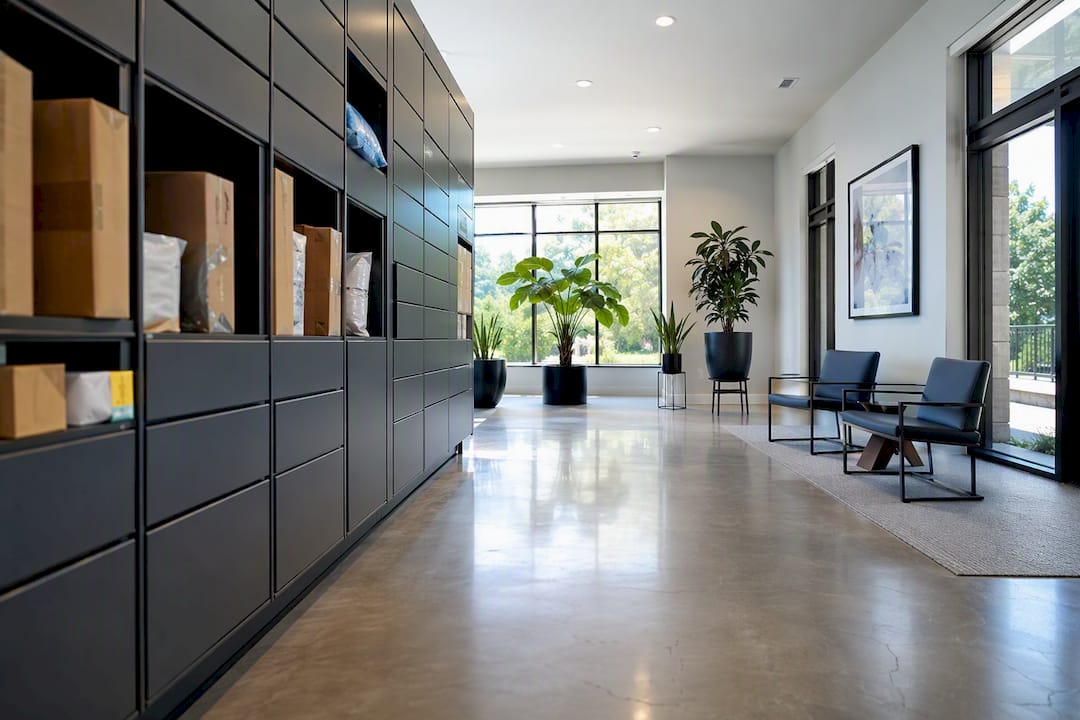
Every leasing tour includes a walk past the package room, whether it’s on the script or not. A clean, well-organized space with visible security signals tells prospects something about how the property runs, while an overflowing room with boxes stacked in the hallway tells them the opposite. Renewal-time residents notice the same thing, quietly, every time they pick up a delivery.
The most overlooked lever here isn’t hardware. It’s whether the room looks intentional. Run a quick walk-through audit before your next round of tours; it costs nothing and it’s the fastest amenity upgrade available.
— Postal Solutions
Consider Outsourcing Your Package Room Operations
Running a package room well takes daily discipline most leasing teams don’t have hours left to give, especially during move-in season or the holiday surge when volume spikes hardest. Postal Solutions puts a dedicated on-site Package Manager at your community up to six days a week, handling intake, sorting, chain-of-custody logging, resident notifications, and the weekly audits this guide walks through, working with the package room or lockers you already have.
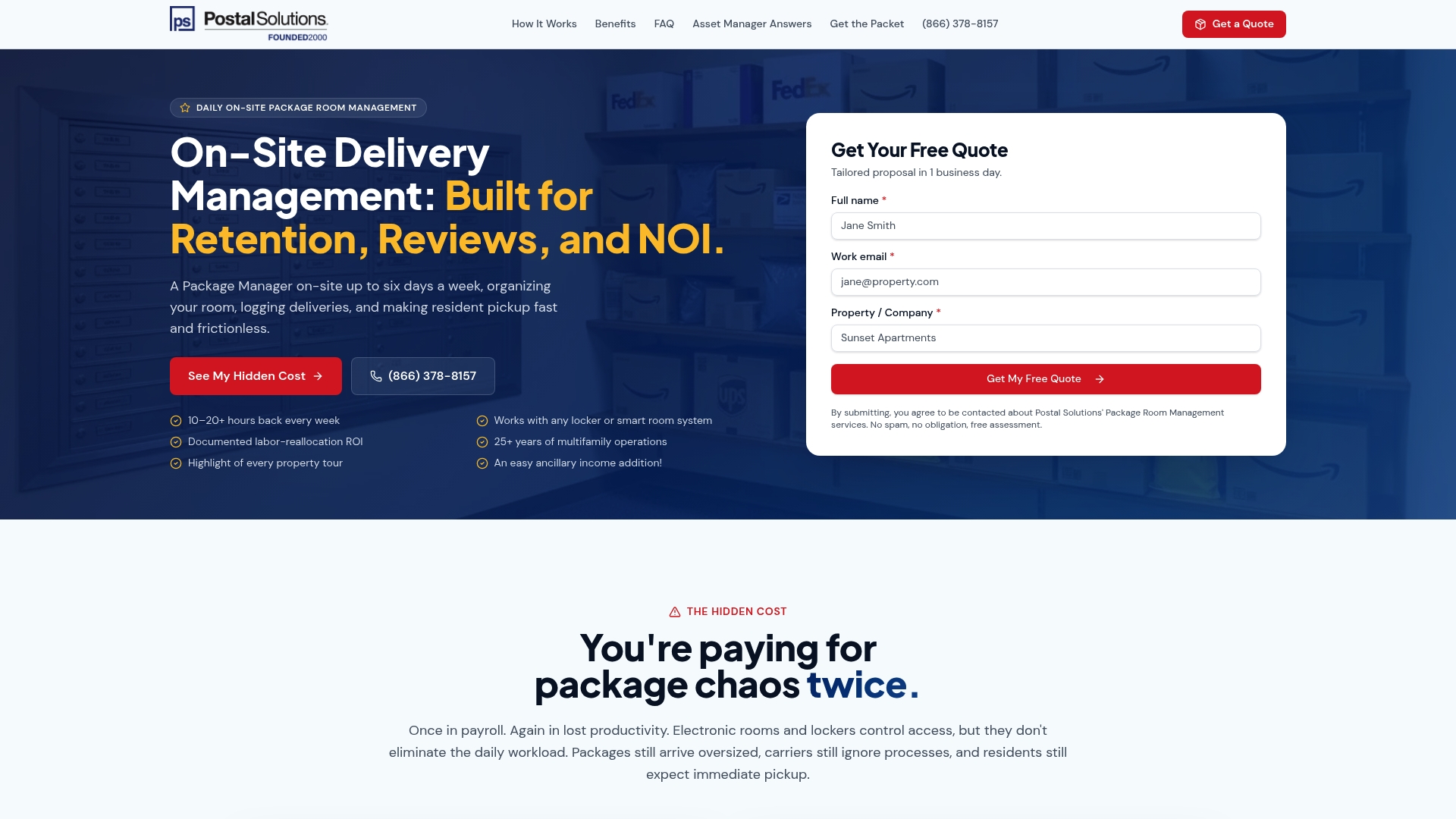
If your staff is spending hours a week chasing lost deliveries instead of leasing apartments, or if you’re heading into a peak season without a plan, that’s the signal to consider a managed on-site model. It also turns package management into something you can point to on a tour: a visible, professionally run amenity instead of a cluttered back room. Some communities structure it as a paid resident amenity and keep the margin over management costs. Whether your property runs lockers, a staffed room, or no dedicated system at all, see how on-site management compares to off-site alternatives for your situation, or download the free package room management guide to start your own audit this week.
Sources
- NAA guidance: Best Practices for Package Management (multifamily)
- ADA design standards (accessibility requirements)
- Best practices for mail and packages – Cornell Student & Campus Life
FAQ
What are the most common problems in a package room?
Carrier non-compliance (missed scans, wrong drop locations), inconsistent staff logging, and packages sitting past the holding window without escalation cause most disputes, with carrier issues cited as the single leading cause of package failures.
How do you manage a package room effectively?
Combine automated notifications, tiered access control, and weekly physical audits against your delivery log, following the standardized intake SOPs the best property management software for owners can help you implement for multifamily communities.
What steps are involved in the USPS package intake process?
USPS intake procedures call for scanning and logging each item at acceptance, verifying carrier-specific handoff protocols, and maintaining a documented audit trail that supports compliance checks.
How often should you audit a package room?
Run a physical package room audit weekly, checking inventory against your log and flagging aging packages, then review KPIs on a monthly cycle to catch longer-term trends.
How long can a package sit before it needs to be returned to the carrier?
Most properties set a holding window of 7 to 14 days, with reminder notifications partway through and a final notice before the item is flagged for carrier return.
Recommended
- Package Room Management for Apartments: A Manager’s Guide — Postal Solutions Blog
- Free Guide: Package Room Management for Apartments (PDF)
- Package Room Policy for Property Managers: Ready-to-Adopt Rules — Postal Solutions Blog
- Package Room Reviews: What Property Managers Should Check — Postal Solutions Blog
Ready when you are
Fix your package room — start with a free proposal
Daily on-site Package Manager, resident text & email pings*, and a tour-ready amenity. Tell us your unit count and we'll send a right-sized proposal — usually within one business day.
- ✓ 16–30 hours back every week
- ✓ Works with any locker system
- ✓ Faster, friction-free resident pickup
- ✓ An easy ancillary income addition