
September 17, 2026
Recover 20+ Staff Hours: Reduce Package Handling for Property Teams
A property segmented playbook to reduce package handling and recover 20 or more staff hours per week. Audit volume, choose the right on site model, pilot...
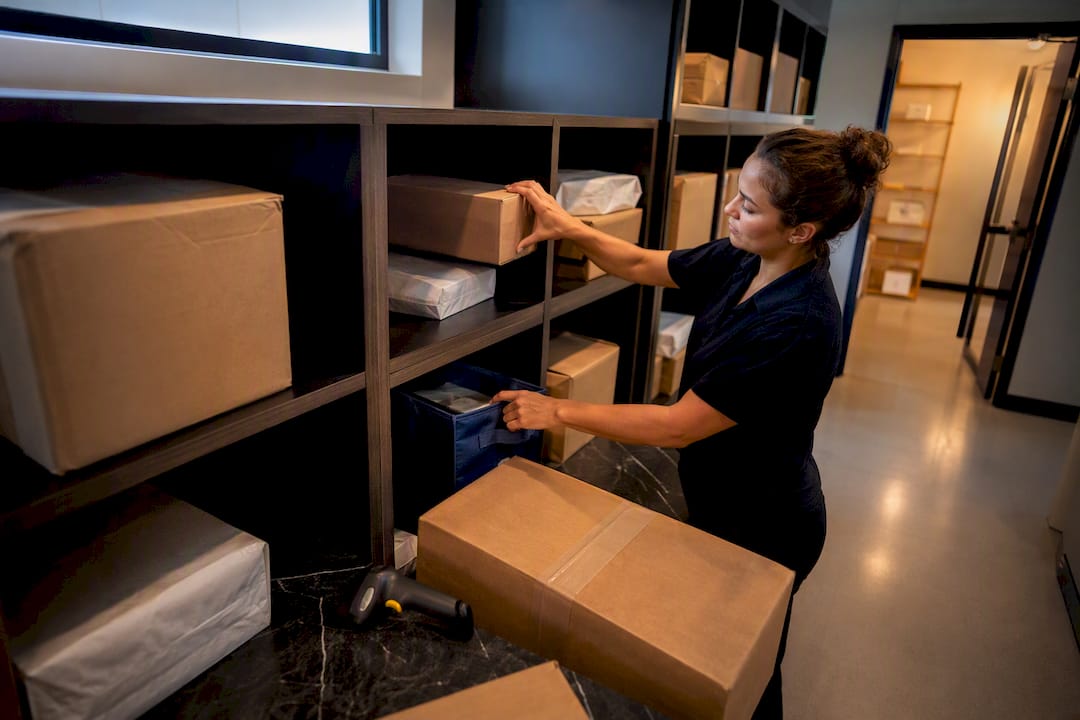
The fastest way to reduce leasing staff package hours is to combine an on-site package room or locker system with a daily accountability layer, either a dedicated package manager or a strict staff-owned intake protocol, backed by weekly audits. Properties that make this switch typically recover 20 or more staff hours per week at higher-volume communities, along with fewer resident complaints. The steps that get you there: audit your current workload, pick the right model for your property, lock in intake and notification policies, then pilot and measure before you scale.
TL;DR:
- Implementing a managed on-site package room with a dedicated package manager consistently recovers over 20 staff hours weekly in high-volume communities.
- Lockers are suitable for low-volume properties, while smart package rooms handle overflow and oversized items more efficiently in medium to high-volume settings.
- Conduct a one-week audit of package volume, staff hours, overflow incidents, and resident complaints to determine your property’s specific needs before choosing a system.
- Establish strict intake procedures, clear signage, and assign staff owners for exceptions to improve compliance and reduce package handling chaos.
- Weekly audits and a defined KPI system, including staff hours and package pickup times, are essential to maintaining efficiency gains over time.
Table of Contents
- How to Reduce Package Handling: Models and Real Savings
- How Do You Audit Package Volume and Staff Time?
- Which Package Solution Fits Your Property?
- Building an Intake and Resident Policy That Sticks
- Staffing, Audits, and KPIs That Lock In the Savings
- 30/60/90-Day Rollout: Piloting the New System
- Postal Solutions’ Perspective: People Plus Technology, Not Either Alone
- Let Postal Solutions Take Package Handling Off Your Plate
- Sources
- FAQ
How to Reduce Package Handling: Models and Real Savings
Three operational models dominate multifamily package management, and each removes staff labor differently.
Self-service lockers let residents pick up parcels with a code or app notification, 24/7, without a staff member touching the box after intake. The residual work is loading the locker and handling anything too big to fit.
Smart package rooms go further. Shelving, visual scanning, and software log every parcel automatically, which lets the system handle overflow and oversized items that would jam a fixed locker bank. Staff still manage exceptions: damaged boxes, misdeliveries, and returns.
Off-site management moves storage away from the property entirely. It cuts on-site square footage needs but shifts friction onto residents, who now have to travel or schedule pickup, and that friction tends to show up later as complaints.
Managed on-site package rooms, staffed by a dedicated package manager, combine the convenience of on-site storage with a person accountable for intake accuracy and daily organization. This model consistently shows the largest time recovery for leasing teams:
- Lockers alone: moderate savings, mainly on distribution time
- Smart rooms: higher savings, especially at high-volume properties
- Off-site: frees space but adds resident-facing delays
- Managed on-site: 20+ hours per week reclaimed at busier communities
How Do You Audit Package Volume and Staff Time?
Before you change anything, spend one week measuring what’s actually happening. The average community receives nearly 150 packages a week, a number that jumps to roughly 270 during the holidays, so a single week of tracking gives you a real baseline, not a guess.
Pull data from three sources: timesheet entries tagged to package tasks, your carrier or delivery logs, and resident portal tickets related to missing or delayed parcels. One-third of community teams already spend more than four hours a week on packages, so if your numbers land near or above that, you have a clear case for change.
| Metric | How to collect it | What it tells you |
|---|---|---|
| Packages per day (average and peak) | Carrier logs, package software | Sizing needs for lockers or shelving |
| Staff hours on acceptance/logging | Timesheet review | Baseline labor cost |
| Overflow incidents per week | Manual notes, resident tickets | Capacity gaps |
| Resident complaints | Portal tickets, front desk log | Service quality signal |
Which Package Solution Fits Your Property?
The right model depends on unit count, package volume, available space, and how much staff time you’re willing to spend on exceptions.
- Low-volume properties (under roughly 100 units, light delivery traffic): a well-placed locker bank often handles the load with minimal staff involvement.
- Medium-volume properties: a smart package room usually beats a locker wall, since it handles oversized and overflow items without needing more square footage.
- High-volume or student housing: managed on-site package rooms perform best, because people handle the exceptions while technology handles the bulk, which is exactly where lockers alone start to break down.
Space and capital matter too. Lockers require dedicated square footage sized for peak days, not averages, and under-sizing is the most common reason properties end up with overflow complaints. Carrier compliance is the other deciding factor. If drivers routinely bypass your intake process, no hardware model will save you staff hours.
Pro Tip: Size any locker or smart-room installation for your holiday peak, not your average week. A system that works fine in June can overflow completely by the second week of December.
Building an Intake and Resident Policy That Sticks
A documented workflow prevents the small exceptions from eating your team’s week. Carrier non-compliance, drivers dropping packages outside the designated intake point, is the leading cause of package-system failures, which makes intake procedure the first thing to fix.
- Post clear intake signage at every entrance carriers use, showing exactly where and how to log a delivery, an important aspect of facility maintenance for property managers that improves operational compliance.
- Onboard recurring drivers directly. A five-minute conversation with your regular UPS or FedEx driver prevents weeks of bypassed packages.
- Set resident pickup windows and hold times (commonly 3 to 7 days) before a package gets flagged for return-to-sender.
- Publish a return and appeals process so residents know what happens to unclaimed items and how to dispute a “missing” package.
- Assign named owners for exceptions: one person handles oversized furniture deliveries, another handles perishables and refrigerated items, another handles misdeliveries.
- Log every touch on out-of-process items so nothing disappears into an unmanaged corner of the leasing office.
Communities that pair this kind of protocol with a locker integration workflow tied to their property management system cut down on manual notification work almost immediately.
Staffing, Audits, and KPIs That Lock In the Savings
A package manager, whether a dedicated on-site role or a clearly assigned staff duty, changes the math because one accountable person prevents the slow drift back into chaos that happens when packages become “everyone’s job.”
Weekly audits are the mechanism that keeps it working. A basic audit checklist should include:
- Cross-check package log entries against physical inventory
- Flag anything sitting unclaimed longer than your hold-time policy
- Verify chain-of-custody records for high-value or oversized items
- Confirm notification alerts actually fired for new arrivals
Properties running managed on-site package rooms report recovering 20 or more staff hours weekly, a figure that climbs at communities receiving well above the roughly 150-package weekly average.
Track three KPIs monthly: staff hours spent on packages, average pickup time, and delivery failure rate (aim under 2%). If any of these drift upward between audits, that’s your signal the process is breaking down somewhere in the intake chain.
30/60/90-Day Rollout: Piloting the New System
Run this as a contained pilot before committing property-wide.
- Days 1 to 30: Baseline your current package volume and staff hours. Choose your model (locker, smart room, or managed on-site). Assign an owner for the pilot.
- Days 31 to 60: Deploy the system at one building or one wing. Train staff or onboard your package manager. Start weekly audits immediately, don’t wait until something goes wrong.
- Days 61 to 90: Measure against baseline. Success looks like a meaningful drop in staff hours, faster average pickup times, and a visible dip in complaint tickets.
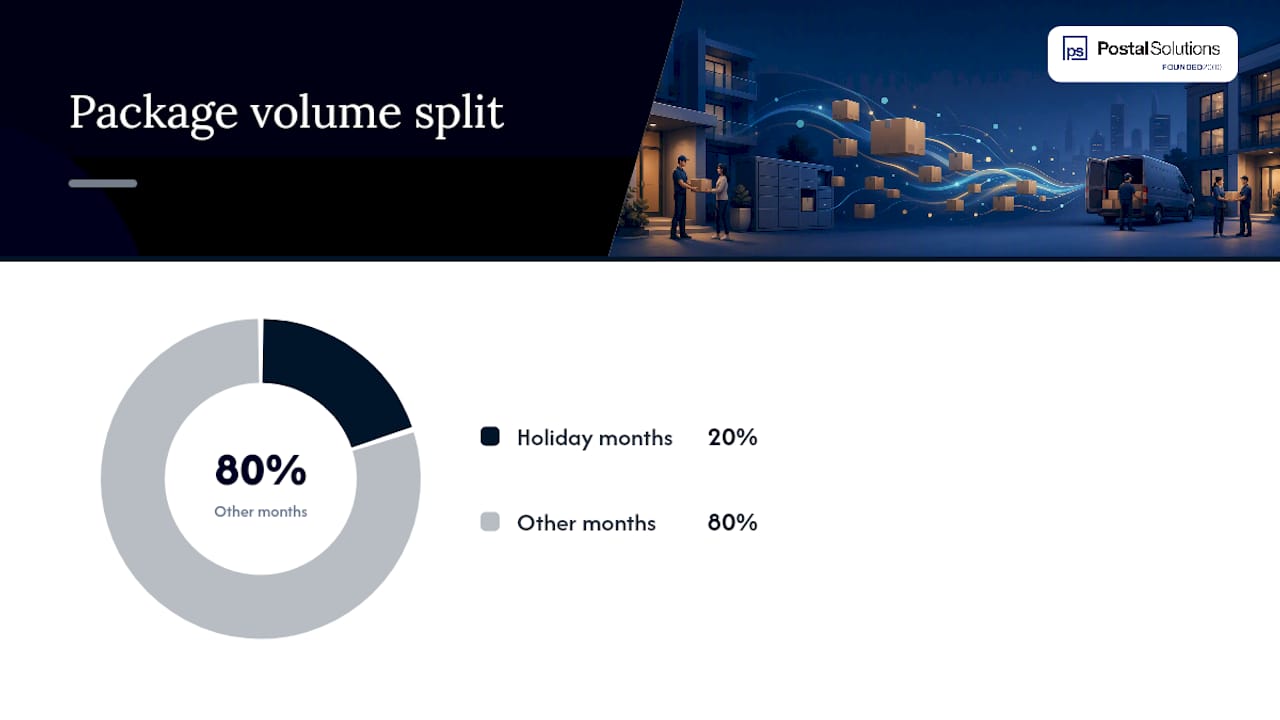
Since holiday months account for roughly 20% of annual package volume and daily counts can triple, build a temporary overflow plan into your pilot from the start, even if your pilot period doesn’t overlap the holidays.
Pro Tip: Run your pilot on the building with the highest current complaint volume. It gives you the clearest before-and-after story when you present results to ownership.
Postal Solutions’ Perspective: People Plus Technology, Not Either Alone
Twenty-five years of managing on-site package operations has taught us one thing above all else: hardware alone doesn’t reduce staff hours, accountability does. A locker wall with nobody checking it becomes an overflow problem within weeks. A smart room with no daily owner still generates the resident complaints leasing teams dread.
What actually works is a dedicated Package Manager working your community up to six days a week, receiving, sorting, and organizing deliveries so your existing hardware performs the way it was sold to perform. The system isn’t the amenity. The daily discipline behind it is.
— Postal Solutions
Let Postal Solutions Take Package Handling Off Your Plate
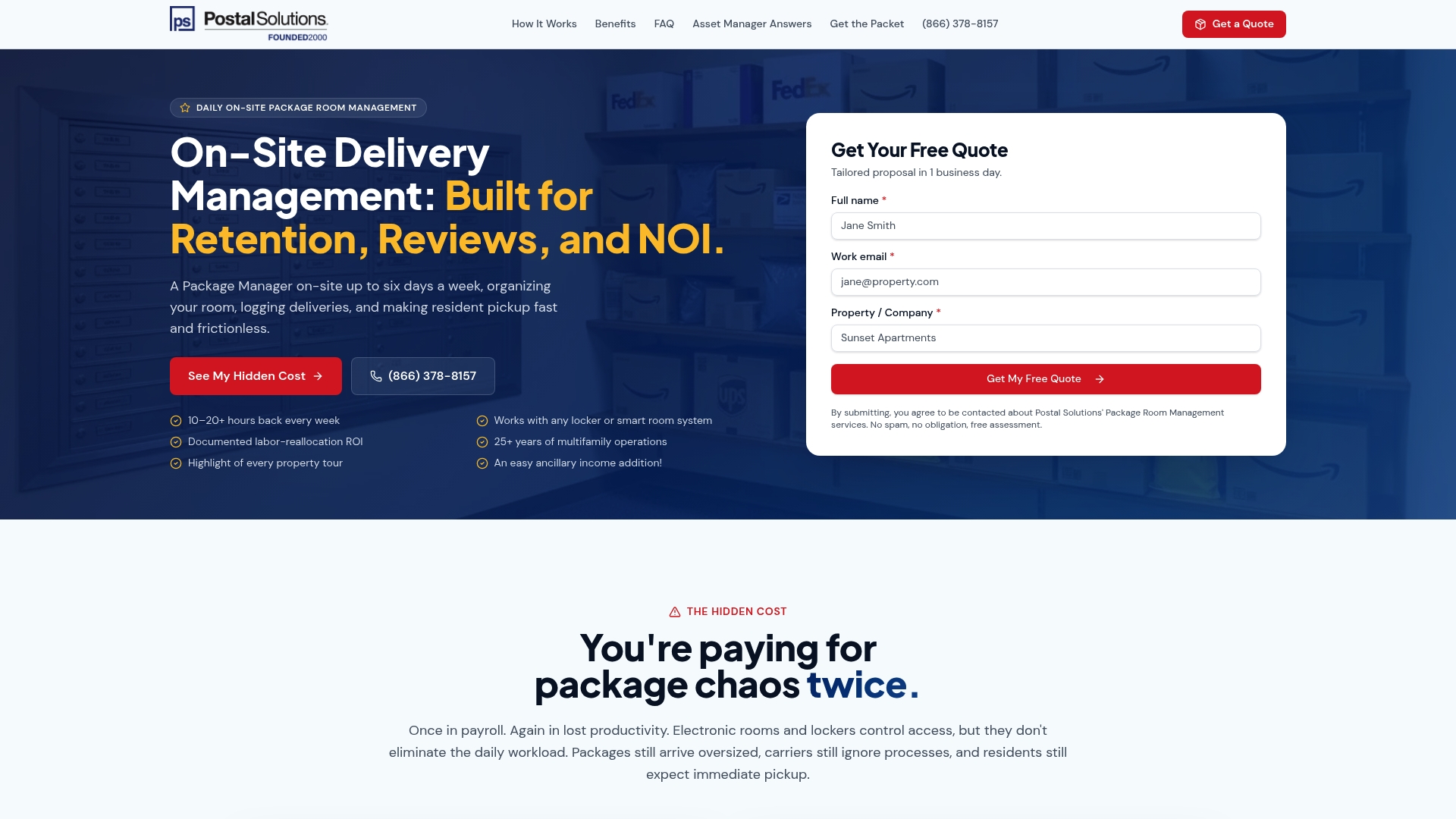
Professional services run the daily package operation so your leasing team doesn’t have to: receiving, sorting, secure storage, resident text and email notifications, and weekly audits that catch problems before residents do. It works with the package room or locker system you already have, whether that’s a smart room, a locker bank, or no dedicated system at all.
If you’re evaluating a pilot or writing an RFP, ask any vendor three questions: how do they handle carrier non-compliance, what does their weekly audit actually log, and how do they measure staff-hours reduction after 90 days. Those answers separate a real operational partner from a hardware installer.
Start with the free package room management guide to run your own audit, or see how on-site management compares to off-site models for your specific property profile.
Sources
- Multifamily Package Management (NAAHQ)
- Multifamily package management guide for operators (Postal Solutions)
- Onsite vs Offsite Package Management | Parcel Pending
- What package wrangling is really costing your team (Multifamily & Affordable Housing Business)
FAQ
How Many Staff Hours Does On-Site Package Management Save?
Higher-volume properties running managed on-site package rooms report saving 20 or more staff hours per week compared to unmanaged manual handling.
What Causes Most Package System Failures?
Carrier non-compliance, drivers dropping deliveries outside the designated intake area, is the leading cause of package-system breakdowns, which is why intake signage and driver onboarding matter as much as the hardware itself.
Should I Choose Lockers or a Managed Package Room?
Lockers work well for lower-volume properties with predictable package sizes, while managed on-site package rooms fit higher-volume or student housing communities better because a dedicated person handles the exceptions lockers can’t.
How Often Should We Audit Our Package Room?
Run audits weekly, cross-checking log entries against physical inventory and confirming chain-of-custody records, since this catches unclaimed items and process breakdowns before they turn into resident complaints.
Does Postal Solutions Work With Existing Locker Systems?
Yes. Postal Solutions provides daily on-site package management that integrates with the package room or locker system a property already has, adding the accountability layer of a dedicated Package Manager rather than replacing hardware.
Recommended
Ready when you are
Fix your package room — start with a free proposal
Daily on-site Package Manager, resident text & email pings*, and a tour-ready amenity. Tell us your unit count and we'll send a right-sized proposal — usually within one business day.
- ✓ 16–30 hours back every week
- ✓ Works with any locker system
- ✓ Faster, friction-free resident pickup
- ✓ An easy ancillary income addition